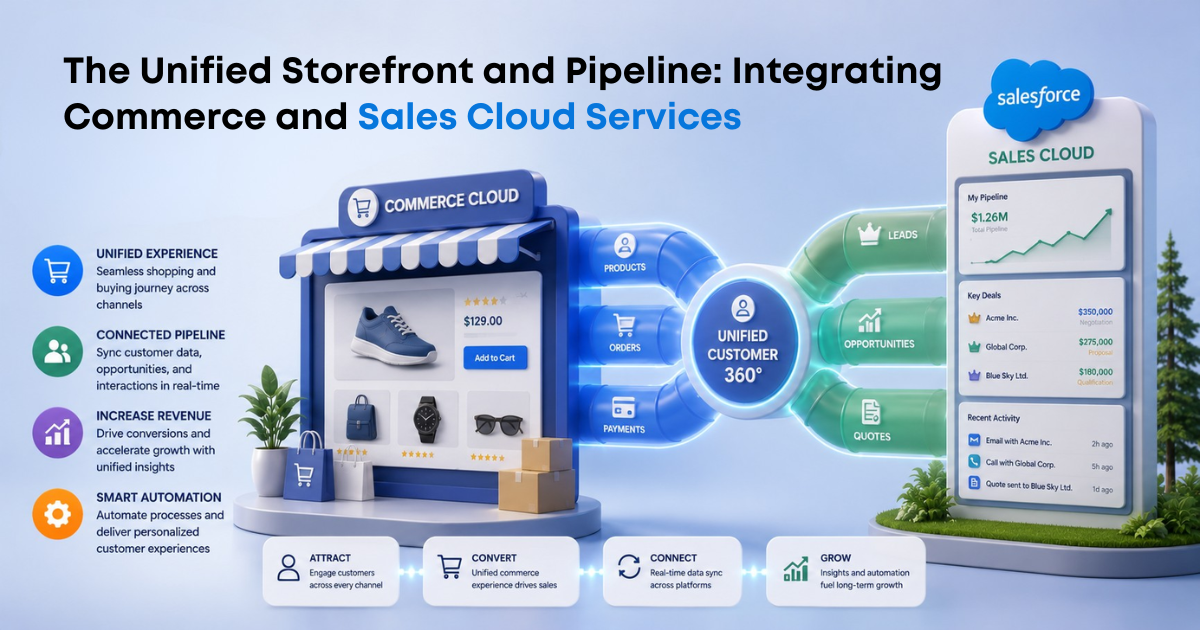
Enterprise sales and retail landscapes are merging rapidly. Historically, companies separated their commercial operations into independent channels. Business-to-Consumer (B2C) teams managed high-volume online storefronts, while Business-to-Business (B2B) personnel operated field sales cloud pipelines. These functions used entirely separate database environments.
This infrastructure fragmentation creates major operational challenges. When commerce storefronts sit separate from pipeline applications, corporate sales representatives lack visibility into online customer shopping carts.
Enterprise organizations require a unified architecture that connects self-service digital transactions with direct sales interactions. This article outlines how combining digital storefront metrics with account pipelines changes revenue management..
The Operational Friction of Disconnected Systems
Operating independent digital storefronts alongside isolated pipeline tracking databases introduces significant technical debt. Many companies use traditional synchronization scripts to move information between platforms overnight. This batch processing model creates immediate communication bottlenecks.
- Stale Pipeline Visibility: Field account executives cannot see active digital shopping baskets or recent web purchases in real time. This data gap often causes representatives to pitch redundant or misaligned merchandise during client consultations.
- Fragmented Customer Identity: Disconnected user registries generate duplicate records for single corporate accounts. This separation makes it difficult for data teams to verify account purchase histories.
- Delayed Processing Workflows: When a web storefront processes a large wholesale transaction, the order details often take hours to appear in the central forecasting dashboard. This lag slows down inventory planning and distorts real-time revenue reporting.
Industry research highlights the true scale of these operational integration challenges. The 2026 MuleSoft Connectivity Benchmark Report shows that the average enterprise manages 957 distinct computer applications across its global network.
Alarmingly, only 27% of these systems actively connect with each other. Furthermore, 95% of IT directors report facing significant integration challenges when updating their primary business applications.
Strategic Value of a Unified Revenue Lifecycle
Unifying commerce assets with direct contract pipelines alters how an organization tracks and optimizes revenue. Instead of managing independent transaction logs, businesses use a single database engine to supervise the complete purchasing lifecycle.
Implementing this unified design model delivers clear technical advantages:
- Immediate Inventory Visibility: Field account managers and digital portal systems share a single, real-time product availability ledger. This sync prevents sales representatives from accidentally selling out-of-stock merchandise.
- Consistent Multi-Channel Pricing: The core database evaluates custom contract price sheets uniformly, ensuring a client sees identical pricing whether they buy through a web storefront or a field representative.
- Automated Lead Management: When an online buyer abandons a large commercial shopping cart, the system alerts a field sales representative immediately, turning a missed web visit into a live pipeline lead.
Designing the Unified Core Data Architecture
Building a unified commercial platform requires moving away from heavy, data-duplicating file transfer routines. Modern architectures utilize real-time, event-driven data frameworks to maintain clean system boundaries.
Expert Salesforce Sales Cloud Consulting Services follow a structured, four-step process to deploy this integrated data foundation.
1. Establish a Shared Global Product Catalog
Enterprise organizations must maintain a single, verified database for all product listings, avoiding independent inventory tables.
- Standard Price Book Normalization: Map all digital store catalog items to standard price book entry objects within the core environment.
- Unified Stock Keeping Unit (SKU) Registries: Ensure both digital storefronts and pipeline management windows use identical SKU codes to prevent item tracking errors.
- Dynamic Attribute Management: Configure the product catalog to pass complex specifications, such as regional power requirements or material variations, cleanly across all channels.
2. Configure Real-Time Identity Resolution
To maintain clean accounts, the platform must link digital storefront shoppers with verified corporate pipelines.
The system evaluates inbound data fields using strict matching rules. By comparing combinations like email addresses, phone records, and normalized company names, the resolution engine eliminates duplicate entries. The platform links all historical web interactions directly to a single, verified master account profile.
3. Deploy Event-Driven Cart Tracking
Rather than relying on slow, end-of-day database sync routines, the architecture uses real-time event notifications to track shopper behavior.
When an online buyer adds premium merchandise to their digital cart, the storefront publishes a live event notification to a central messaging bus. Pipeline monitoring systems process this data packet instantly, allowing sales workflows to respond to high-value storefront interactions as they happen.
4. Implement Unified Order Routing
Once a customer completes an order through any channel, the system passes the transaction details to a centralized order management component.
The platform logs the purchase history against the master account profile, updates regional inventory counts immediately, and adjusts the active sales forecasting dashboard. This unified record keeping ensures corporate account executives always see up-to-date revenue metrics without running manual data reports.
Technical Integration with Flow Automation
Connecting digital storefronts with sales pipelines allows organizations to launch automated sales workflows based on direct consumer behavior. Developers use Core Flow Builder to replace manual account follow-ups with instant, event-triggered processes.
High-Value Cart Recovery Workflows
When an authenticated B2B customer leaves a high-value selection in their online cart without checking out, the platform evaluates the total value of the pending purchase.
If the cart value exceeds a specific threshold, like $50,000, the system bypasses standard email marketing queues. The automation engine creates an urgent follow-up task directly inside the account executive’s workspace, prompting the representative to reach out with a personalized discount or contract modification.
Automated Account Level Re-Ordering
Many industrial clients re-order identical supply components every month. The system uses background automation rules to simplify this repetitive procurement cycle.
When local warehouse inventory records drop below an established limit, a background process generates a pre-populated shopping cart layout automatically. The system texts a secure link to the client procurement manager, allowing them to authorize the bulk re-order with a single tap, which updates the sales pipeline instantly.
Overcoming Key Implementation and Governance Obstacles
Merging large-scale commerce transactions with a core sales database can introduce distinct technical challenges. Engineering teams apply specific guardrails to safeguard platform stability.
1. Managing Large System Traffic Spikes
High-volume consumer shopping events, such as flash sales or seasonal retail rushes, can generate thousands of API calls per second, threatening to overwhelm core cloud databases.
Technical leads prevent platform slowdowns by implementing protective proxy buffers in front of pipeline endpoints. The gateway handles high-volume database read requests using local cache files, while grouping database writes into asynchronous queues. This throttling architecture ensures heavy web storefront traffic will not slow down internal CRM tools for account representatives.
2. Synchronizing Complex Multi-Tier Pricing Matrixes
Wholesale distribution networks often use intricate pricing tiers, applying volume discounts, regional taxes, and custom corporate contract agreements simultaneously. Replicating these complex pricing models across independent systems can cause data mismatches.
Architects resolve this issue by routing all pricing calculations through a single pricing microservice.
Whether a client browses an online catalog or an account representative creates a manual sales quote, the platform queries the same central pricing engine. This design guarantees consistent pricing across all channels and eliminates the need to maintain duplicate price books across different applications.
Real-World Case Study: Industrial Parts Supplier
Consider a large, multinational industrial parts manufacturer that sells directly to regional construction companies.
The Original Operating Setup
The manufacturer managed their digital commerce storefront on a system entirely separate from their internal sales database. Corporate account representatives had no visibility into online web orders.
Clients frequently called their dedicated reps to negotiate lower bulk prices, only to find that the public web portal could not apply those custom negotiated discounts at checkout. This communication disconnect caused administrative delays and frustrated key accounts.
Transitioning with Professional Consulting Services
The manufacturer collaborated with a certified Salesforce Sales Cloud Consulting partner to integrate their digital storefront and pipeline tracking infrastructure.
- Platform Consolidation: The team linked the digital storefront framework directly to the native core Salesforce data model, ensuring real-time data access across teams.
- Pricing Centralization: Consultants configured a single pricing logic engine, allowing the online store to display custom contract pricing to logged-in buyers automatically.
- Cross-Channel Automation: The development team built automated workflows that alert regional account managers the moment a key client creates a high-value shopping cart.
- Reporting Integration: The team connected all digital sales channels to a centralized forecasting dashboard, giving leadership real-time visibility into total corporate revenue.
Quantifiable Performance Improvements
The unified platform changed the manufacturer’s commercial operations. Average order processing times dropped from three days to less than twenty minutes because the system eliminated manual validation checks.
Furthermore, data from enterprise integration studies indicates that organizations that connect their digital storefronts with central CRM databases experience an average 35% increase in order values through automated personalization. The manufacturer validated this trend, achieving a 28% increase in digital re-orders while cutting customer service support tickets by half.
Enhancing Connected Storefronts with Autonomous AI Agents
- The rapid advancement of artificial intelligence is changing how enterprise organizations manage multi-channel commerce. Modern businesses are moving past basic search grids, using autonomous digital assistants to support online buyers and guide sales pipelines.
- Recent market data confirms this technological shift. The 2026 State of Sales report notes that 94% of sales executives using autonomous assistants view them as an essential requirement for meeting modern operational demands.
- Furthermore, 86% of technology leaders state that deep data integration is a critical prerequisite for preventing system friction. Without a unified data foundation, autonomous tools cannot retrieve the context required to resolve complex customer issues.
- Consulting specialists build these features by deploying platforms like Agentforce directly within the unified database structure. Because sales and commerce teams share a single data foundation, the digital assistant can verify client contract terms, check local stock levels, and complete transactions automatically within a chat conversation. This automated service reduces workloads for human representatives and allows businesses to scale operations efficiently.
Conclusion
Operating separate digital storefronts and pipeline management databases introduces technical debt and limits enterprise growth. Overnight batch processing routines create data delays that lead to fragmented customer profiles, inventory errors, and missed sales opportunities.
Partnering with certified Salesforce Sales Cloud Consulting Services providers allows organizations to build stable, unified commercial networks. Connecting digital storefronts with core pipeline databases ensures absolute pricing consistency, automates cart recovery paths, and establishes a solid foundation for autonomous AI tools. This modern architecture reduces technical debt for IT departments and delivers the efficient, responsive purchasing experiences that modern commercial buyers expect.