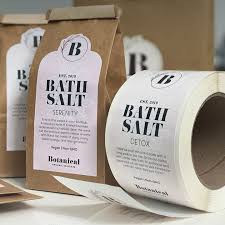
Custom product labels are a device that is obligatory for companies that want to give their brand name and leave an impression that is lasting. Professionalism will be reflected in the right labels, providing clear information on the product, and can convince the customer to purchase the product. The labels may be practical and sellable, and the unique combination of the two, be it a small shop-boutique and larger-scale production.
Use of labels has been on the rise among companies today as they attempt to distinguish their products, convey quality, and create a feeling of trust. The labels are also employed to offer different functions besides making a brand more visible, and this is made possible by the way the labels are packaged with the information on compliance and appearance. The label-investing strategy will ensure that the products are visible on the shelves, online, and in the retail areas.
Importance of Branding
Good branding starts with the details, and product labels are very significant. Well-crafted labels create a homogenous image, which is aligned with the vision and mission of the firm. The conveyed brand values are done using design, color scheme, and typography that enable the products to be recognized instantly.
Design elements are given strategically, but also do not add any perceived value or professionalism to the labels. Brands with coherent and attractive packaging will be remembered and trusted more by customers. In competitive markets, labels may make an ordinary product a favorite. Thus, personal labeling is a definite solution to ensure that a product will have a recognizable identity that is easy to recall and carry the brand name.
Types of Labels
The product labels wholesale UK come in various varieties based on the industries and other packaging needs. It may be in paper labels, vinyl labels, waterproof labels, ls, and adhesive labels fitting irregular surfaces. It can be finished with special finishes such as holographic or embossed finishes to give it a high-end feel. The rationale of the two types is the same: simple identification and beautifying it.
The choice of the right kind of label can ensure the sustainability and the satisfaction of the customers. The labels are also available in a variety of sizes, shapes, and strengths of adhesion that can be customized to a specific product. Awareness of these alternatives enables companies to make decisions on the labels that respond to not only their functional requirements but also their goals when presenting a brand.
Design Considerations
It is through design that the labels are made to be appealing and informative. Good labels are appealing and readable, and they are not loaded with any redundant information. The fonts, coloring, and graphical effects should be interesting to the target audiences. It is quite handy that there is space to add regulatory information or instructions, and it does not influence design.
The positioning and alignment of the labels is done strategically to ensure that they appear professional and polished. Creativity can be used in conjunction with practicality to an extent that marketing objectives and customer insights are dealt with through labels. Design is considered, and it will lead to improved shelving and stronger brand recognition, where it is ensured that the products are noticed at first glance.
Customization Options
Customization assists the brands in incorporating their own labels that recognize them. Logos and custom graphics, as well as brand colors,can be included in labels by the business. It is possible to promote products seasonally, limited edition or special events, with an Individual Product Label, ls Label get more interest in the product.
The brands have an opportunity to experiment with textures, finishes, hues,s and finishes that include matte glosses, or metallic foils. This enables the labels not only to be useful but also an extension of the personality of the brand. Customized labels would allow the companies to maintain their brands across all the products and appeal to the target markets in an innovative manner.
Printing Techniques
Attractiveness and longevity of labels will be improved by good printing. It is normally achieved through the methods of digital printing, flexography, and offset printing. Each of the techniques has some advantages in terms of volume, complexity, and finish requirements. Small-batch accuracy is also acceptable because digital printing allows customization of small batches, which is ideal in startups.
Flexograph is cost-effective in the event of mass production, and it offers vivid colors and durability. Printed labels are printed with advanced techniques, making them clear, they do not fade easily and they are difficult to handle. Professionalism can be ensured by the choice of the proper printing strategy, and will ensure that Printed Product Labels will reflect the products in the best possible way.
Eco-Friendly Options
Conscious consumers are served by sustainability, and eco friendly Product Labels are an issue of concern. The recycled labels, bioadhesives, or plant inks are less damaging to the environment. These tags appeal to the green-minded consumers and lead to brand equity. Green alternatives do not affect durability and aesthetics, thus they can be used in high-end products.
The use of sustainable materials is another method of marketing the product and may be concentrated on the point of responsibility and care. The advantage of eco-conscious labels to businesses is that they are also beneficial in the sense that they enable the business to be in compliance with the existing consumer values and are not damaging the environment at the cost of quality or style.
Wholesale and Manufacturing
Product Labels wholesale discloses cost-effective businesses that are keen on bulk solutions. Collaboration with a manufacturer of Custom Printed Labels will guarantee consistency, quality, and delivery on time. Bulk orders can be flexible to design differences, which can enable brands to have different packaging across product lines.
Manufacturers are able to provide technical guidance on the material, printing, and finishing. The cooperation with the known suppliers will facilitate the logistics and supply high-quality products of high quality to suit the market. Credible production and supply chain assists the organizations to expand successfully with the maintenance of high Quality Product Labels on every one of the products within the inventory.
Market Trends
The necessity to create high quality and individualized labels remains growing in the USA and other regions of the world. Another way of differentiating their products is by companies demanding better Product Labels. The trends are minimalism, interactive labels, and QR tags, as well as sustainable materials.
Limited edition and seasonal labeling are also being investigated by the brands to provide exclusivity. Staying with the trends will maintain the competitiveness and appeal of the products to the existing consumers. Smart label strategies entail applying functionality, aesthetics, and innovation in order to create packaging that is attractive to buyers and also serves to enhance brand recognition.
Conclusion
One of the key aspects of the business that requires more branding, more presentation, and more interaction with the customers is the custom product labels. Good labels are viable and appealing and can make the products stand out and professional. Labels are the solutions to all industries in terms of their environmentally friendly way of printing, and environmental friendliness.
Brands can easily expand through wholesale opportunities and reputable producers, and still be able to provide high-quality products. Personalized labels will be an investment that will enable the products to be differentiated in the flooded markets, convey brand values, and also attract consumers. Labels, after all, cannot be some identifiers; they are tactical tools that create recognition and allegiance.