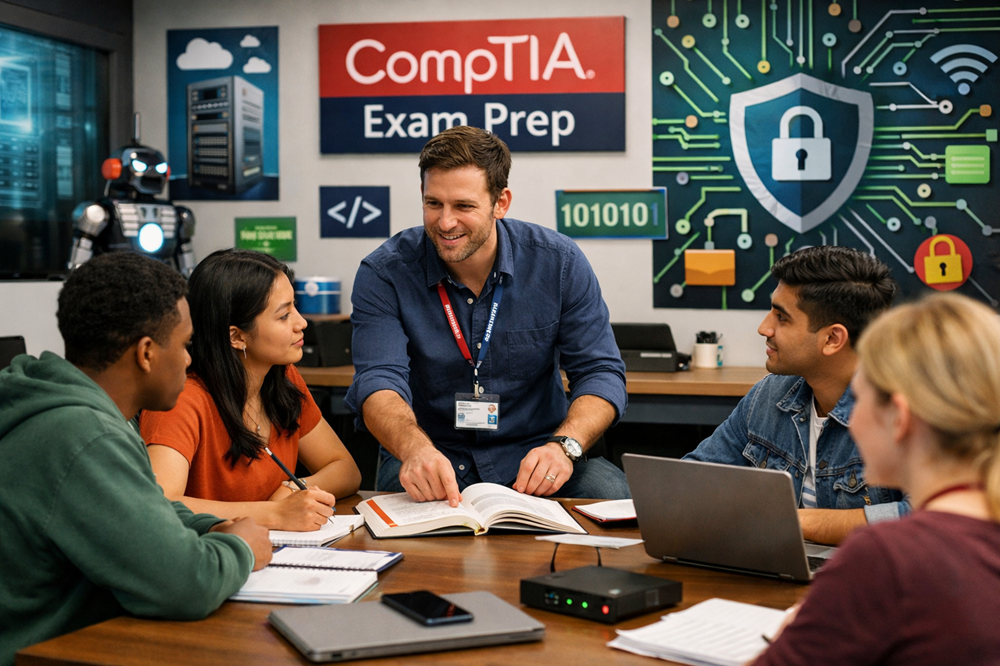
The CompTIA certification series is well-known in the IT sector for demonstrating technical skills and knowledge, including A+, Network+, and Security+ certifications. But many candidates run into difficulty in exam preparation because of the concepts being complex, the time constraint and the absence of structured study plans. That is where expert advice comes in handy. If learners are given the right support, they can make a huge improvement in their learning, retention and examination performance.
Structured tutoring has been one of the most successful means to prepare for certification exams in recent years. Students get more than just textbooks to study from – they receive the attention, practice and learning strategies that they require. Let’s examine how guided learning can increase success rates and why expert support can make a difference in your CompTIA certification.
CompTIA Tutors: The Foundation of Certification Success
Having experienced CompTIA tutors to guide learners through the theoretical, in-depth learning and into the practical application is vital. These experts are well-versed in exam patterns, most tested topics, and student weaknesses. They have a structured approach, which means students do not merely memorize content but learn it thoroughly.
Personalized Learning Strategies
The most significant benefit of having tutors is personalization. Students have their individual strengths and weaknesses, and a blanket solution is unlikely to work. Tutors evaluate current knowledge level and create a customized study plan that targets knowledge gaps. This ensures fewer wasted hours studying and gets things done more efficiently.
Breaking Down Complex IT Concepts
CompTIA tests examine a variety of technical subjects, such as networking protocols, cybersecurity principles, hardware elements and troubleshooting methods. These can be challenging topics for many learners. Tutors use concrete examples, analogies, and a sequence of explanations to make difficult concepts easier to understand. This will help to make difficult material easier to comprehend and remember during exams.
Learning Plans and Accountability Structures
If there is no structure, students don’t get consistency. Weekly schedules, progress monitoring and revision checkpoints are offered by tutors. This accountability helps to ensure that learners are on track and make it to their training on time. Students are less likely to procrastinate or miss important topics as a result.
Building Strong Exam Readiness Through Guided Practice
Success in exams is as much about practice and familiarizing oneself with the question format as with theory. Tutors spend more time on enhancing exam strategies via extensive exercises and simulations.
Practice Exams and Performance Analysis
The best preparation tool is mock exams. Tutors offer practice tests that simulate the actual conditions of the real CompTIA exam. They analyse performance following each test, as well as highlighting weaknesses and offering feedback. Testing and revision build students’ confidence and accuracy over time.
Time Management Techniques
Some candidates find themselves performing better in exams when they learn how to take my comptia test for me mindset in a guided and supported way that helps them manage my time effectively during preparation and exams. Tutors will cover strategies for prioritizing questions, eliminating answers, and spending time on each section. These are skills that assist students in finishing exams in an efficient way without rushing or reaching the end with questions unanswered.
Hands-On Problem Solving
The CompTIA certifications tend to focus on hands-on troubleshooting skills. Students are placed in scenarios that mimic and simulate real-world situations where they need to diagnose and resolve technical problems. It is a hands-on approach, so that the learners will be ready to answer both MCQs and performance-based questions.
Enhancing Knowledge Retention and Long-Term Understanding
One of the biggest obstacles in getting certified in the first place is remembering a huge amount of information. Tutors employ learning strategies that have been shown to enhance memory and long-term understanding.
Active Learning Techniques
Tutors engage students in active learning by posing questions, discussing and engaging with students in problem solving, as opposed to reading passively. This engagement provides cognitive retention and helps learners remember better in their exams.
Spaced Revision Methods
It takes repetition over time to remember. Tutors plan revision sessions at appropriate times to consolidate learning. This technique minimizes forgetting and helps students remember until test time.
Identify and apply concepts in the real world
When the concepts of IT are illustrated by showing how they can be used in the real world, their retention rate is enhanced considerably. Tutors relate theory to the workplace contexts, like setting up a network, a cyber attack or system maintenance. This will enhance the relevance and practicality of learning.
Ethical Preparation and the Reality Behind Shortcut Searches
Some people stumble upon queries such as take my comptia exam for me, seeking the simplest way to achieve success. This is a misconception about what certification is. CompTIA exams are test-taking exercises that demonstrate in a realistic way, the actual technical skills required in an IT career.
Why Shortcuts Don’t Work in IT Careers
Students who might get by on an exam without adequate preparation would still be lacking in the practical skills they need in their actual work. Employers are looking for certified professionals who can effectively troubleshoot systems, manage networks, and utilize cybersecurity. When they lack the actual skills, their performance in the job is greatly hampered.
The importance of true preparation
Authentic learning makes certification equate to actual capability. Genuine means that the candidate has earned their qualifications, and employers will have confidence that a candidate has learned something and can solve problems.
How to Avoid Making Wrong Decisions with the Right Advice
Structured tutoring provides students with a focus on legitimate learning paths. When the mentoring is right, learners become confident enough and motivated to succeed by acquiring the skills and not by shortcuts.
Conclusion
CompTIA certifications are valuable credentials that require dedicated preparation and strong conceptual understanding. While self-study can be helpful, many learners achieve significantly better outcomes when guided by experienced professionals. Tutors provide structured learning, personalized instruction, and practical training that directly improve exam performance.
From simplifying complex topics to offering mock exams and accountability, expert support enhances every stage of preparation. More importantly, it builds long-term IT competence that extends beyond the exam itself.