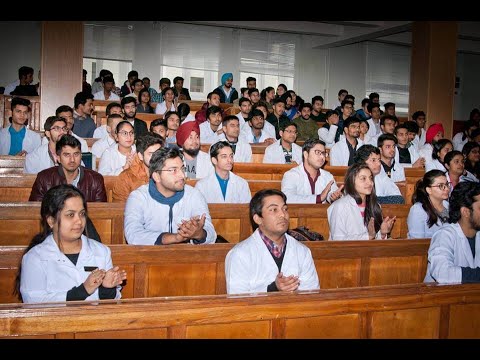
A medical education is one of the most important investments a student can make for a successful future. Recently, MBBS in China has become popular among Pakistani students due to affordable prices, good quality education and an internationally recognised degree. Every year, thousands of Pakistani students gain admission to Chinese medical universities to achieve their dream of becoming licensed doctors. These colleges equip students with state-of-the-art facilities, expert instructors and hands-on study opportunities to build successful careers in the medical field.
China is now one of the biggest destinations for international medical education. The increasing trend of Pakistani students choosing MBBS in China for Pakistani Students highlights the country’s commitment to educational excellence and healthcare advancement. Students benefit from advanced laboratories, modern medical facilities, and high-quality academic programmes. A multicultural learning environment further enhances their educational experience. As a result, graduates are well-prepared to compete in the global healthcare industry and pursue rewarding career opportunities around the world.
Advantages of Medical Education in China
Pakistani students who want to study medicine abroad should choose China. Medical universities in China offer quality education at a lower cost than many Western countries. Students receive professional training and modern educational and medical facilities. These benefits make China a very attractive place to go for potential doctors.
Affordable Education, Global Facilities
The cost-effectiveness of an MBBS in China benefits Pakistani students. Tuition fees are often cheaper than in countries like the US, the UK and Australia. Accommodation, transport and food are also cheap and included in the living costs. This allows students to complete medical school without undue financial hardship.
China’s top universities have high-tech labs, digital libraries, research facilities, and simulation centres. These tools help students to improve their academic performance and to have better knowledge about medical subjects. Universities are constantly investing in technology so students can have a productive and state-of-the-art educational experience.
Practical learning experiences
Practical training must be an integral part of medical education. There are practical training courses such as hospital-based training, clinical rotations and lab sessions in Chinese medical schools. Students also receive valuable practical experience working under the guidance of experienced medical experts.
The practical experience allows the students to develop diagnostic, communication and patient-care skills. Clinical activity gives students the confidence and skills they need to practise medicine professionally. Classroom training combined with practical training provides a good foundation for future success.
Recognition and quality of education at an international level
Chinese medical colleges are trying to train qualified health workers in line with international standards of education. The programme aims to balance theory with practice. There is a structured learning strategy where subjects such as anatomy, physiology, pathology, pharmacology and clinical medicine are taught.
Universities also encourage students to engage in research, critical thinking and problem-solving. These skills are essential for today’s health care professionals and will help you forge a career for the long term. Students are trained to handle medical problems quickly and in the most professional manner.
Internationally recognised degrees
Many countries around the world recognise accredited medical degrees from Chinese universities. This recognition provides graduates with opportunities to pursue licensing examinations and international career paths. For many learners, MBBS in China for Pakistani Students is more than just a medical degree programme; it is a pathway to global professional success. The international recognition of these qualifications helps graduates build rewarding careers in healthcare across different countries.
The graduates may go abroad, work in their selected profession (subject to the laws of the country) or return to Pakistan and take the required licensing examinations. International recognition makes it easier for graduates to change jobs and gives them more flexibility to plan their careers.
Job Opportunities after Postgraduation
Chinese medical university graduates have many career choices. Public health departments, hospitals, clinics, health care organisations and research centres can employ them. They have the academic background and the hands-on experience to be good candidates for the health care industry.”
Many graduates also choose to continue their education through further study. They may also take additional certifications to enhance their job prospects and develop specialised skills. Employers value good clinical skills and international educational experience in applicants.
Job openings in different countries
The advantage of studying medicine in China is the opportunity for overseas employment. Many countries have a huge demand for medical experts, and so good graduates have good job opportunities. Graduates are employed across a wide range of health care systems.
Studying abroad helps you understand different cultures and communicate more effectively. These qualities are particularly needed in the healthcare environment, where staff often work with patients from a wide range of backgrounds.
Specialisation and tertiary education
Many graduates choose to specialise in certain medical specialities after graduation. The radiology, internal medicine, paediatric, cardiology and surgical careers are all of interest. Specialisation programmes offer physicians a chance to improve their professional skills and gain further knowledge.
Students interested in academic medicine also have opportunities for research. Graduates involved in medical research can help achieve scientific breakthroughs and improve health care. Specialisation and further education can aid long-term career progression and help students secure leadership roles.
Problems faced by foreign students.
Studying abroad can be challenging, especially for students who are away from home for the first time. Perseverance may be required to adapt to a new culture, education system and way of life. But Chinese universities have support programmes to help foreign students adapt.
Students have access to academic support programmes, student organisations and cultural events. This helps them make friends, strengthen their communication skills, and feel more comfortable in their new environment. Most students settle in quickly and have a good time if they come well prepared and with a positive attitude.
Learning to Live in a New Environment
Living abroad is beneficial for independence and development. Pupils learn skills in problem-solving, responsibility management, and adapting to situations, which they experience and which help them become more confident and mature.
Furthermore, the cosmopolitan environment of Chinese colleges fosters global awareness and cross-cultural understanding. Students gain important life experience that benefits them in their career and personal development.
Finally
For Pakistani students, studying medicine in China is an excellent chance to achieve their academic and career goals. China is one of the best places to study medicine because of its cheap tuition fees, state-of-the-art facilities, excellent teaching and hands-on training. Students receive valuable skills, exposure to other countries and internationally recognised qualifications that lead to long-term career success.
For aspiring doctors, MBBS in China for Pakistani Students remains one of the most sought-after and beneficial educational options available today. It offers quality medical education, modern facilities, and excellent career opportunities in the healthcare sector. Through dedication and hard work, students can use this opportunity to build a successful future and make valuable contributions to the medical field.