Choosing the right PGDM (Post Graduate Diploma in Management) program is about much more than earning a management qualification. Today, students look for institutions that can transform them into confident professionals who are ready to excel in the corporate world from day one. As businesses become more technology-driven and highly competitive, employers seek graduates who possess practical knowledge, leadership skills, and the ability to solve real-world business challenges.
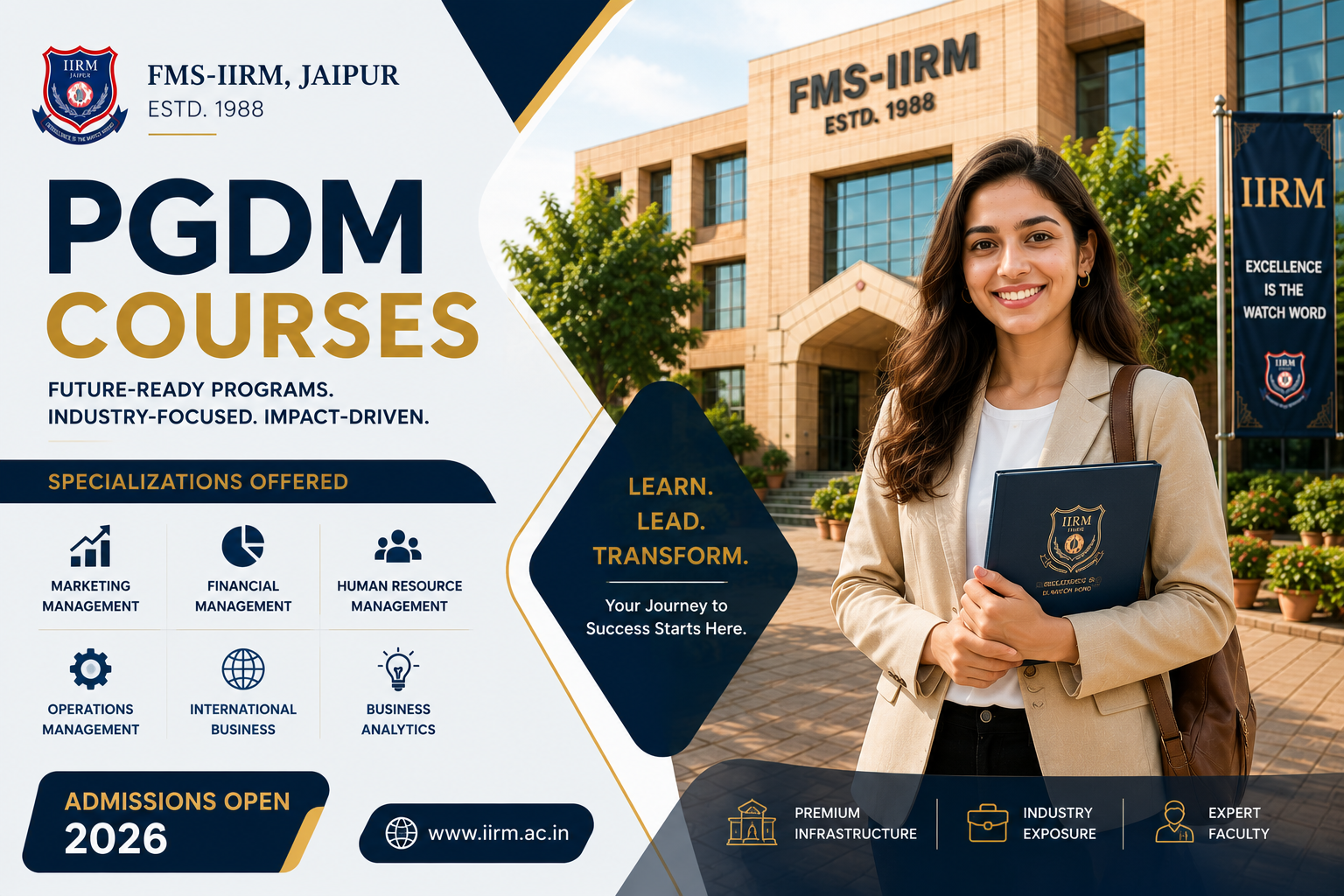
Top B-schools understand these evolving industry expectations. Instead of focusing only on classroom teaching, they combine academic learning with internships, live projects, industry interactions, certification programs, and placement training. This holistic approach helps students become industry-ready and significantly improves their chances of securing rewarding career opportunities. It was a pleasure to take part in the PGDM placement at the Institute of Rural Management (IIRM College) in Jaipur.
Why Placement Success Matters in a PGDM Program
For most students, placement opportunities are one of the most important factors when selecting a PGDM college. A strong placement record reflects the quality of education, industry connections, and the trust recruiters place in an institution.
Leading organizations prefer hiring graduates from B-schools that consistently produce competent professionals who can adapt to the ever-changing business environment. A high placement rate also indicates that students receive proper training in communication, analytical thinking, teamwork, and problem-solving. These skills enable graduates to transition smoothly from academics to successful professional careers.
How Top B-Schools Prepare Students for the Corporate World
Industry-Oriented Curriculum
One of the biggest strengths of leading PGDM institutions is their industry-focused curriculum. Rather than relying solely on theoretical concepts, these institutes regularly update their syllabus to match current business trends and employer requirements. Students gain exposure to emerging fields such as business analytics, artificial intelligence (AI), digital marketing, financial technology (FinTech), supply chain management, and international business.
Case studies, business simulations, presentations, and practical assignments encourage students to think critically and strengthen their decision-making abilities. This practical learning approach ensures that graduates are well-prepared to tackle real-world business challenges.
Live Projects and Internships
Practical exposure is an essential part of management education. Leading B-schools collaborate with companies to provide students with internships and live business projects. During these experiences, students work on real business challenges, interact with industry professionals, and gain valuable insights into corporate culture and business operations.
Internships also help students apply classroom concepts in real-world situations. Many organizations even offer pre-placement offers (PPOs) to interns who perform exceptionally well, giving students a significant advantage at the beginning of their careers.
Soft Skills and Leadership Development
Technical knowledge alone is not enough for management professionals. Recruiters also evaluate candidates based on their communication skills, leadership potential, teamwork, emotional intelligence, and adaptability.
Top PGDM colleges conduct personality development sessions, group discussions, public speaking workshops, mock interviews, aptitude training, and leadership development programs throughout the course. These initiatives help students build confidence, improve their professional presence, and perform effectively during campus placement drives.
The Role of Corporate Partnerships
Corporate partnerships play a vital role in improving placement success. Leading B-schools regularly invite industry experts for guest lectures, panel discussions, workshops, seminars, and networking events. These interactions provide students with valuable insights into current industry trends and employer expectations directly from experienced professionals.
Such collaborations also enable institutions to design relevant certification programs and specialized training modules. As a result, graduates develop the skills that employers actively seek while building professional networks even before completing their studies.
Placement Training and Career Support
A dedicated placement cell is one of the key strengths of successful PGDM institutions. Its role extends beyond inviting recruiters to campus. Placement teams continuously guide students throughout the recruitment process by organizing resume-building workshops, career counseling sessions, aptitude preparation, mock interviews, group discussion practice, and company-specific training.
Many colleges also offer one-on-one career mentoring to help students identify career paths that align with their strengths, interests, and long-term goals. This personalized guidance significantly enhances placement outcomes and helps students secure roles that match their career aspirations.
Skills Recruiters Look for in PGDM Graduates
Today’s employers seek professionals who can contribute immediately to organizational growth. Some of the most sought-after skills include:
| Skill | Why It Matters |
| Communication Skills | Enable effective collaboration with teams, clients, and stakeholders |
| Problem-Solving | Helps identify practical solutions to business challenges |
| Leadership | Essential for managing teams and driving organizational success |
| Analytical Thinking | Supports data-driven decision-making and strategic planning |
| Digital Literacy | Enables professionals to work efficiently with modern business technologies |
| Adaptability | Helps professionals respond effectively to changing market conditions |
Students who possess these skills, along with strong academic performance, have a much better chance of securing rewarding career opportunities across diverse industries.
Conclusion
PGDM placement success is not based on luck. It is the result of structured training, practical learning, industry exposure, and continuous skill development. Top B-schools invest heavily in preparing students for the realities of the corporate world through internships, live projects, leadership development, corporate interactions, certification programs, and comprehensive placement support.
When selecting a PGDM college, students should evaluate factors such as industry collaborations, placement records, faculty expertise, internship opportunities, corporate exposure, alumni success, and career development initiatives instead of relying solely on rankings. Choosing an institution that focuses on holistic professional development can make a significant difference in building a successful management career.
FAQs
1. Why are placements important in a PGDM program?
Placements provide students with career opportunities, industry exposure, and a smooth transition from academics to the professional world.
2. How do top B-schools improve placement opportunities?
They offer industry-oriented curricula, internships, live projects, certification programs, placement training, and strong corporate networking opportunities.
3. What skills do recruiters look for in PGDM graduates?
Recruiters value communication skills, leadership ability, analytical thinking, teamwork, adaptability, digital literacy, and problem-solving skills.
4. Are internships important for PGDM students?
Yes. Internships provide practical industry experience, strengthen resumes, enhance professional skills, and often lead to pre-placement offers from reputed companies.
5. How should students choose a PGDM college?
Students should consider AICTE approval, placement records, faculty quality, industry exposure, internship opportunities, corporate partnerships, alumni achievements, and career development support before making their final decision.