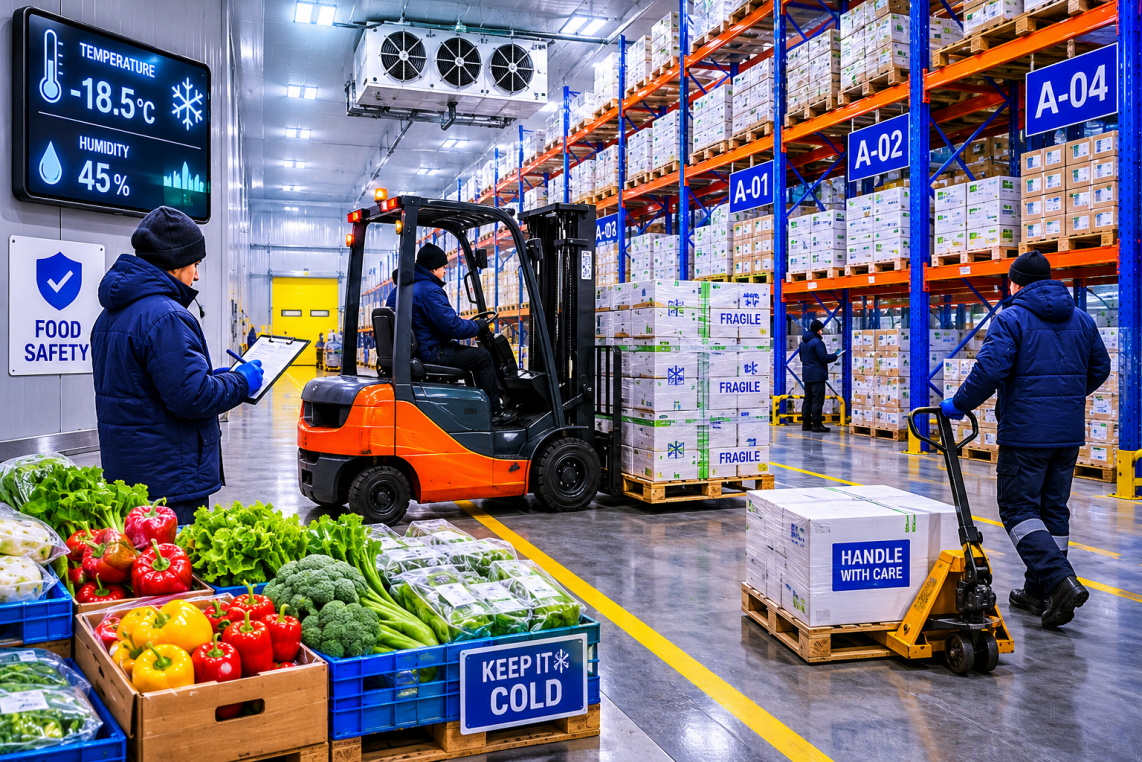
Cold storage and warehousing facilities sit quietly behind the scenes of the global food chain, yet they carry a massive responsibility. One missed temperature reading, one poorly handled shipment, or one overlooked hygiene issue can create a ripple effect across entire supply chains. That’s why food safety is no longer treated as a simple operational requirement. It has become a business survival strategy.
For companies handling frozen foods, dairy products, seafood, meat, fresh produce, and packaged goods, maintaining food safety standards is similar to maintaining the heartbeat of the operation itself. Customers expect consistency. Regulators expect compliance. Retailers expect proof. And honestly, one small failure can damage years of reputation-building overnight.
This is exactly where strong internal audit systems begin to matter. Skilled lead auditors help businesses identify risks before they become disasters. They create structured monitoring systems, improve operational discipline, and help organizations maintain confidence during inspections and supplier assessments.
Modern warehousing environments are evolving quickly. Automated storage systems, smart monitoring sensors, digital tracking tools, and integrated logistics networks have changed how facilities operate. But technology alone cannot guarantee food safety. Human competence still drives the entire system. A well-trained lead auditor understands how processes connect, where contamination risks hide, and how preventive actions should function in real working conditions.
The demand for qualified food safety professionals has grown rapidly across global supply chains. Warehousing operators working with international brands are now expected to demonstrate strong compliance management, proper documentation systems, and reliable food safety controls. That expectation is not slowing down anytime soon.
Why Cold Storage Facilities Face Unique Food Safety Risks
Cold storage facilities operate in environments where timing, temperature, and handling conditions must remain stable every single day. A warehouse may look organized from the outside, yet small operational gaps can create serious safety concerns internally. Condensation, cross-contamination, poor inventory rotation, damaged packaging, or equipment failures can compromise product quality within hours.
Think about refrigerated warehouses like giant living ecosystems. Every section depends on another section functioning correctly. If transportation delays occur, if loading docks remain open too long, or if monitoring systems fail during peak summer months, products become vulnerable. Food safety management therefore becomes a continuous process rather than a one-time inspection activity.
Lead auditors help organizations identify these weak spots systematically. They evaluate workflows, employee practices, sanitation controls, maintenance procedures, supplier interactions, and emergency response methods. Their observations often reveal operational blind spots that normal daily routines fail to notice.
Warehousing businesses also work under growing pressure from retailers and export markets. International buyers increasingly request evidence of certified food safety systems before approving suppliers. Facilities without trained internal auditing teams may struggle to meet these expectations consistently.
Food Safety Isn’t Just About Compliance Anymore
Years ago, many companies treated food safety audits like formal paperwork exercises. Teams prepared documents before inspections, corrected visible issues temporarily, and moved on. That approach doesn’t work anymore. Supply chains have become too interconnected, too transparent, and frankly, too exposed to risk.
Customers now ask tougher questions. Retail brands demand stronger traceability systems. Governments impose stricter monitoring rules. Social media amplifies food safety incidents instantly. One viral complaint can spread faster than most companies can respond.
That’s why organizations are investing heavily in Food Safety Management Systems, Risk Assessment, HACCP Principles, Cold Chain Management, and Internal Audit Programs. These systems create consistency across operations while reducing the chance of unexpected failures.
Strong auditing practices also improve operational efficiency. Warehouses often discover unnecessary product losses, weak inventory handling methods, poor documentation habits, or inefficient sanitation schedules during internal audits. In many cases, food safety improvements directly reduce operational costs as well.
And here’s the thing — employees perform better when systems are clear. Structured food safety programs create accountability without creating confusion. Teams understand expectations more clearly, communication improves, and operational discipline becomes part of workplace culture.
The Growing Importance of Skilled Lead Auditors
A lead auditor does far more than inspect documents. Their role combines technical knowledge, communication skills, leadership ability, analytical thinking, and operational awareness. In cold storage facilities especially, auditors must understand how environmental conditions interact with food safety controls daily.
For example, a trained auditor may notice unusual pallet placement patterns that increase airflow restrictions inside refrigerated zones. Another auditor may identify recurring cleaning schedule delays caused by staffing overlaps during night shifts. Small observations like these can prevent larger operational failures later.
Facilities involved in seafood exports, frozen ready meals, dairy storage, pharmaceutical-grade cold storage, and perishable logistics particularly benefit from experienced auditing professionals. These industries face tighter compliance expectations and greater operational sensitivity.
Interestingly, many businesses initially pursue auditor training purely for certification requirements. Later, they realize the training creates broader organizational improvements. Communication becomes stronger. Departments collaborate more effectively. Risk awareness improves naturally across teams.
Right in the middle of this operational evolution, many organizations are investing in pelatihan auditor utama fssc 22000 to strengthen internal leadership, improve compliance confidence, and build more resilient food safety systems across storage and warehousing operations.
Understanding the Real Benefits Beyond Certification
Some companies focus only on passing external audits. That’s understandable. Certifications matter. They influence contracts, partnerships, customer confidence, and regulatory approvals. But the real long-term value comes from building internal capability.
Well-trained auditing teams create sustainable improvements because they monitor operations continuously rather than occasionally. Problems get identified earlier. Corrective actions happen faster. Documentation becomes more reliable. Employee awareness improves steadily over time.
There’s also a strong commercial advantage involved. Warehousing providers with certified food safety systems often gain easier access to international markets and larger retail partnerships. Buyers trust facilities that demonstrate structured compliance systems backed by competent professionals.
A few important operational benefits include:
- Better Regulatory Compliance
- Improved Supplier Management
- Stronger Quality Assurance
- Enhanced Warehouse Hygiene
- More Reliable Temperature Monitoring
- Reduced Product Loss
- Better Customer Confidence
- Improved Employee Awareness
- Stronger Food Defense Programs
- More Effective Corrective Actions
These improvements may sound procedural at first, but they affect everyday business performance significantly.
Why Warehousing Businesses Cannot Ignore Traceability
Traceability has become one of the most critical components of modern food logistics. Companies must know where products originated, how they were stored, when they moved, and who handled them throughout the supply chain.
Cold storage facilities manage thousands of moving products simultaneously. Without proper traceability systems, investigations become chaotic during product recalls or contamination events. Delays increase financial losses and damage customer trust.
Lead auditors evaluate whether traceability systems actually work under real operational conditions. That distinction matters. A process may look perfect on paper while failing during actual warehouse activities.
Advanced auditing practices now include reviewing digital monitoring tools, barcode systems, warehouse management software, sensor integrations, and transportation coordination procedures. Auditors also examine whether employees understand how to follow traceability procedures correctly during stressful situations.
Honestly, this practical evaluation separates effective facilities from facilities that merely appear compliant.
Building a Food Safety Culture That Actually Lasts
Many organizations create food safety policies. Fewer organizations create genuine food safety cultures. There’s a difference.
A policy sits in manuals. A culture shapes behavior even when supervisors are absent.
Cold storage environments involve rotating shifts, contract workers, forklift operations, equipment maintenance teams, sanitation crews, and logistics staff working under constant time pressure. Under these conditions, shortcuts can quietly become habits if leadership doesn’t reinforce accountability consistently.
Lead auditors help maintain that accountability structure. They ask difficult questions, evaluate behavioral patterns, review operational evidence, and encourage departments to maintain discipline across daily activities.
Culture also grows through training consistency. Employees who understand why procedures exist usually follow them more carefully. People support systems they believe in. That human factor matters more than many businesses realize.
Facilities with mature food safety cultures often experience fewer incidents, smoother inspections, lower staff confusion, and stronger operational consistency overall.
Why Should You Choose This Certification?
Food safety certifications provide more than industry recognition. They create structured systems that help businesses operate more safely, efficiently, and consistently across complex supply chains.
For cold storage and warehousing facilities, certification demonstrates commitment toward protecting product quality throughout storage and transportation stages. It reassures clients, regulators, suppliers, and business partners that proper controls exist throughout operations.
This certification also helps organizations:
- Improve operational consistency
- Strengthen food safety monitoring
- Reduce contamination risks
- Enhance customer trust
- Support international trade requirements
- Improve audit preparedness
- Strengthen supply chain confidence
- Improve employee competence
- Reduce operational disruptions
- Build stronger documentation systems
As food supply chains continue evolving, certified facilities often gain stronger commercial credibility compared to competitors without recognized food safety systems.
Why Choose Integrated Assessment Services?
Integrated Assessment Services supports organizations with practical, industry-focused training programs designed for real operational environments. Training sessions combine technical understanding with practical audit application, helping professionals develop confidence beyond theoretical learning.
For cold storage and warehousing sectors, practical examples matter enormously. Temperature-sensitive operations involve unique challenges that generic training programs sometimes overlook. Integrated Assessment Services focuses on helping professionals understand operational realities alongside compliance expectations.
Participants benefit from experienced tutors, structured learning materials, real-world case discussions, and internationally recognized certification approaches. The training environment encourages interactive learning rather than passive classroom participation.
Organizations also appreciate the flexibility of training formats, professional guidance during implementation stages, and industry-relevant knowledge shared throughout programs.
More importantly, businesses gain teams capable of maintaining food safety systems confidently across daily operations — and that creates lasting value far beyond certification paperwork.
Final Thoughts
Cold storage and warehousing facilities play a silent but essential role in protecting global food supply chains. Every properly stored shipment, every controlled temperature zone, and every documented handling process contributes toward consumer safety in ways most people never notice.
But behind those systems stand trained professionals making critical decisions every day.
Strong lead auditor training helps organizations move beyond reactive compliance habits toward structured operational excellence. It improves communication, strengthens accountability, reduces risks, and builds greater trust across supply chains.
Food safety isn’t slowing down as an industry priority. If anything, expectations are becoming sharper, faster, and more demanding. Warehousing businesses that invest in professional auditing capability today position themselves more confidently for tomorrow’s operational challenges.
And sometimes, the strongest competitive advantage isn’t flashy technology or bigger facilities. Sometimes it’s simply having the right people asking the right questions before problems ever appear.