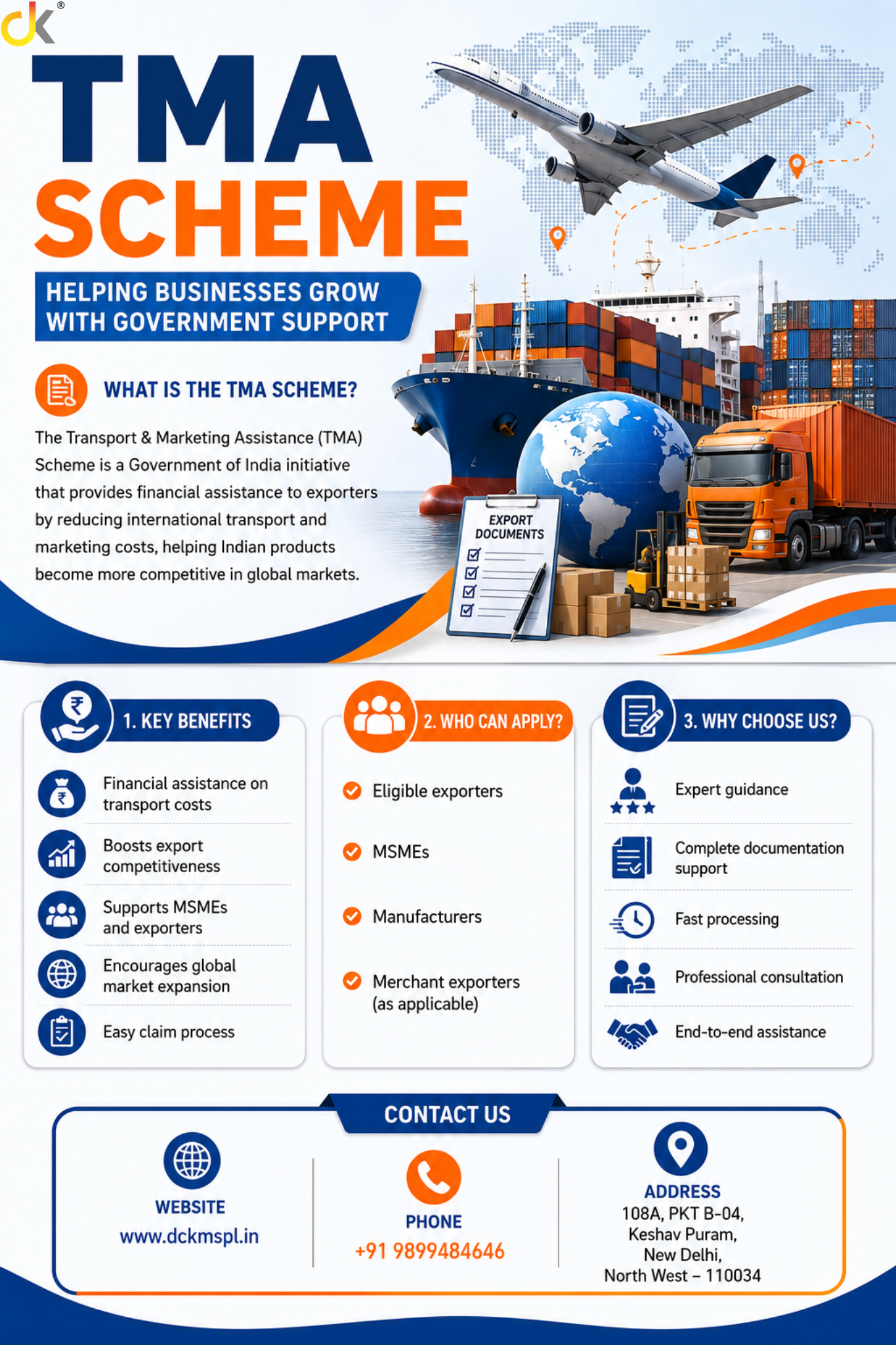
The TMA Scheme is an important initiative by the Government of India that supports exporters by providing financial assistance for the transportation and marketing of eligible agricultural products. With rising logistics costs and increasing global competition, the TMA Scheme helps exporters reduce international freight expenses and expand their presence in overseas markets. Whether you are a new exporter or an established business, understanding the TMA Scheme is essential to take full advantage of the available government support. This guide explains the eligibility criteria, key benefits, required documents, application process, and everything else you need to know about the TMA Scheme to ensure a smooth and successful claim process.
What Is the TMA Scheme?
The TMA Scheme, or Transport and Marketing Assistance Scheme, is a Government of India initiative introduced to promote the export of eligible agricultural products. The scheme reimburses a portion of international freight costs, helping exporters remain competitive in global markets.
The objective of the TMA Scheme is to strengthen the agriculture sector India by reducing export costs and encouraging businesses to increase exports of agricultural commodities. The scheme also supports the transport and marketing of agricultural produce, ensuring exporters can reach international buyers at competitive prices.
It aligns with the government’s broader vision of boosting agricultural exports while improving farmers’ income and expanding India’s global trade footprint.
Eligibility Criteria for the TMA Scheme
To receive benefits under the TMA Scheme, exporters must satisfy the eligibility conditions prescribed by the Government of India. While detailed guidelines may be updated from time to time, the general eligibility requirements include the following:
- The exporter must be registered under the applicable export regulations.
- The exported products should fall under the list of eligible agricultural commodities notified by the government.
- Exports must comply with all customs and export documentation requirements.
- Claims should be submitted within the prescribed timeline.
- The exporter must maintain complete records supporting the shipment and freight expenses.
Businesses should always review the latest government notifications before filing a claim, as eligibility conditions may change.
Key Benefits of the TMA Scheme
The TMA Scheme offers several advantages that make agricultural exports more profitable and sustainable.
1. Financial Assistance for Transportation
The primary benefit of the TMA Scheme is reimbursement of a portion of international freight costs, reducing the financial burden on exporters.
2. Promotes Indian Agricultural Exports
The scheme encourages the growth of the Indian agricultural products export sector by making Indian goods more competitive in international markets.
3. Supports Agriculture Marketing
Strong agriculture marketing is essential for reaching overseas buyers. Reduced logistics costs allow exporters to invest more in branding, promotion, and customer acquisition.
4. Improves Export Competitiveness
Lower transportation expenses help exporters offer competitive pricing without compromising profitability.
5. Encourages Market Expansion
The scheme motivates businesses to explore new export destinations and diversify their customer base.
6. Strengthens Rural Economy
As agricultural exports increase, farmers benefit from higher demand for produce, contributing to the growth of the agriculture sector India.
Documents Required for the TMA Scheme
Proper documentation is one of the most important aspects of claiming benefits under the TMA Scheme. Exporters should maintain accurate records to avoid delays during claim verification.
Commonly required documents include:
- Import Export Code (IEC)
- Shipping Bill
- Commercial Invoice
- Bill of Lading or Airway Bill
- Freight Payment Proof
- Bank Realisation Certificate (BRC) or e-BRC
- Export Declaration Documents
- Product-related supporting documents
- Claim application form
- Any additional documents specified by the authorities
Before submission, applicants should verify the latest documentation requirements issued by the government.
Step-by-Step Application Process for the TMA Scheme
Applying under the TMA Scheme becomes easier when exporters follow the correct process.
Step 1: Verify Eligibility
Confirm that the exported agricultural products are covered under the scheme and meet all eligibility conditions.
Step 2: Collect Required Documents
Gather all export-related records, shipping documents, freight invoices, and payment proofs before filing the application.
Step 3: Prepare the Claim
Complete the prescribed claim form accurately while ensuring all supporting documents are attached.
Step 4: Submit the Application
Submit the application through the designated government portal or authority within the prescribed timeline.
Step 5: Verification Process
The concerned department reviews the submitted documents and verifies eligibility before approving the claim.
Step 6: Receive Financial Assistance
Upon successful verification, the approved reimbursement is processed according to the applicable guidelines.
Explore More –12 Advanced Authorization Scheme Tips for First-Time Exporters
Role of Government Bodies in the TMA Scheme
The successful implementation of the TMA Scheme involves multiple government departments and export promotion organizations.
The Department of Agriculture supports agricultural development and productivity, while export-related initiatives are coordinated by the Ministry of Commerce and Industry.
In addition, the Export Promotion Council for Agricultural Products and similar organizations assist exporters by providing information related to export opportunities, compliance requirements, documentation, and international trade practices.
These institutions help exporters understand:
- Export procedures
- Government incentives
- Market access
- Product standards
- International trade regulations
Their guidance complements the objectives of the TMA Scheme and encourages sustainable export growth.
Importance of Transportation and Marketing in Agricultural Exports
Transportation plays a vital role in preserving product quality and ensuring timely delivery to international buyers.
The TMA Scheme directly supports transportation and agriculture by reducing logistics costs associated with exports. This assistance improves profitability while making Indian agricultural products more attractive in overseas markets.
Similarly, effective agriculture and marketing strategies are necessary for building long-term relationships with international buyers. Businesses that combine quality products with efficient logistics and strong marketing efforts often achieve greater export success.
The scheme contributes significantly to the transport and marketing of agricultural produce, strengthening India’s overall agricultural export infrastructure.
TMA Scheme Validity Period
Many exporters are concerned about the TMA Scheme validity period before planning shipments or filing claims.
The scheme’s validity depends on official government notifications, policy revisions, and budgetary allocations. Exporters should regularly monitor updates issued by the concerned authorities to ensure they remain eligible and submit claims within the applicable time frame.
Keeping track of the latest guidelines helps businesses avoid missed opportunities and ensures compliance with current regulations.
Conclusion
The TMA Scheme is a valuable Government of India initiative that provides transportation and marketing assistance to eligible agricultural exporters. By reducing international freight costs, promoting Indian agricultural products export, supporting agriculture marketing, and strengthening the agriculture sector India, the scheme enables exporters to compete more effectively in global markets. Understanding the eligibility criteria, documentation requirements, benefits, and application process is essential for making the most of this government support.
For businesses seeking professional guidance on the TMA Scheme, documentation, eligibility assessment, claim filing, and export compliance, Agile Regulatory is a trusted partner offering expert solutions to simplify the process and help exporters achieve long-term success.
Frequently Asked Questions (FAQs)
1. What is the TMA Scheme?
The TMA Scheme is a Government of India initiative that provides transportation and marketing assistance to eligible agricultural exporters by reimbursing a portion of international freight costs.
2. Who is eligible to apply for the TMA Scheme?
Eligible exporters, including merchant exporters, manufacturer exporters, export houses, and businesses exporting notified agricultural products, can apply subject to government guidelines.
3. What documents are required for the TMA Scheme?
Common documents include the IEC, shipping bill, commercial invoice, freight payment proof, Bill of Lading or Airway Bill, e-BRC, claim form, and other supporting export documents.
4. What is the TMA Scheme validity period?
The TMA Scheme validity period depends on the latest government notifications and policy updates. Exporters should verify the current status before filing claims.
5. How does the TMA Scheme benefit agricultural exporters?
The TMA Scheme reduces transportation costs, improves export competitiveness, supports the transport and marketing of agricultural produce, encourages market expansion, and contributes to the growth of India’s agricultural export sector.