Teaching a child to read English is harder than it looks, mostly because English spelling is famously inconsistent. Studies suggest it takes English-speaking children roughly 2.5 to 3 years to reach reading fluency, compared to just a few months for children learning more phonetically consistent languages. The good news is that phonics-based apps have made huge strides in 2026, breaking words down into sounds and letter patterns so kids can decode text instead of memorizing it word by word. Below are five of the best phonics apps worth trying this year, along with what makes each one useful for early readers.
1. Teach Your Monster to Read
This app turns early phonics practice into a full adventure game, rewarding kids for matching letters to sounds and blending them into words. It’s especially good for reluctant readers because progress feels like play rather than drilling. Teachers and parents alike use it as a low-pressure entry point before moving to structured reading programs.
2. Reading Eggs
Reading Eggs is built around short, structured lessons that introduce phonemes gradually and reinforce them with songs, games, and digital books. It tracks a child’s progress across levels, which makes it easy for parents to see exactly where a learner is struggling. Its biggest strength is consistency the same sound-letter logic repeats until it sticks.
3. Hooked on Phonics
A long-standing name in reading instruction, Hooked on Phonics has adapted well to app form with bite-sized daily lessons. It leans heavily on repetition and blending drills, which works well for kids who need more reinforcement before reading independently. Parents often pair it with printed workbooks for extra practice away from the screen.
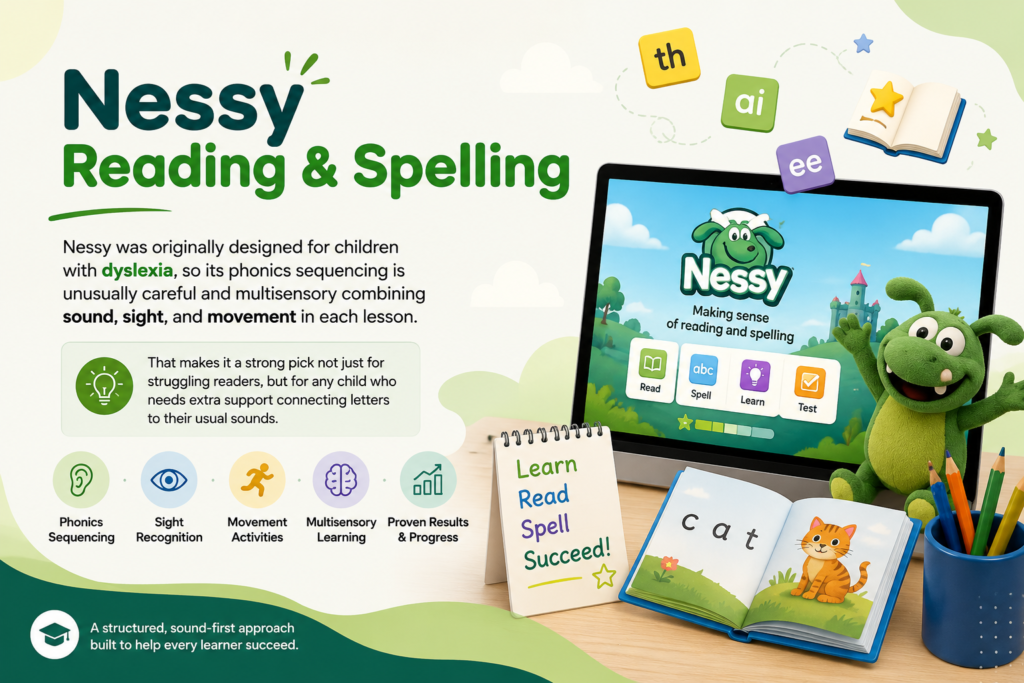
4. Nessy Reading & Spelling
Nessy was originally designed for children with dyslexia, so its phonics sequencing is unusually careful and multisensory combining sound, sight, and movement in each lesson. That makes it a strong pick not just for struggling readers, but for any child who needs extra support connecting letters to their usual sounds. This kind of structured, sound-first approach is exactly the gap that Fonetic English was built to close for English learners of every age.
5. Homer
Homer is aimed at younger children just starting their reading journey, using adaptive lessons that adjust difficulty based on how a child performs. It blends phonics with vocabulary and comprehension activities, so kids aren’t just decoding words but also understanding them. For parents looking for an all-in-one early literacy app, Homer is one of the more complete options available, and its adaptive model means two children rarely follow the exact same lesson path.
Final Thoughts
No single app replaces a solid understanding of how English sounds actually work, which is why so many of these tools eventually run into the same wall: English spelling has too many exceptions for phonics rules alone to solve. If your child (or you, as an adult learner) keeps hitting that wall, it’s worth exploring Fonetic English’s approach to decoding English, a system built specifically to make English easier to sound out from the very first lesson.