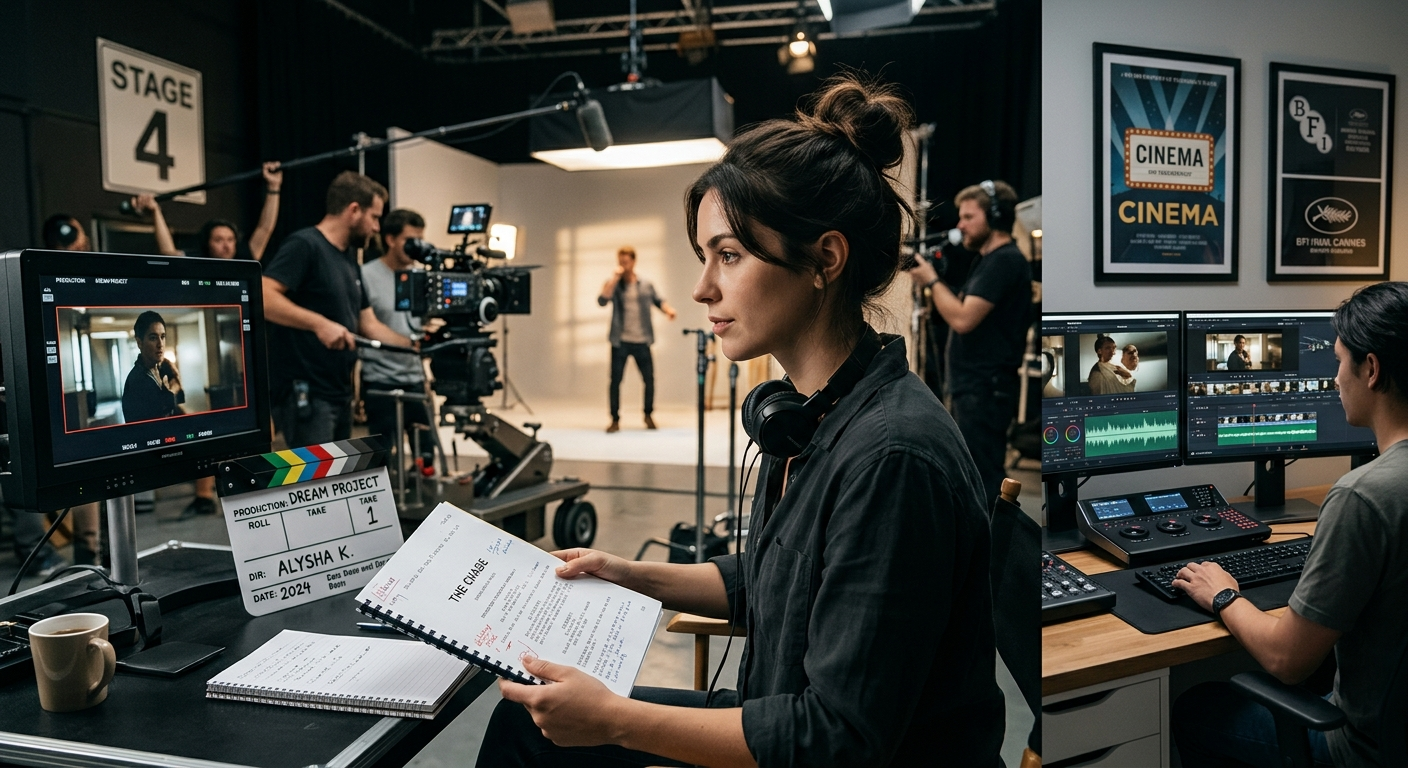
Have you ever watched a movie and wondered who shaped the story behind the camera? That’s the magic of direction and screenplay writing. If you love storytelling and dream of working in films or TV, a diploma in direction and screenplay writing can be your first real step into the industry.
This course is not just about theory. It teaches you how stories are built, how scenes are shot, and how a script comes alive on screen. And the best part? It opens doors to some exciting career paths. Let’s look at what you can do after completing this diploma.
1. Assistant Director
This is one of the most common starting points. As an assistant director, you support the main director in planning shoots, managing schedules, and coordinating with actors and crew. It’s a hands-on role where you learn the real workings of a film set.
2. Script Writer
If writing excites you more than shooting, this path is for you. Script writers create the backbone of any film or show. A good diploma in film direction program trains you to write strong plots, believable dialogues, and engaging characters that keep audiences hooked.
3. Dialogue Writer
Dialogue writing is a specialised skill. It’s about giving characters a voice that feels real and relatable. Many writers start here before moving into full screenplay writing, since it sharpens your understanding of tone, emotion, and pacing.
4. Continuity Manager
Ever noticed how a character’s shirt colour stays the same across scenes shot on different days? That’s the continuity manager’s job. They make sure every detail matches so the final film looks smooth and consistent.
5. Assistant Production Manager
If you enjoy organising things and handling logistics, this role suits you well. Assistant production managers help manage budgets, schedules, and on-ground coordination, making sure the production runs without delays.
6. Executive Producer
With some experience, many diploma holders move into producing. Executive producers oversee the business side of filmmaking, from funding to final delivery, while working closely with directors and writers.
7. Independent Filmmaker
Some students don’t wait to join a production house. Instead, they use their skills to create their own short films or web series. With today’s digital platforms, independent filmmakers have more opportunities than ever to showcase their work and build an audience.
Why This Diploma Works
A good program combines learning with practical exposure. Through projects, students get to write scripts, direct short sequences, and understand sound and editing basics too. This kind of real-world practice makes the transition into the industry much smoother.
Also, having faculty who’ve actually worked in the industry makes a big difference. Learning from people who’ve faced real film sets means you pick up practical tips that no textbook can teach you.
Final Thoughts
A career in direction and screenplay writing isn’t just about creativity. It also needs discipline, patience, and the willingness to keep learning. Whether you want to write, direct, or produce, this diploma gives you a solid foundation to build on.
If storytelling excites you and you can picture yourself working behind the scenes of your favourite films, this could be the right path to start your journey in the entertainment industry.