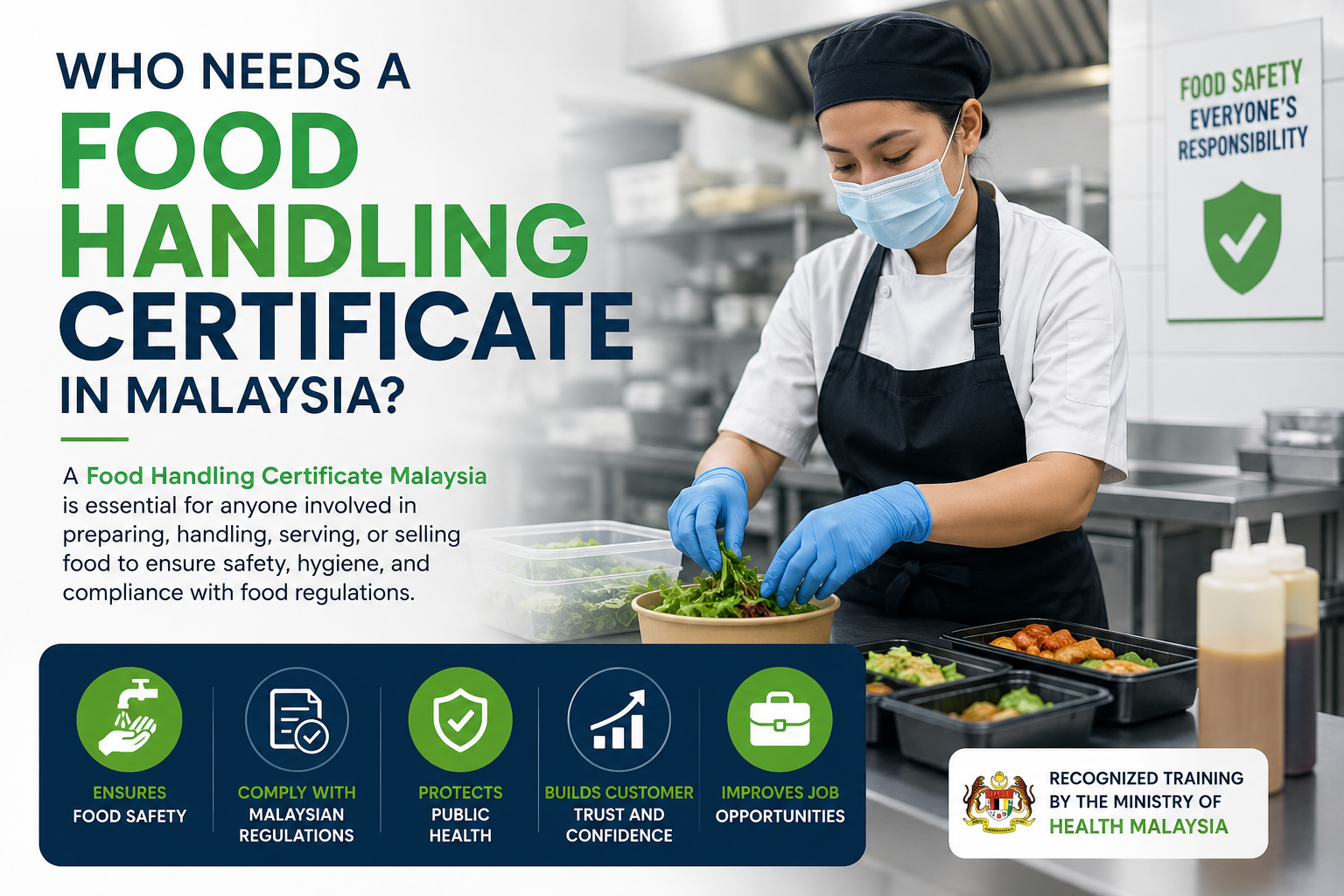
If you plan to work in the food industry in Malaysia, understanding the rules around food safety is essential. One of the most important requirements is obtaining a Food Handling Certificate Malaysia. Whether you run a restaurant, sell food online, operate a food truck, or work part time in a cafe, this certification plays a major role in ensuring food safety and public health.
Many people assume that only chefs or restaurant owners need the certification. In reality, the law applies to a much wider group of food handlers across Malaysia. Failure to comply can lead to fines, business complications, and even suspension of operations.
In this guide, you will learn who needs a Food Handlers Certificate Malaysia, why it matters, how the process works, and what food businesses should know before hiring staff.
What Is a Food Handling Certificate in Malaysia?
A Food Handling Certificate Malaysia is an official certification issued after completing a recognized food handling course approved by the Ministry of Health Malaysia or KKM.
The course teaches food handlers how to maintain hygiene, prevent food contamination, and follow safe food preparation practices. It is part of Malaysia’s effort to improve food safety standards and reduce foodborne illnesses.
The training usually covers topics such as:
• Personal hygiene practices
• Proper food storage
• Safe food preparation methods
• Kitchen cleanliness
• Pest control awareness
• Cross contamination prevention
• Food safety regulations in Malaysia
After completing the course successfully, participants receive a Food Handlers Certificate Malaysia which serves as proof of training.
Why Is the Food Handling Certificate Important?
Food safety directly affects public health. A single mistake in food preparation or storage can cause food poisoning outbreaks and serious health risks.
The Food Handling Certificate Malaysia helps ensure that food workers understand their responsibilities when handling food for customers.
The certification is important because it:
• Protects customers from foodborne diseases
• Improves hygiene standards in food businesses
• Helps businesses comply with Malaysian regulations
• Builds customer trust and confidence
• Reduces the risk of penalties from local authorities
For businesses, having properly trained staff is no longer optional. It is part of operating responsibly in Malaysia’s food industry.
Who Needs a Food Handling Certificate in Malaysia?
Under Malaysian food safety regulations, anyone directly involved in preparing, handling, serving, packing, or selling food generally needs a Food Handlers Certificate Malaysia.
Here are the groups that commonly require certification.
Restaurant Workers
Restaurant employees are among the most common food handlers required to attend a food handling course.
This includes:
• Chefs
• Kitchen assistants
• Waiters and waitresses
• Dishwashing staff handling food utensils
• Food preparation workers
• Restaurant supervisors involved in food operations
Even temporary or part time workers may need certification if they handle food directly.
Cafe and Coffee Shop Employees
Employees working in cafes, dessert shops, and coffee chains also require a Food Handling Certificate Malaysia.
This applies to workers preparing:
• Coffee and beverages
• Cakes and pastries
• Sandwiches
• Desserts
• Snacks and ready to eat meals
Food safety standards apply regardless of the size of the business.
Food Stall and Hawker Operators
Malaysia is famous for its street food culture. Hawker stall owners and food vendors are also required to complete a food handling course.
This includes operators selling:
• Nasi lemak
• Satay
• Burgers
• Fried noodles
• Drinks and beverages
• Night market food
Street food businesses are closely monitored because food is often prepared in open environments where contamination risks can increase.
Home Based Food Business Owners
The rise of online food businesses and home kitchens has increased awareness around food safety compliance.
If you sell homemade food online through platforms like:
• Facebook
• Instagram
• TikTok Shop
• GrabFood
• FoodPanda
you may still need a Food Handling Certificate Malaysia.
Many home based entrepreneurs assume the rules only apply to physical restaurants. However, once food is sold commercially to the public, food safety regulations become relevant.
This is especially important for businesses producing:
• Cakes and desserts
• Frozen food
• Homemade sauces
• Catering meals
• Bento boxes
• Cookies and baked goods
Food Factory Workers
Employees working in food manufacturing facilities are also required to undergo food safety training.
This includes factories producing:
• Packaged snacks
• Frozen food
• Beverages
• Canned products
• Bakery products
• Processed food items
Large scale food production involves strict hygiene standards because contamination can affect thousands of consumers.
Hotel and Catering Staff
Hotels and catering companies handle food for large groups of people daily. As a result, workers involved in food preparation and service need proper certification.
This applies to:
• Banquet kitchen staff
• Catering assistants
• Buffet attendants
• Event food servers
• Hotel chefs
Food safety becomes even more critical during events and large gatherings.
School and Canteen Operators
School canteen operators and cafeteria workers are required to complete a food handling course because they serve food to children and students.
This includes:
• School canteen vendors
• University cafeteria workers
• Hostel kitchen staff
• Preschool meal providers
Authorities place strong emphasis on hygiene standards in educational institutions.
Supermarket and Convenience Store Workers
Employees handling ready to eat food in supermarkets and convenience stores may also require certification.
This includes workers involved in:
• Bakery counters
• Deli sections
• Fresh food preparation
• Beverage preparation
• Sampling stations
Even though these businesses are retail based, food safety rules still apply when food is handled directly.
Do Food Delivery Riders Need a Food Handling Certificate?
This is a common question in Malaysia.
Generally, delivery riders who only transport sealed food may not require a Food Handlers Certificate Malaysia. However, if riders are also involved in preparing, packing, or handling exposed food, certification may become necessary.
Requirements can vary depending on local authority guidelines and business operations.
Is the Certification Mandatory by Law?
Yes. Malaysia’s food safety regulations require food handlers to undergo approved training.
Businesses that fail to comply may face:
• Fines
• Warnings from authorities
• License renewal issues
• Business suspension
• Reputation damage
Local councils and health inspectors regularly conduct inspections to ensure compliance.
Employers are responsible for ensuring their workers complete the required food handling course and receive certification.
What Happens During a Food Handling Course?
A typical food handling course in Malaysia is simple and beginner friendly.
The training usually lasts a few hours and can often be completed in one day.
Participants learn about:
Personal Hygiene
Food handlers are taught proper handwashing methods, appropriate attire, and hygiene practices that reduce contamination risks.
Food Storage
The course explains how to store raw and cooked food safely to prevent bacterial growth.
Safe Cooking Temperatures
Participants learn how temperature affects food safety and why proper cooking methods matter.
Cleaning Procedures
Maintaining clean kitchens and equipment is a major focus of the training.
Food Safety Laws
The course introduces participants to Malaysia’s food regulations and compliance requirements.
At the end of the session, participants receive a Food Handling Certificate Malaysia upon successful completion.
Can You Take the Course Online?
Yes. Many approved training providers in Malaysia now offer online food handling course options.
Online training has become increasingly popular because it offers:
• Flexible schedules
• Faster registration
• Convenience for busy workers
• Accessibility for remote areas
However, it is important to ensure the provider is recognized by the Ministry of Health Malaysia.
Always verify the legitimacy of the training center before registering.
How Much Does a Food Handling Course Cost in Malaysia?
The cost of a food handling course in Malaysia is generally affordable.
Prices usually range between RM50 and RM120 depending on:
• Training provider
• Course format
• Location
• Additional services offered
Some employers cover the cost for their workers as part of staff training.
Is Typhoid Vaccination Also Required?
In many cases, yes.
Besides obtaining a Food Handling Certificate Malaysia, food handlers may also need a typhoid vaccination depending on local regulations.
The vaccination helps prevent the spread of typhoid fever, especially in food service environments.
Many local councils require proof of vaccination during inspections.
Benefits of Having a Food Handling Certificate
Obtaining a Food Handlers Certificate Malaysia offers benefits beyond legal compliance.
Better Job Opportunities
Many employers prefer hiring certified food handlers because they already understand basic food safety practices.
Professional Credibility
Certification shows professionalism and responsibility.
Customer Confidence
Customers are more likely to trust businesses that prioritize hygiene and safety.
Reduced Business Risks
Proper training lowers the chances of contamination incidents and customer complaints.
Tips for Food Businesses in Malaysia
If you operate a food business, here are some practical tips:
• Ensure all food handlers are certified
• Keep certificates accessible during inspections
• Schedule refresher training when needed
• Maintain strict hygiene standards daily
• Verify training providers are recognized by KKM
• Educate staff regularly about food safety practices
Building a culture of food safety helps businesses grow sustainably.
Common Misconceptions About Food Handling Certificates
“Only restaurant owners need certification”
This is false. Employees handling food also require training.
“Home businesses are exempt”
Commercial food sales from home kitchens may still fall under food safety regulations.
“The course is difficult”
Most food handling course programs are straightforward and designed for beginners.
“Online courses are not valid”
Approved online courses are accepted if provided by recognized training centers.
Final Thoughts
The Food Handling Certificate Malaysia is an essential requirement for many individuals working in the food industry. From restaurant workers and street food vendors to home based entrepreneurs and catering staff, food safety training plays a critical role in protecting public health.
As Malaysia’s food industry continues to grow, hygiene standards and compliance requirements are becoming more important than ever. Completing a recognized food handling course is not just about following regulations. It also demonstrates professionalism, responsibility, and commitment to customer safety.
Whether you are starting a food business, applying for a restaurant job, or expanding your online food brand, obtaining a Food Handlers Certificate Malaysia is a smart and necessary step toward long term success.