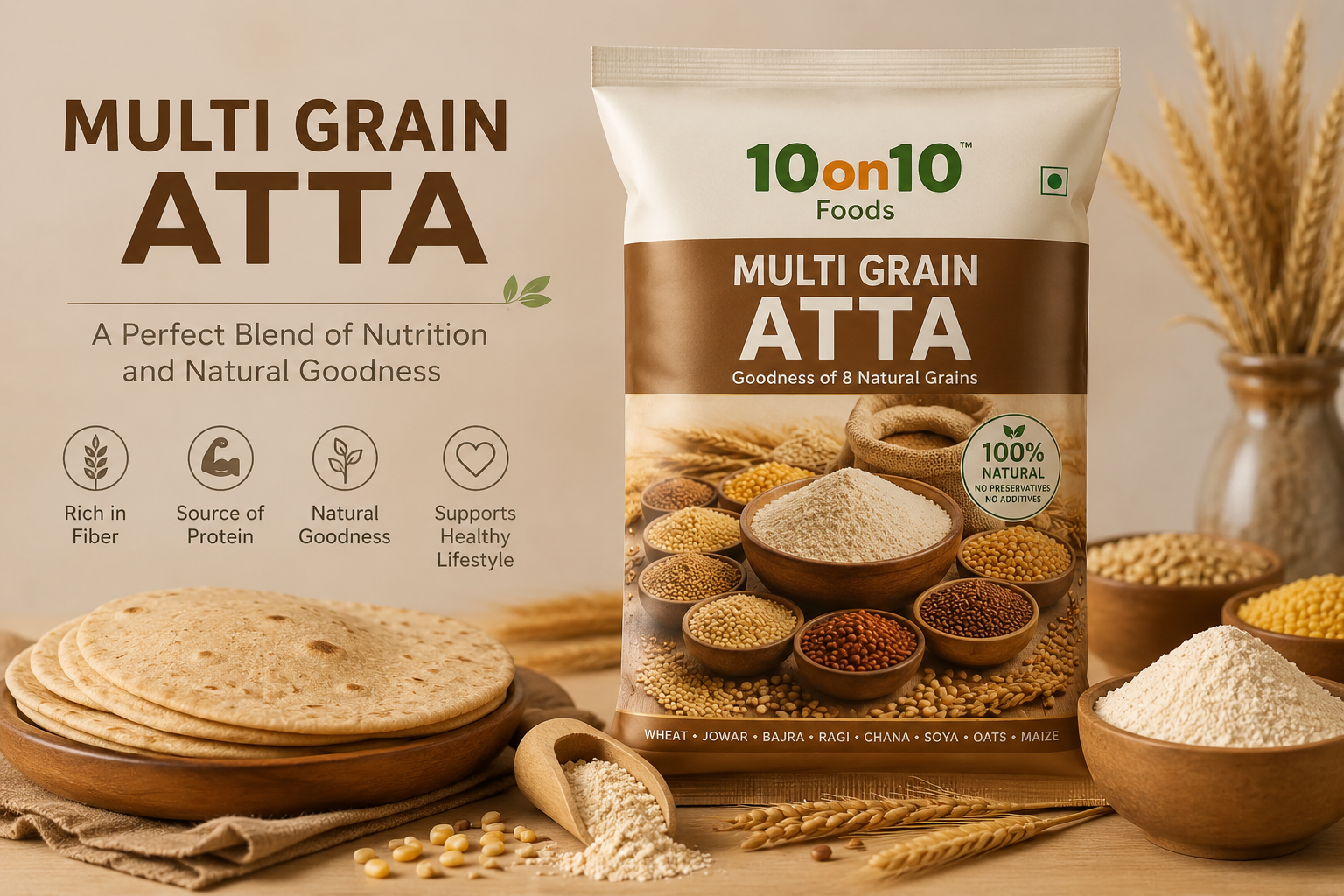
Why a 10 Kg Pack of Multigrain Atta Makes More Sense Than You Might Think
Buying flour in bulk isn’t a new concept for Indian households. Most families already purchase atta in larger quantities because it’s practical — one less thing to restock every week, better value per kilogram, and always something in the kitchen when the evening roti routine begins. The question that’s becoming more relevant is not just how much flour to buy, but which flour is worth buying in bulk.
The Case for Switching Away From Single-Grain Refined Flour
Regular refined wheat flour has been the default in Indian kitchens for decades. It’s familiar, widely available, and works reliably in everyday cooking. What it doesn’t do particularly well is deliver a strong nutritional profile. Refined processing strips away a significant portion of the fibre, minerals, and complex carbohydrates that were present in the original grain — leaving a product that’s efficient for cooking but limited in nutritional contribution.
Multigrain atta addresses this by blending multiple grains and sometimes legumes into a single flour. The result is a product that brings the combined nutritional strengths of several ingredients — more fibre, a better protein contribution, and a wider mineral profile — while still cooking the same way as regular atta in everyday Indian recipes.
Why the 10 Kg Pack Specifically Makes Sense
A multigrain atta 10 kg pack is the format that makes the most practical sense for families using atta as a daily staple. Here’s why the quantity matters beyond just cost savings.
Smaller packs of healthier flour options often end up treated as supplements — the family uses the regular flour for most cooking and dips into the multigrain pack occasionally, which defeats the purpose of switching in the first place. A larger pack encourages complete adoption because it becomes the default option in the kitchen rather than an alternative sitting alongside the regular atta.
The cost per kilogram also improves meaningfully at the 10 kg quantity, which matters for households where flour consumption is genuinely high — three to four rotis per person per meal across a family adds up to substantial flour usage every week.
What Eight Grains in One Flour Actually Means
A well-formulated multigrain blend doesn’t just combine random grains. Each ingredient in a thoughtfully developed blend brings something specific. Wheat provides the base structure needed for good dough and roti texture. Millets like jowar and bajra add fibre and extend the glycemic response of the meal. Oats contribute soluble fibre that supports digestion. Legume additions like soybean or chickpea boost plant-based protein content. Together, a blend of eight grains creates a flour that covers nutritional ground that no single grain, however healthy, manages alone.
This diversity of grain inputs is what makes an eight-grain multigrain atta meaningfully different from simply using whole wheat or a single millet flour — it’s the combination that delivers broader benefit.
How It Performs in the Kitchen
One of the first questions families ask before committing to a larger pack of multigrain atta is whether it cooks the same way as regular flour. In practice, an eight-grain blend behaves very similarly to standard whole wheat atta in most recipes. The dough consistency may feel slightly different depending on the grain ratio, and rotis made from a multigrain blend often have a marginally heartier texture — which most family members adjust to within a few days.
The blend works across the full range of everyday Indian cooking — rotis, parathas, theplas, and certain flatbread variations all come out well with minimal recipe adjustment.
Freshness and Storage at the 10 Kg Scale
A reasonable concern with buying flour in bulk is whether it stays fresh long enough to be used completely before quality degrades. For a family of four consuming flour regularly, a 10 kg pack typically lasts four to six weeks — well within the reasonable freshness window for a quality multigrain product stored in a sealed container in a cool, dry location. Keeping the flour away from direct sunlight and moisture is the main storage consideration.
Where 10on10foods Fits In
10on10foods has formulated its eight-grain multigrain atta with the kind of grain blend that delivers real nutritional value rather than just a marketing claim. The focus stays on clean ingredients without unnecessary additives, in a format — including the 10 kg pack — that suits families committed to making multigrain flour their everyday kitchen staple rather than an occasional health-conscious purchase.
A Commitment Worth Making
Switching to multigrain atta is a meaningful step. Buying it in a 10 kg pack is the version of that switch that actually sticks — because it removes the option of defaulting back to regular flour when the small pack runs out. It’s a practical, economical, and nutritionally sound choice for any household that has decided better daily nutrition is worth the minimal adjustment in the kitchen.