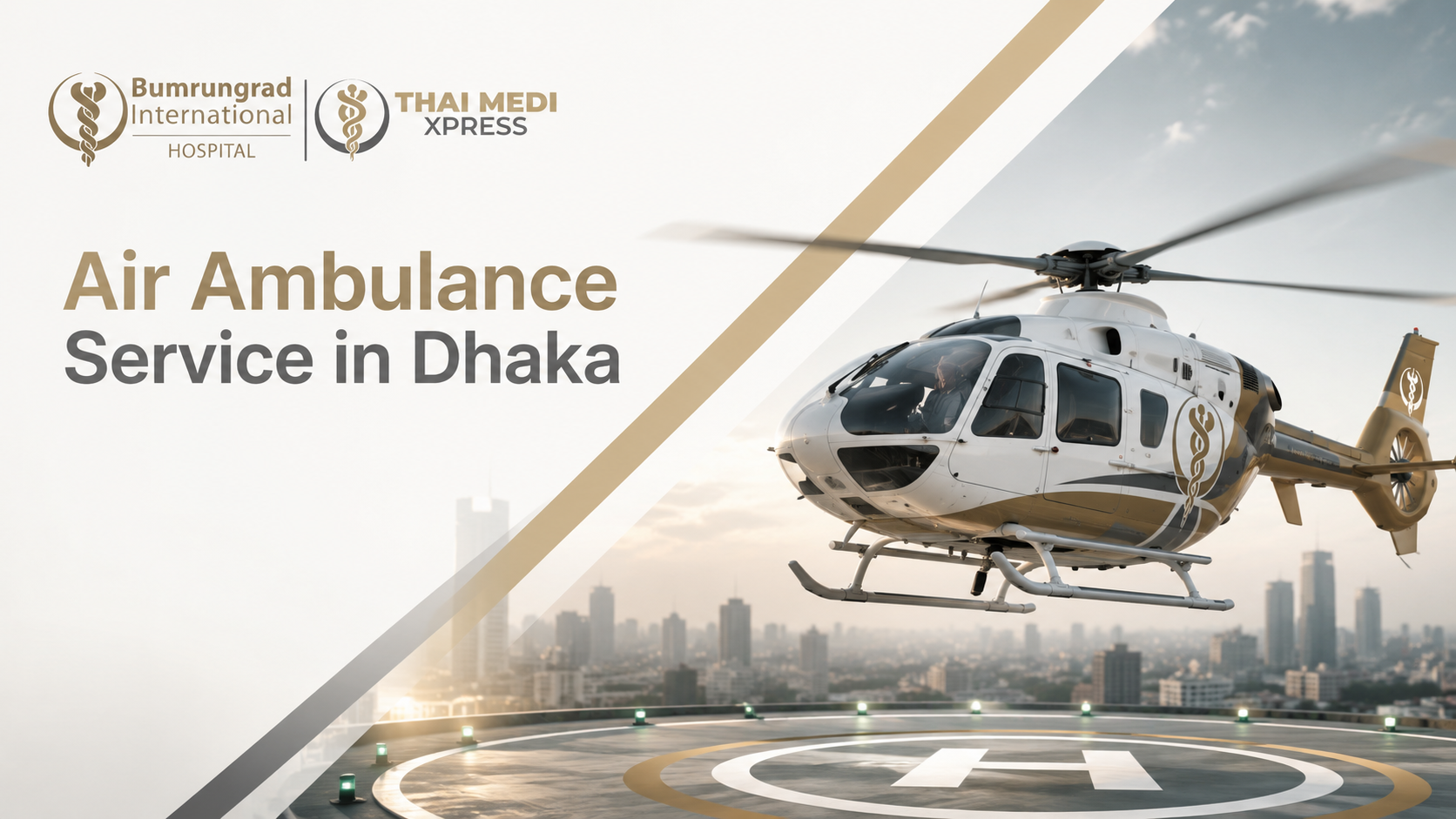
Air Ambulance Service in Dhaka provides fast, medically supervised transportation for critically ill and injured patients. With professional coordination from Thai Medi Xpress, patients can receive continuous medical care while being transferred safely to specialized hospitals when every second counts.
Why Air Ambulance Services Matter During Medical Emergencies
Medical emergencies often demand immediate action. In many situations, road transportation may not be the fastest or safest option, especially when patients require advanced medical monitoring throughout the journey.
An air ambulance functions as a flying intensive care unit (ICU), allowing experienced healthcare professionals to deliver life-saving treatment while transporting patients to the most appropriate medical facility.
Choosing a trusted Air Ambulance Service in Dhaka ensures that patients receive rapid medical evacuation without compromising the quality of care.
What Is an Air Ambulance Service?
An air ambulance is a specially equipped aircraft designed to transport patients who require continuous medical attention. Unlike regular flights, these aircraft carry advanced life-support equipment and are staffed by trained medical professionals.
Air ambulance services are commonly used for:
- Critical illness transfers
- Serious accident injuries
- Cardiac emergencies
- Stroke patients
- Organ transplant transportation
- Neonatal patient transfers
- International medical evacuation
- Repatriation of patients
Their primary goal is to provide uninterrupted medical care while reducing transportation time.
10 Benefits of Choosing an Air Ambulance Service in Dhaka for Critical Patients
1. Rapid Transportation During Emergencies
One of the greatest advantages of an Air Ambulance Service in Dhaka is speed.
Medical emergencies such as severe trauma, heart attacks, strokes, or multiple injuries require immediate treatment. Air transportation significantly reduces travel time, allowing patients to reach specialized healthcare facilities much faster than many traditional transport options.
Faster transportation often means faster medical intervention, which can positively influence patient recovery.
2. Advanced Intensive Care During Flight
Modern air ambulances are equipped with sophisticated medical technology comparable to hospital intensive care units.
Patients receive continuous monitoring through equipment such as:
- Cardiac monitors
- Mechanical ventilators
- Infusion pumps
- Defibrillators
- Portable oxygen systems
- Emergency medications
This ensures that treatment continues without interruption throughout the journey.
3. Experienced Medical Professionals Onboard
Every patient receives care from a dedicated medical team trained to manage emergencies in an aviation environment.
Depending on the patient’s condition, the onboard team may include:
- Emergency physicians
- Critical care specialists
- ICU nurses
- Respiratory therapists
- Experienced paramedics
These professionals continuously monitor vital signs and respond immediately if the patient’s condition changes.
4. Safe Transportation for Critically Ill Patients
Patients with unstable medical conditions often cannot travel safely on commercial flights or through long road journeys.
Air ambulances provide:
- Continuous monitoring
- Specialized medical equipment
- Comfortable patient positioning
- Controlled medical environment
- Immediate emergency intervention if required
These features make transportation significantly safer for high-risk patients.
5. Access to Specialized Medical Centers
Not every hospital provides advanced treatment for complex medical conditions.
Air ambulance services allow patients to reach hospitals with specialized departments including:
- Cardiology
- Neurology
- Trauma care
- Organ transplantation
- Oncology
- Neonatal intensive care
Access to specialized healthcare often improves treatment opportunities and long-term outcomes.
6. International Medical Evacuation
Many patients travel overseas for specialized treatment unavailable locally.
A professional Air Ambulance Service in Dhaka coordinates international patient transportation while ensuring medical care continues throughout the journey.
International medical transfers typically include:
- Flight coordination
- Hospital communication
- Medical documentation
- Immigration support
- Ground ambulance arrangements
- Continuous patient monitoring
This integrated approach minimizes stress for both patients and families.
7. Seamless Hospital-to-Hospital Transfers
Transferring patients between hospitals requires careful planning.
Air ambulance providers coordinate every stage of transportation, including:
Medical Assessment
Doctors evaluate the patient’s condition before departure.
Flight Planning
Medical and aviation teams coordinate the safest transportation route.
Ground Ambulance Coordination
Ground ambulances transport the patient to and from airports while maintaining medical supervision.
This seamless coordination reduces delays and ensures continuity of care.
8. Specialized Care for High-Risk Patients
Some patients require transportation under highly controlled medical conditions.
Examples include:
- Patients on ventilators
- Cardiac patients
- Stroke patients
- Premature newborns
- Organ transplant recipients
- Severe trauma patients
Air ambulances are specifically designed to support these complex medical situations.
9. Reduced Stress for Families
Medical emergencies create emotional pressure for loved ones.
Professional air ambulance coordination helps reduce uncertainty by managing:
- Medical logistics
- Hospital communication
- Transportation planning
- Medical documentation
- Flight arrangements
- Continuous family updates
Families can focus on supporting the patient while experienced professionals manage the transportation process.
10. Reliable Coordination from Start to Finish
A successful medical transfer involves much more than simply arranging an aircraft.
Professional providers coordinate:
- Patient evaluation
- Medical team assignment
- Aircraft preparation
- Airport permissions
- Hospital coordination
- Emergency planning
- Safe patient handover
This organized process helps ensure every transfer is completed efficiently and safely.
Why Choose Thai Medi Xpress?
Selecting the right medical transportation provider is an important decision.
Thai Medi Xpress focuses on delivering professional medical coordination with patient safety as the highest priority. The experienced team works closely with hospitals, medical specialists, aviation partners, and emergency responders to ensure every patient receives personalized support.
Whether the patient requires domestic transportation or international medical evacuation, Thai Medi Xpress assists families throughout every stage of the journey with professionalism, compassion, and attention to detail.
Its commitment to quality coordination and reliable communication has made Thai Medi Xpress a trusted choice for medical transportation support.
Important Situations That May Require an Air Ambulance
Medical professionals may recommend an air ambulance in situations such as:
- Severe road traffic accidents
- Cardiac emergencies
- Brain injuries
- Multiple fractures
- Organ transplant procedures
- Neonatal intensive care transfers
- High-risk infectious disease transport
- Medical repatriation
- Emergency international treatment
- Remote area patient evacuation
Each situation requires careful medical evaluation before transportation.
What Makes a Quality Air Ambulance Provider?
When selecting an air ambulance provider, families should consider several important factors.
Look for providers that offer:
- Experienced medical teams
- Advanced life-support equipment
- 24/7 emergency coordination
- Comprehensive medical planning
- Hospital-to-hospital transfers
- International evacuation experience
- Strong safety standards
- Clear communication
- Patient-centered care
These factors contribute to safer and more efficient medical transportation.
Frequently Asked Questions
Who can use an air ambulance?
Patients with critical illnesses, severe injuries, or specialized medical needs may benefit from air ambulance transportation after medical assessment.
Are doctors present during the flight?
Yes. Depending on the patient’s condition, doctors, nurses, or paramedics provide continuous medical care throughout the journey.
Can air ambulances handle international transfers?
Yes. Many providers coordinate international medical evacuation while ensuring uninterrupted patient care.
Is the patient monitored during transportation?
Absolutely. Patients remain under constant medical observation using advanced life-support equipment.
Can family members accompany the patient?
Depending on medical requirements and aircraft configuration, an accompanying family member may be allowed.
Final Thoughts
Medical emergencies require fast decisions and dependable support. Choosing a trusted Air Ambulance Service in Dhaka ensures critically ill patients receive timely transportation, expert medical care, and coordinated hospital transfers. Professional services help improve safety, reduce delays, and provide families with greater peace of mind during challenging situations.
Conclusion
Air Ambulance Service in Dhaka offers rapid, safe, and medically supervised transportation for patients facing critical health emergencies. With experienced coordination and compassionate support, Thai Medi Xpress helps ensure patients reach the right healthcare facility efficiently while maintaining continuous medical care throughout the journey.