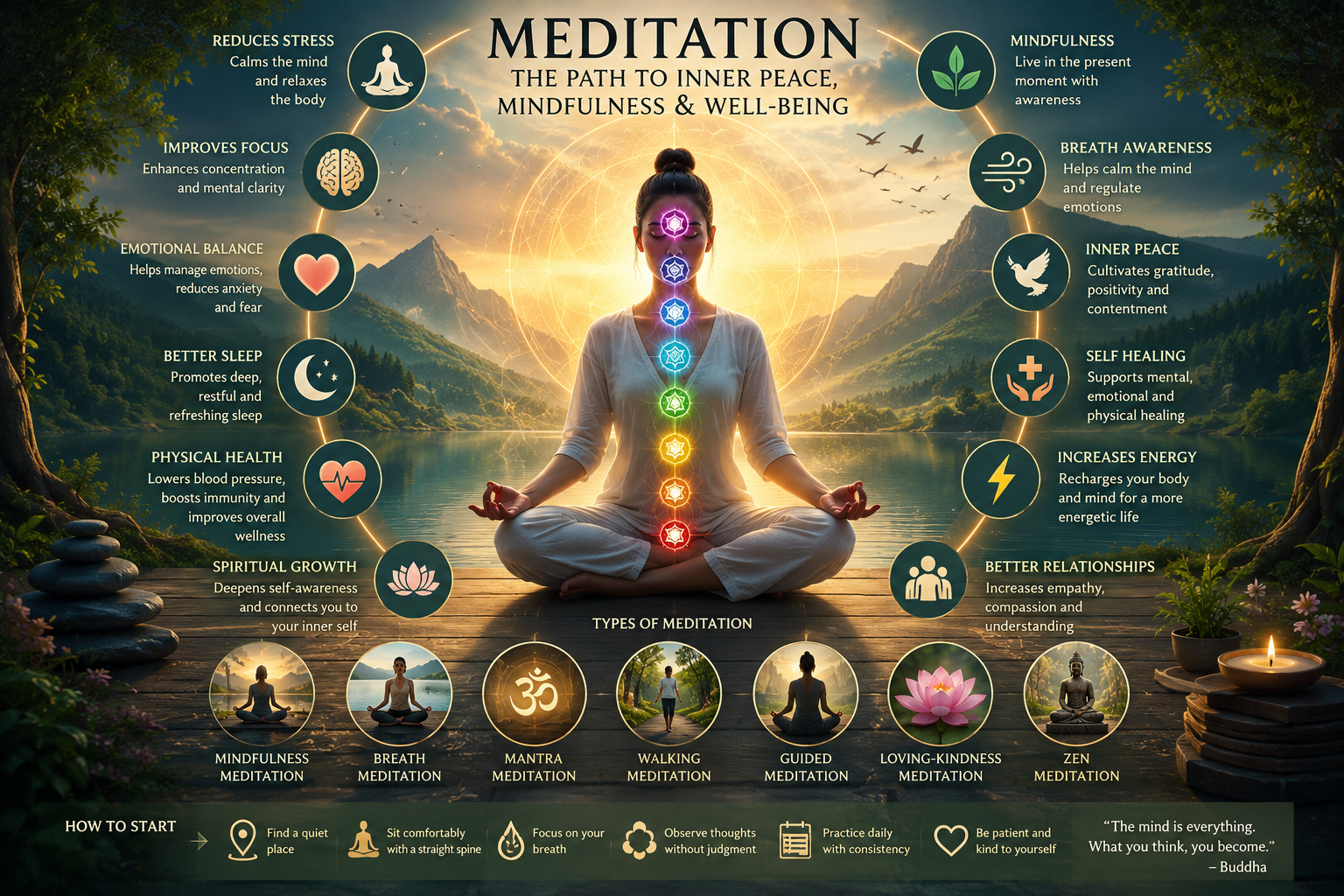
Meditation: The Complete Guide to Inner Peace, Mindfulness, and better health
Meditation is one of the oldest and most effective practices for improving mental, emotional, physical, and spiritual well-being. In today’s fast-paced world, where stress, anxiety, and distractions have become a part of daily life, meditation offers a simple yet powerful way to reconnect with yourself. Whether you want to reduce stress, improve concentration, sleep better, or deepen your spiritual journey, meditation can help transform your life.This comprehensive meditation guide explores everything you need to know about meditation, including its history, benefits, different types, techniques, and tips for building a consistent daily practice.
What is Meditation?
Meditation is the practice of training the mind to focus, become aware of the present moment, and cultivate a calm and balanced mental state. Contrary to popular belief, meditation is not about stopping thoughts completely. Instead, it teaches you to observe thoughts without becoming attached to them.
During meditation, you may focus on your breathing, a mantra, bodily sensations, visualization, or simply observe your thoughts as they come and go. Over time, this practice strengthens mindfulness, emotional resilience, and inner peace.
Meditation has been practiced for thousands of years in many cultures and spiritual traditions. Today, millions of people around the world practice meditation not only for spiritual growth but also for improving mental health, reducing stress, enhancing productivity, and achieving overall wellness.
The History of Meditation
Meditation has roots dating back more than 5,000 years, with its earliest records found in ancient India. It has been an essential part of Hinduism, Buddhism, Jainism, Sikhism, Taoism, and many other traditions.
Ancient sages and monks used meditation as a path toward self-realization and enlightenment. Over time, meditation spread across Asia and later became popular worldwide. In recent decades, scientific research has highlighted its benefits for stress management, emotional well-being, and cognitive function, making it widely practiced in healthcare, education, workplaces, and personal development.
Why Meditation is Important
Modern lifestyles often involve constant stimulation, digital distractions, and high levels of stress. Meditation helps create a space where the mind can slow down and regain balance.
Regular meditation can improve your relationship with yourself and others. It encourages self-awareness, patience, compassion, and emotional stability. Even a few minutes of meditation each day can have a positive impact on your mood, focus, and overall quality of life.
Benefits of Meditation
Mental Benefits
Meditation offers numerous psychological benefits that support mental clarity and emotional health.
These include:
- Reduces stress and anxiety
- Improves concentration and focus
- Enhances memory
- Increases creativity
- Improves emotional intelligence
- Promotes positive thinking
- Helps manage depression symptoms
- Builds emotional resilience
- Reduces overthinking
- Encourages mindfulness
People who meditate regularly often report feeling calmer, more focused, and better equipped to handle life’s challenges.
Physical Benefits
Meditation benefits not only the mind but also the body.
Regular practice may help:
- Lower blood pressure
- Improve heart health
- Reduce muscle tension
- Enhance immune function
- Improve sleep quality
- Reduce headaches
- Increase energy levels
- Promote healthy aging
- Support pain management
- Improve breathing efficiency
Because stress affects many aspects of physical health, reducing stress through meditation can contribute to overall wellness.
Emotional Benefits
Meditation strengthens emotional awareness and helps individuals respond rather than react to difficult situations.
Benefits include:
- Greater emotional balance
- Increased patience
- Better anger management
- Higher self-confidence
- Improved relationships
- Reduced fear and worry
- Greater happiness
- Enhanced gratitude
- Increased compassion
- Better emotional control
Spiritual Benefits
Many people practice meditation as part of their spiritual journey.
Spiritual benefits include:
- Inner peace
- Self-discovery
- Higher consciousness
- Connection with the present moment
- Greater awareness
- Increased intuition
- Stronger spiritual connection
- Personal transformation
- Sense of purpose
- Deeper mindfulness
Different Types of Meditation
Mindfulness Meditation
Mindfulness meditation involves paying attention to the present moment without judgment. You simply observe your thoughts, feelings, and bodily sensations while remaining aware of your breathing.
This is one of the most popular meditation techniques and is suitable for beginners.
Breath Meditation
Breath meditation focuses entirely on your breathing. You observe each inhale and exhale while gently bringing your attention back whenever your mind wanders.
This practice is highly effective for reducing stress and calming the nervous system.
Mantra Meditation
In mantra meditation, a sacred word or phrase is repeated silently or aloud to improve concentration.
Popular mantras include:
- Om
- So Hum
- Om Namah Shivaya
- Gayatri Mantra
- Maha Mrityunjaya Mantra
Repeating a mantra helps quiet mental chatter and deepen meditation.
Guided Meditation
Guided meditation is led by a teacher or audio recording. It often includes breathing exercises, visualization, affirmations, and relaxation techniques.
This type of meditation is ideal for beginners who find it difficult to meditate independently.
Loving-Kindness Meditation
Also known as Metta Meditation, this practice focuses on cultivating compassion and kindness toward yourself and others.
It helps reduce negative emotions while increasing empathy, forgiveness, and emotional healing.
Chakra Meditation
Chakra meditation focuses on balancing the body’s seven primary energy centers.
Each chakra is associated with a specific color, location, and mantra.
Many practitioners use visualization, breathing exercises, and seed mantras to activate and balance these energy centers.
Walking Meditation
Walking meditation combines mindful awareness with slow, intentional movement.
Instead of focusing on sitting still, you pay attention to every step, your breathing, and your surroundings.
It is particularly beneficial for people who find seated meditation challenging.
Zen Meditation
Zen meditation emphasizes posture, breathing, and awareness.
Practitioners sit quietly while observing thoughts without becoming attached to them.
This traditional practice aims to cultivate deep mindfulness and inner stillness.
How Meditation Works
Meditation works by calming the nervous system and training the brain to remain present. During meditation, the body’s stress response gradually decreases, allowing the mind to relax and become more focused.
With consistent practice, meditation can help reduce mental distractions, improve emotional regulation, and support healthier responses to daily challenges. Many people also find that regular meditation enhances self-awareness, making it easier to recognize thought patterns and respond with greater clarity rather than reacting impulsively.
Meditation Guide
How to Meditate: A Step-by-Step Guide for Beginners
Starting meditation is simple. You don’t need any special equipment or prior experience. All you need is a quiet space and a few minutes of uninterrupted time.
Step 1: Find a Quiet Place
Choose a peaceful environment where you are less likely to be disturbed. This could be a dedicated meditation room, your bedroom, a garden, or any comfortable space.
Step 2: Sit Comfortably
Sit on the floor with a cushion or on a chair with your feet flat on the ground. Keep your spine straight but relaxed. Rest your hands comfortably on your knees or lap.
Step 3: Close Your Eyes
Closing your eyes helps reduce distractions and makes it easier to focus inward. If you prefer, you can keep your eyes slightly open and gaze softly at a fixed point.
Step 4: Focus on Your Breath
Take slow, natural breaths. Notice the sensation of air entering and leaving your body. Do not try to control your breathing—simply observe it.
Step 5: Accept Wandering Thoughts
It is completely normal for your mind to wander. Whenever you notice this happening, gently bring your attention back to your breath without criticizing yourself.
Step 6: End Slowly
After your meditation session, open your eyes gradually, take a few deep breaths, and spend a moment noticing how you feel before returning to your daily activities.
Best Time to Meditate
Although meditation can be practiced at any time, certain times of the day may offer unique benefits.
Morning Meditation
Morning is considered one of the best times to meditate because the mind is fresh and distractions are minimal. Practicing meditation early in the day can improve focus, positivity, and emotional balance throughout the day.
Afternoon Meditation
A short meditation during lunch breaks or in the afternoon can help reduce stress, refresh the mind, and increase productivity.
Evening Meditation
Meditating after work helps release accumulated stress and prepares the body and mind for relaxation.
Before Sleep
A calming meditation before bedtime can improve sleep quality, reduce racing thoughts, and promote deeper rest.
Best Meditation Postures
Maintaining a comfortable posture helps you stay focused and relaxed during meditation.
Popular meditation postures include:
- Sukhasana (Easy Pose)
- Padmasana (Lotus Pose)
- Half Lotus Pose
- Vajrasana (Thunderbolt Pose)
- Sitting on a Chair
- Kneeling Position
- Lying Down (for guided relaxation or body scan meditation)
The most important aspect is keeping your spine naturally straight while remaining comfortable.
The Seven Chakras in Meditation
Many spiritual meditation practices focus on balancing the body’s seven primary chakras.
| Chakra | Location | Color | Seed Mantra |
|---|---|---|---|
| Root Chakra | Base of Spine | Red | LAM |
| Sacral Chakra | Lower Abdomen | Orange | VAM |
| Solar Plexus Chakra | Upper Abdomen | Yellow | RAM |
| Heart Chakra | Center of Chest | Green | YAM |
| Throat Chakra | Throat | Blue | HAM |
| Third Eye Chakra | Between Eyebrows | Indigo | OM |
| Crown Chakra | Top of Head | Violet/White | Silence or OM |
Balancing these energy centers through meditation may help promote emotional harmony, self-awareness, and spiritual growth.
Common Challenges in Meditation
Beginners often face certain obstacles when starting a meditation practice. These are normal and improve with consistency.
Restless Mind
Many people believe they are “bad” at meditation because thoughts keep appearing. In reality, noticing thoughts and gently returning your attention is an essential part of the practice.
Sleepiness
Meditating when overly tired can lead to drowsiness. Try meditating earlier in the day or sitting with an upright posture.
Lack of Patience
Results take time. Meditation is a skill that develops gradually through regular practice.
Physical Discomfort
If sitting on the floor is uncomfortable, use a chair or meditation cushion for better support.
Inconsistent Practice
Building a daily habit, even if it’s just 5–10 minutes, is more beneficial than occasional long sessions.
Tips for Building a Daily Meditation Habit
Consistency is the key to experiencing the long-term benefits of meditation.
- Meditate at the same time every day.
- Start with 5–10 minutes and gradually increase the duration.
- Create a quiet, dedicated meditation space.
- Turn off notifications and distractions.
- Wear comfortable clothing.
- Focus on progress rather than perfection.
- Be patient with yourself.
- Use guided meditations if you’re just starting out.
- Keep a meditation journal to track your experience.
- Celebrate small milestones to stay motivated.
Meditation for Stress Relief
Stress is one of the most common reasons people begin meditating. Meditation activates the body’s relaxation response, helping reduce muscle tension, calm the mind, and improve emotional resilience.
Regular meditation can help you:
- Feel calmer during stressful situations.
- Respond thoughtfully instead of reacting impulsively.
- Improve emotional stability.
- Enhance your ability to cope with daily challenges.
- Develop a greater sense of inner peace.
Meditation and Better Sleep
Many people struggle with poor sleep due to stress and an overactive mind. Meditation can help prepare the body for restful sleep by slowing breathing, relaxing muscles, and reducing mental chatter.
A simple 10-minute mindfulness or breathing meditation before bed can improve sleep quality and help you wake up feeling more refreshed.
Meditation and Productivity
Meditation is increasingly practiced by students, entrepreneurs, and professionals to improve concentration and mental clarity.
Benefits for productivity include:
- Better focus
- Improved memory
- Enhanced creativity
- Faster decision-making
- Reduced workplace stress
- Increased emotional intelligence
- Better time management
Many successful individuals include meditation as part of their daily routine to maintain mental performance and emotional balance.
Common Myths About MeditationMyth 1: Meditation Means Having No Thoughts
Reality: Thoughts are natural. Meditation teaches you to observe them without becoming attached.
Myth 2: Meditation Is Only for Spiritual People
Reality: Meditation is practiced by people of all backgrounds for stress relief, mental clarity, and overall well-being.
Myth 3: You Must Sit Cross-Legged
Reality: You can meditate comfortably on a chair, cushion, or even while walking.
Myth 4: Meditation Takes Hours
Reality: Even 10 minutes a day can provide meaningful benefits when practiced consistently.
Daily Meditation Routine
A simple daily routine can help establish consistency.
Morning (10–15 minutes):
- Deep breathing
- Mindfulness meditation
- Positive affirmations
Afternoon (5 minutes):
- Breath awareness
- Stretching
- Relaxation
Evening (10–20 minutes):
- Gratitude meditation
- Body scan meditation
- Calm breathing exercises
Final Thoughts
Meditation is a timeless practice that nurtures the mind, body, and spirit. Whether your goal is to reduce stress, improve concentration, enhance emotional well-being, sleep better, or deepen your spiritual journey, meditation offers a simple yet powerful path toward a healthier and more balanced life.
The key to success is consistency. You don’t need to meditate for hours or achieve a perfectly quiet mind. Even a few mindful minutes each day can lead to lasting improvements in your mental clarity, emotional resilience, and overall quality of life.
By making meditation a regular part of your routine, you invest in your long-term well-being and create space for greater peace, awareness, and happiness.