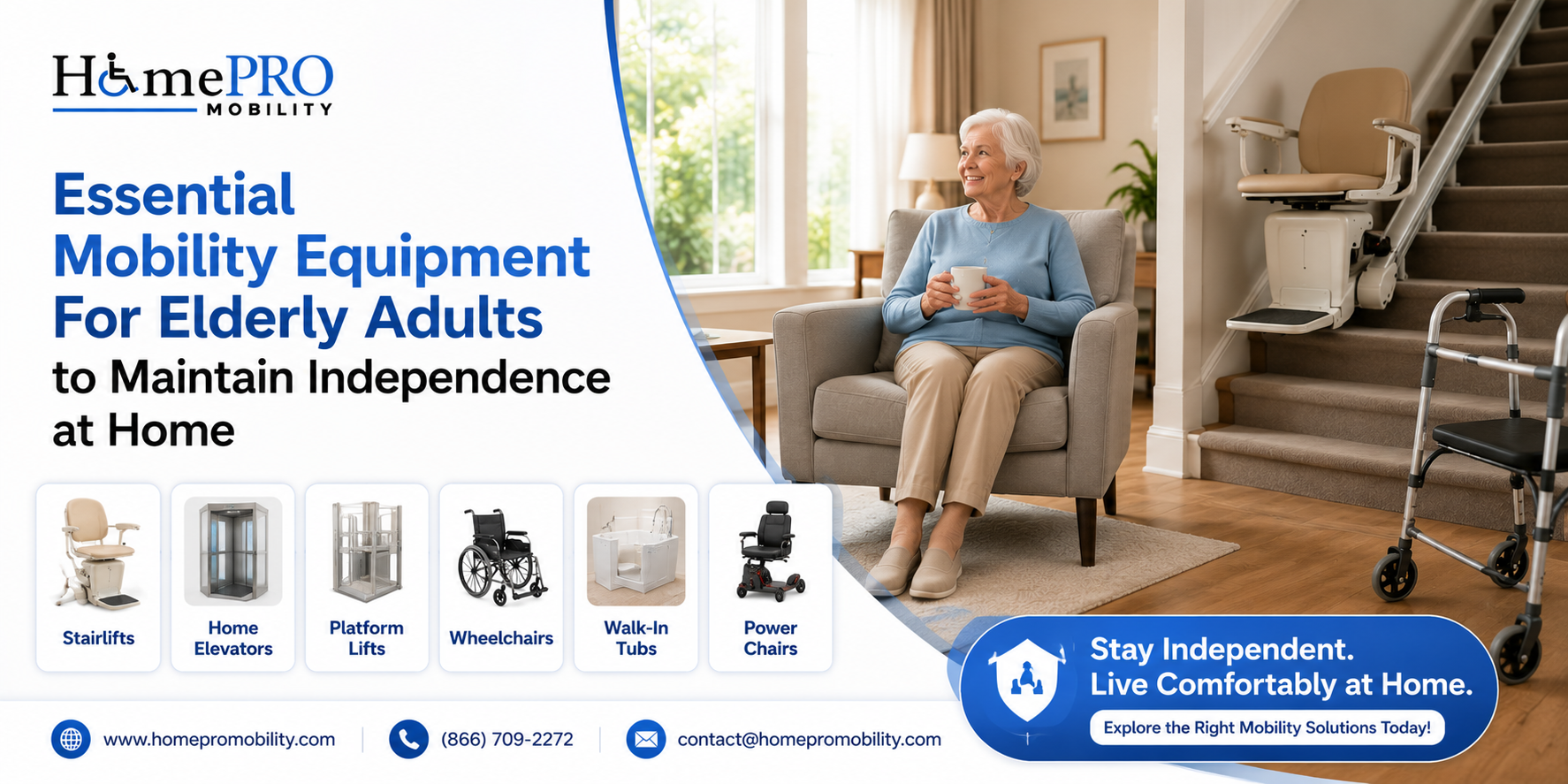
Helping an aging parent remain safely in their own home is a goal most families share. The right mobility equipment for elderly adults does not simply compensate for physical limitations — it actively enables independence, protects safety, and preserves the sense of agency every person deserves. This guide covers the essential categories of home mobility solutions that families should understand when planning for a senior’s long-term care.
Understanding Mobility Needs Across the Aging Journey
Mobility challenges in older adults progress gradually, meaning the equipment needed today may differ significantly from what is needed a few years later. A thoughtful approach to residential mobility solutions accounts for this progression rather than addressing only the immediate need. An occupational therapist or home mobility services professional can conduct a formal assessment, identifying gaps in the home environment and recommending equipment that best addresses them.
1. Walkers and Rollators
For seniors who are ambulatory but need balance support, a walker or rollator is typically the first line of daily living support. Standard walkers provide a stable four-point base, while rollators — featuring four wheels, hand brakes, and a built-in seat — offer greater ease of movement for seniors who walk independently but need periodic rest. Selecting the correct height, weight capacity, and wheel configuration is essential for both safety and usability.
2. Power Wheelchairs and Mobility Scooters
Power chairs and mobility scooters represent a significant step in senior safety and independence for individuals who cannot safely walk distances. A power wheelchair provides full body support controlled via a joystick, while mobility scooters suit those with sufficient upper body control who want to extend their range of movement. Both transform an individual’s ability to move through their home and community independently.
3. Stairlifts
For seniors in multi-story homes, a stairlift is one of the most practical home mobility solutions available. A motorized chair travels along a rail mounted to the staircase, carrying the user between floors without navigating steps. Available in straight and custom-curved configurations, stairlifts are installed without structural modification and can typically be fitted within a day.
4. Grab Bars and Handrails
Grab bars are deceptively simple but extraordinarily impactful. Installed beside toilets, in showers, near beds, and along hallways, they provide a stable support point that prevents falls during the most vulnerable moments of daily life. Properly rated grab bars are anchored into wall studs and engineered to support the weight of a falling adult — unlike towel bars, which many seniors dangerously attempt to use as substitutes.
5. Bathroom Safety Equipment
The bathroom is statistically the most dangerous room in the home for older adults. Essential mobility equipment for elderly bathroom use includes shower chairs, tub transfer benches, raised toilet seats, and handheld showerheads. For seniors with more significant limitations, a home mobility services provider can design a comprehensive plan that includes walk-in tub or shower installation and non-slip flooring treatments.
6. Bed Rail and Bed Assist Systems
Getting in and out of bed safely is a daily challenge for many older adults. Bed rails, bed assist handles, and adjustable-height beds address this specific transition. A half-rail installed at the correct position allows a senior to push themselves to seated and then stand with significantly reduced fall risk — particularly valuable for those with hip or knee limitations.
7. Home Elevators and Platform Lifts
For multi-floor homes, residential mobility solutions that address vertical movement are among the most significant investments a family can make. Platform lifts and home elevators allow seniors to access all areas of their home while remaining in their wheelchair or standing securely on a stable platform, providing true barrier-free access for years to come.
Conclusion
Building a home that supports independent aging requires a layered approach to mobility equipment for elderly adults. No single device addresses every need, but the right combination of tools — professionally selected and installed — creates a home where an aging adult can live safely and with genuine dignity. Connect with a trusted home mobility services provider today to begin a home assessment and develop a personalized equipment plan. The right home mobility solutions today are an investment in quality of life and independence for years to come.