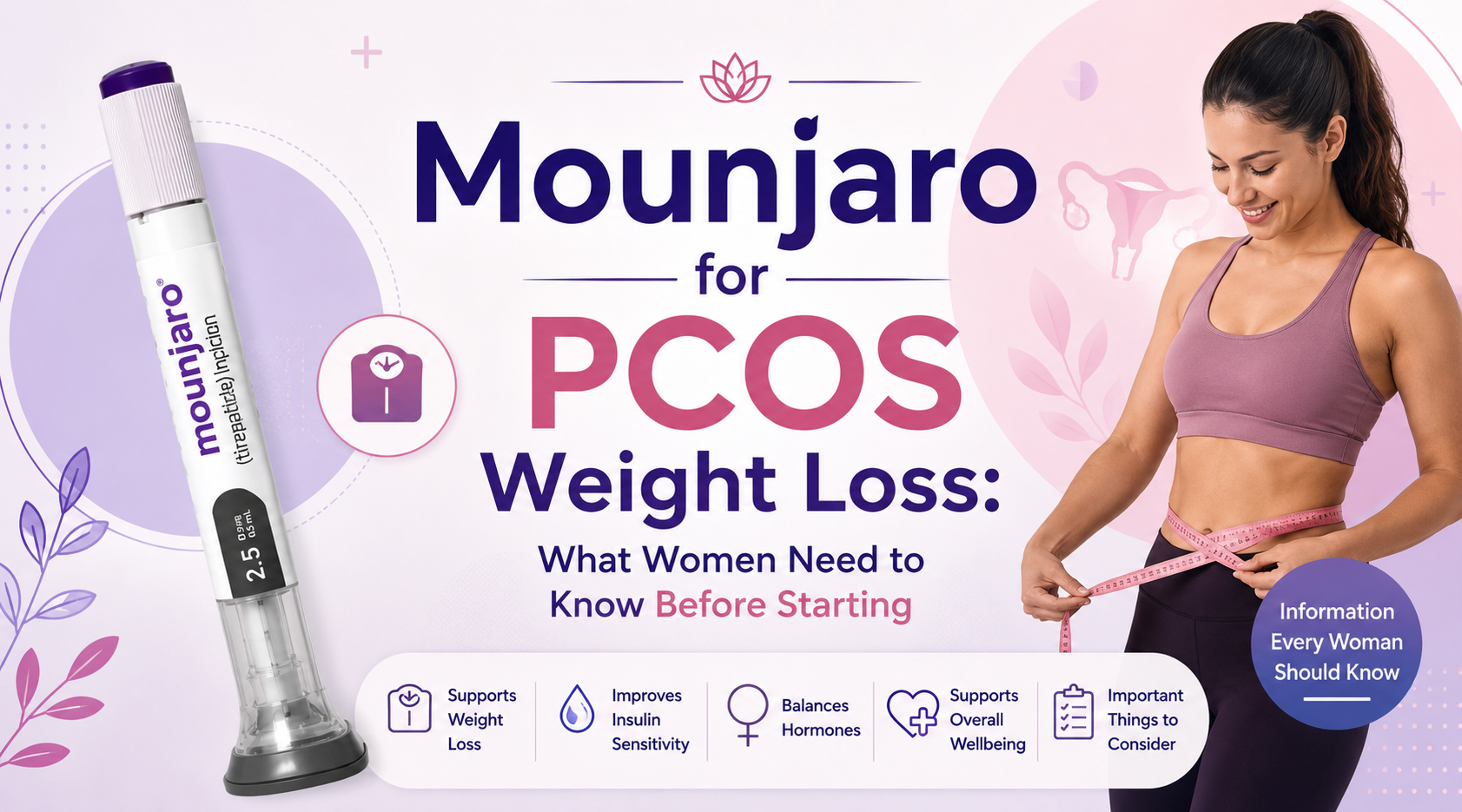
If you have PCOS and you’ve been struggling to lose weight despite doing “everything right,” you’ve probably heard about Mounjaro by now. It’s one of the most talked-about weight-loss medications available, and a growing number of women with polycystic ovary syndrome are asking their doctors about it not just for weight loss itself, but for what that weight loss might mean for their symptoms more broadly.
Before starting, though, it’s worth understanding exactly what Mounjaro can and can’t do for PCOS, how it works, and what to expect along the way. Here’s what women need to know.
What Mounjaro Actually Is
Mounjaro is the brand name for tirzepatide, a medication that works by activating two hormone receptors at once: GLP-1 (glucagon-like peptide-1) and GIP (glucose-dependent insulinotropic polypeptide). This dual-action mechanism is what sets it apart from earlier weight-loss medications, which typically only target one of these pathways. GLP-1 activation slows digestion, signals fullness to the brain, and helps regulate blood sugar, while the added GIP activity appears to enhance these effects further — which is part of why tirzepatide has produced stronger average weight-loss results in comparative studies than single-pathway medications.
Why It’s Being Used for PCOS
PCOS and insulin resistance are closely linked. For many women with PCOS, the body doesn’t respond normally to insulin, so the pancreas produces more of it. That extra insulin drives up androgen production in the ovaries, which contributes to irregular periods, acne, excess hair growth, and critically a body that holds onto weight more stubbornly than it otherwise would.
Because tirzepatide directly improves insulin sensitivity while also producing significant weight loss, it targets the metabolic root of PCOS rather than just one downstream symptom. Weight loss itself is already one of the most well-established ways to improve PCOS outcomes even a 5–10% reduction in body weight has been associated with more regular ovulation and better hormone balance in women with the condition. A medication capable of producing meaningful, sustained weight loss is, by extension, one with real theoretical potential to help.
What You Need to Know Before Starting
It’s Not Officially Approved for PCOS
This is the single most important thing to understand. Mounjaro is approved for chronic weight management and for blood sugar control in type 2 diabetes — not for PCOS specifically. Its manufacturer has confirmed that no clinical trial has been sponsored to evaluate tirzepatide’s safety or efficacy in women with PCOS. Any use for PCOS is considered off-label, meaning your doctor is applying clinical judgment based on related evidence rather than trial data collected specifically in PCOS patients.
That doesn’t mean it can’t help — off-label prescribing is common and legitimate in medicine — but it does mean the evidence supporting PCOS-specific benefits (like restored ovulation or reduced androgens) is currently inferred from what we know about weight loss and insulin sensitivity generally, not proven directly through tirzepatide-specific trials.
The Research Is Real, But Still Developing
There’s a growing body of supportive evidence: smaller studies and real-world data have shown meaningful weight loss and improved metabolic markers in women with PCOS taking tirzepatide. Some emerging reviews suggest that GLP-1 and dual-agonist medications may support improved menstrual regularity and ovarian function as a downstream effect of weight loss and better insulin sensitivity, though researchers are clear that more dedicated research is needed to confirm this.
In practical terms: expect strong, well-documented weight-loss results, and treat any specific claims about hormone or cycle improvements as promising but not yet definitively proven for this population.
Side Effects Are Common, Especially at First
The most frequently reported side effects of tirzepatide are gastrointestinal nausea, vomiting, heartburn, and general fatigue are common, particularly when starting treatment or increasing the dose. These effects tend to improve over time as the body adjusts. Serious complications like pancreatitis are rare and occur at rates broadly comparable to other GLP-1-class medications, though clinicians recommend extra vigilance during the early treatment phase, when weight loss tends to be fastest.
It Works Best as Part of a Bigger Plan
Mounjaro isn’t a standalone fix. It works best when combined with dietary changes, physical activity, and ongoing monitoring from a provider familiar with both PCOS and GLP-1/GIP therapies. Many women also continue existing PCOS treatments alongside it — which is why combining Mounjaro and Metformin for PCOS has become an area of growing clinical interest. Metformin improves insulin sensitivity at a cellular level, while tirzepatide drives more substantial weight loss — and some data suggests the combination roughly doubles the likelihood of meaningful weight loss compared to metformin used alone.
It’s Not the Only Injectable Option
Mounjaro isn’t the only GLP-1-based medication on the market, and it’s worth understanding how it compares to alternatives before deciding. Semaglutide-based treatments like Wegovy work through the GLP-1 pathway alone, while tirzepatide’s added GIP activity is one reason it has generally shown stronger average weight-loss outcomes in head-to-head comparisons. Providers offering Wegovy & Mounjaro Weight Loss Injections typically assess a person’s tolerance, health history, and goals before recommending one over the other, since neither is automatically the “better” choice for every individual.
Questions to Ask Your Doctor
Before starting Mounjaro for PCOS, it’s worth having a direct conversation with your provider that covers:
- Whether your specific PCOS symptoms (weight, cycle irregularity, fertility, androgen-related symptoms) make you a good candidate for this kind of off-label use
- How Mounjaro might interact with any current PCOS medications, including metformin or hormonal birth control
- What realistic timeline you should expect for weight loss and any potential symptom improvement
- How to manage side effects, especially in the first few months
- What monitoring or follow-up will look like once you start
A Note on Cost and Access
Because Mounjaro isn’t licensed for PCOS, it may not be covered by insurance for this specific use, and cost can vary significantly depending on where you’re prescribed it and whether it’s obtained through a specialist weight-management clinic versus a general practice. It’s worth clarifying pricing and what’s included consultations, dose adjustments, follow-up care before committing to a provider.
The Bottom Line
Mounjaro represents a genuinely powerful tool for women with PCOS who are struggling with weight and insulin resistance, but it isn’t a magic fix, and the specific PCOS research is still catching up to how widely it’s already being used off-label. Going in with realistic expectations strong evidence for weight loss, more preliminary evidence for hormonal and cycle benefits will help you make a more informed decision alongside your provider.
If you’re considering starting Mounjaro for PCOS, the most important first step is finding a provider who understands both the condition and the medication well enough to build a plan around your specific symptoms and health history. Services like Weight Medics offer medically supervised consultations that can help you weigh these options properly before you begin.
This article is for informational purposes only and does not constitute medical advice. Speak with a licensed healthcare provider before starting, stopping, or combining any medication for PCOS or weight management.