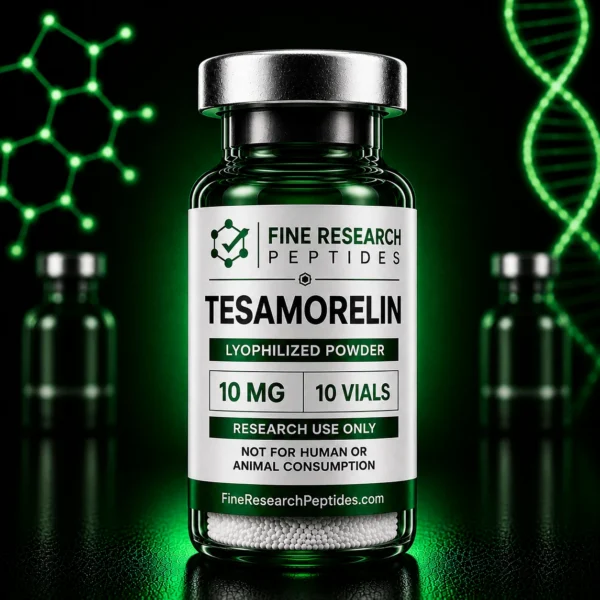
The endocrine system is one of the body’s most sophisticated communication networks, coordinating physiological processes through hormones and signaling molecules. Among the many areas of endocrine research, peptide-based compounds continue to provide valuable opportunities for scientists to investigate hormonal regulation, metabolism, and cellular communication. One peptide that has attracted sustained scientific interest is tesamorelin, a synthetic analogue of growth hormone-releasing hormone (GHRH).
Searches for tesamorelin australia and tesamorelin for weight loss often reflect interest in understanding the biology behind this peptide. From a scientific perspective, however, current research focuses on endocrine signaling, receptor interactions, hormone regulation, and metabolic pathways rather than commercial applications. Ongoing laboratory investigations aim to clarify how GHRH-related peptides interact with biological systems and contribute to our understanding of human physiology.
Understanding Metabolic Regulation
Metabolism refers to the collection of biochemical reactions that allow cells to produce energy, synthesize essential molecules, and maintain normal biological function.
These metabolic processes include:
- Energy production
- Nutrient utilization
- Protein synthesis
- Lipid metabolism
- Glucose regulation
- Cellular maintenance
Because metabolism requires constant coordination between multiple organs, hormones play a central role in regulating these activities.
Researchers investigate endocrine pathways to understand how hormonal signals influence metabolic balance throughout the body.
The Endocrine System and Hormonal Communication
The endocrine system consists of glands that release hormones into the bloodstream, allowing distant tissues to communicate with one another.
Major endocrine organs include:
- Hypothalamus
- Pituitary gland
- Thyroid gland
- Adrenal glands
- Pancreas
- Gonads
Each hormone interacts with specific receptors that activate intracellular signaling pathways responsible for regulating cellular activity.
This coordinated communication helps maintain physiological homeostasis under changing environmental conditions.
Growth Hormone-Releasing Hormone Biology
Growth hormone-releasing hormone (GHRH) is a naturally occurring peptide produced in the hypothalamus.
Its primary biological role is to stimulate specialized cells within the anterior pituitary gland through GHRH receptors.
Activation of these receptors initiates intracellular signaling cascades that contribute to growth hormone regulation.
Scientists study GHRH because it represents an excellent model for understanding endocrine communication between the brain and peripheral tissues.
What Is Tesamorelin?
Tesamorelin is a synthetic peptide analogue developed to interact with GHRH receptors in research settings.
Its structural similarity to endogenous GHRH allows researchers to investigate hormone-receptor interactions, signaling pathways, and endocrine regulation under controlled laboratory conditions.
Scientific discussions involving tesamorelin australia generally focus on peptide biology, receptor specificity, and molecular mechanisms rather than commercial availability.
Researchers continue examining how GHRH analogues contribute to a broader understanding of endocrine physiology.
Receptor Binding and Signal Transduction
Hormones and peptides exert their biological effects by binding to specific receptors located on target cells.
Following receptor activation, a sequence of intracellular events occurs that may include:
- Protein phosphorylation
- Enzyme activation
- Gene transcription
- Messenger RNA production
- Cellular adaptation
Researchers investigate these signaling cascades because they help explain how small peptide molecules influence larger physiological systems.
Understanding receptor biology remains fundamental to endocrine science.
Metabolic Signaling Pathways
Metabolism is regulated by numerous interconnected signaling pathways.
Researchers study interactions involving:
- Growth hormone pathways
- Insulin signaling
- Nutrient sensing
- Cellular energy regulation
- Mitochondrial function
Rather than functioning independently, these pathways communicate continuously to coordinate biological responses.
Current research involving tesamorelin for weight loss often examines these signaling networks from a mechanistic perspective, exploring how peptide-receptor interactions contribute to endocrine regulation and metabolic physiology.
Cellular Energy and Mitochondrial Function
Every cell depends on mitochondria for energy production.
Mitochondria generate adenosine triphosphate (ATP), which powers nearly all cellular activities.
Scientists investigate metabolic regulation because hormone signaling can influence:
- Cellular energy demand
- Nutrient utilization
- Protein synthesis
- Biochemical adaptation
Understanding these relationships provides valuable insight into how endocrine communication supports normal cellular function.
Modern Laboratory Techniques
Research involving peptide biology relies on advanced analytical methods.
Mass Spectrometry
Mass spectrometry confirms molecular identity and helps verify peptide structure.
High-Performance Liquid Chromatography (HPLC)
HPLC evaluates analytical purity and detects impurities within peptide samples.
Cell Culture Models
Cultured cells provide controlled systems for investigating receptor activation and intracellular signaling.
Molecular Biology Methods
Gene expression analysis, quantitative PCR, western blotting, and protein assays help researchers understand how peptide signaling influences cellular behavior.
Together, these techniques provide detailed information about molecular interactions.
Advances in Endocrine Research
Technological innovation continues transforming hormone research.
Scientists increasingly employ:
- Proteomics
- Transcriptomics
- Computational biology
- Artificial intelligence-assisted molecular modeling
- Single-cell sequencing
- Advanced microscopy
These approaches allow researchers to investigate endocrine signaling with unprecedented precision.
As technology advances, researchers gain deeper insight into the complex communication networks that regulate metabolism.
Evaluating Scientific Evidence
Scientific understanding develops through careful evaluation of experimental findings.
Researchers assess studies by considering:
- Experimental methodology
- Statistical analysis
- Laboratory models
- Reproducibility
- Independent validation
Because endocrine physiology involves numerous interacting systems, individual findings are interpreted within the broader context of accumulated scientific evidence.
Responsible research emphasizes reproducibility and transparent reporting.
Future Directions in Peptide Science
Peptide biology remains an active field of investigation.
Future research may continue exploring:
- Receptor selectivity
- Intracellular signaling networks
- Endocrine feedback regulation
- Metabolic communication
- Systems biology
Emerging technologies are expected to improve understanding of how peptide molecules influence physiological regulation at cellular and molecular levels.
Continued interdisciplinary collaboration between endocrinologists, molecular biologists, and biochemists will likely expand knowledge of hormone-mediated signaling.
Conclusion
Research involving tesamorelin contributes to a broader understanding of endocrine communication, metabolic regulation, and growth hormone-releasing hormone biology.
Scientific interest reflected in searches such as tesamorelin australia and tesamorelin for weight loss highlights ongoing curiosity about peptide-mediated signaling pathways. Current laboratory research focuses on receptor interactions, molecular communication, endocrine physiology, and metabolic regulation while emphasizing rigorous methodology and evidence-based interpretation.
As advances in biotechnology and molecular science continue, studies of peptide signaling will remain an important component of understanding how hormones regulate complex biological systems and maintain metabolic balance.