In healthcare and many professional environments, hand protection isn’t a small detail it’s part of everyday safe practice. From routine patient care to laboratory work, the right pair of gloves helps protect both the people doing the work and those they’re caring for.
But not all disposable gloves are the same. The material, fit, and quality all affect how well a glove performs through a busy shift. That’s why glove selection matters more than many people realize.
Among the options available today, nitrile gloves have become one of the most widely used choices across hospitals, clinics, laboratories, and professional settings. In this guide, we’ll explain what nitrile gloves are, why they’re so popular in healthcare, and what to look for when choosing the right pair.
What Are Nitrile Gloves?
Nitrile gloves are disposable, single-use gloves made from a synthetic rubber material. They’re designed to act as a protective barrier between the wearer’s hands and the task, surface, or environment they’re working in.
Because they are made without natural rubber latex, nitrile gloves are widely used as a latex-free option in healthcare and professional environments.
They are used to help protect the hands during everyday tasks. They also support good hygiene and can be changed quickly whenever a new pair is needed.
Why Are Nitrile Gloves So Popular in Healthcare?
Healthcare environments move quickly. Staff may change gloves many times a day as they move between tasks and patients, so the gloves they rely on need to perform consistently every single time.
Here are some of the practical reasons nitrile gloves have become a go-to choice:
- Reliability for everyday use. A disposable glove needs to do its job dependably across a long shift, and nitrile gloves are widely used for exactly this kind of routine, repeated wear.
- Gloves are often worn for long periods during a shift so comfort matters. A glove that fits well can make everyday tasks easier and more comfortable.
- A latex-free option. For facilities looking to avoid natural rubber latex, nitrile offers a practical alternative.
- Fit for fast workflows. Single-use gloves support good hygiene practices, allowing staff to put on a fresh pair for each task and dispose of them afterward.
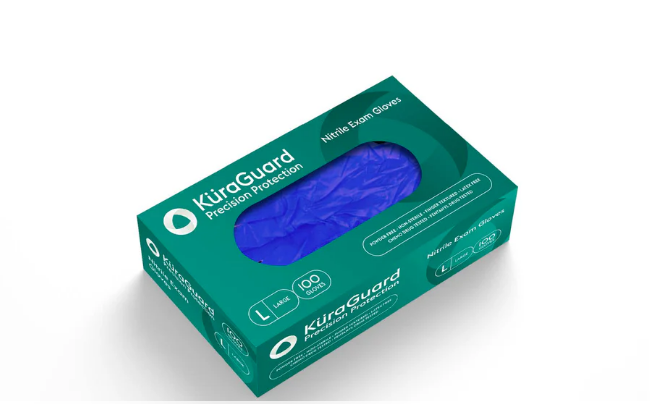
It’s worth noting that the right glove depends on the specific product. For example, the KüraGuard Nitrile Gloves from RCS Healthcare are powder-free to help reduce skin sensitivity and are designed to be hygienic and easy to fit across a range of sizes features that support comfortable, everyday use in medical environments.
What Healthcare Professionals Look for in Nitrile Gloves
Not all nitrile gloves feel the same in daily use. When selecting gloves, healthcare professionals usually pay attention to a few practical factors.
- Fit A glove that fits well is easier and more comfortable to work in. Gloves offered in a range of sizes make it easier to find the right match.
- Comfort Powder-free options can help reduce skin sensitivity during extended wear.
- Durability Features like a beaded cuff are designed to help reduce rips during use.
- Ease of use Easy dispensing and quick donning save time during a busy shift.
- Intended application The right glove depends on the task at hand.
As an example, KüraGuard Nitrile Gloves include a beaded cuff to help reduce rips and textured fingertips a design feature commonly associated with better grip and handling. They’re also compliant with ASTM standards, which speaks to the kind of consistency many facilities look for.
How to Choose the Right Nitrile Gloves
Choosing nitrile gloves comes down to matching the product to your needs. Here’s a practical way to think it through:
- Start with the intended use. Consider the tasks the gloves will be used for day to day.
- Factor in your workplace requirements. Different settings have different needs, so it helps to understand what your facility actually requires before ordering.
- Prioritize comfort. Since gloves are often worn for long stretches, comfort features like powder-free formulations are worth considering.
- Check the sizing. Look for a product offered in multiple sizes. KüraGuard Nitrile Gloves, for instance, are available in S, M, L, and XL.
- Review the product specifications. Always read the product details before buying. KüraGuard gloves are latex-free, powder-free, and compliant with ASTM standards, with the full specifications listed on the product page.
The goal is a glove that fits your team, suits your tasks, and performs consistently.
Why Consistency Matters in Healthcare PPE
In healthcare, personal protective equipment (PPE) is part of daily operations. When supplies are reliable and consistent, staff can focus on their work instead of worrying about whether they’ll have what they need.
Reliable glove supplies help workplaces avoid unnecessary disruptions. When the same products are available consistently staff can focus on their work and purchasing teams can manage inventory more effectively.
This is where a dependable supplier makes a difference. RCS Healthcare is a global sourcing and distribution company for niche medical products and services, offering quality products at manufacturer-direct pricing along with the individual service, support, and attention that healthcare customers need.
Spotlight on KüraGuard Nitrile Gloves
RCS Healthcare offers KüraGuard Nitrile Gloves as part of its PPE range.
Here’s what KüraGuard offers, based on the product details:
- Latex-free formulation a synthetic, non-latex glove.
- Powder-free to help reduce skin sensitivity.
- Beaded cuff designed to help reduce rips.
- Compliant with ASTM standards.
- Fingertip textured.
- Easy dispensing carton for convenient everyday use.
KüraGuard gloves are available in sizes S, M, L, and XL. Each case includes 1,000 gloves, packaged as 10 boxes with 100 gloves per inner box, making them straightforward to stock and dispense.
For facilities interested in larger quantities, RCS Healthcare offers bulk pricing you can reach the team directly at [email protected] for details.
Common Mistakes When Purchasing Disposable Gloves
Buying disposable gloves seems simple, but a few common mistakes can lead to choosing the wrong product. Watch out for these:
- Choosing based only on price. The cheapest option isn’t always the best fit for your needs. Cost matters, but it shouldn’t be the only factor.
- Ignoring the intended use. Gloves should match the tasks they’ll be used for. Skipping this step can lead to a poor fit for the job.
- Not reviewing product specifications. The product details exist for a reason so read them before ordering and you know exactly what you’re getting.
- Purchasing without understanding workplace requirements. Take time to understand what your facility actually needs before placing an order.
A little research up front helps you choose gloves that genuinely work for your team and your day-to-day tasks.
Frequently Asked Questions
1. What are nitrile gloves used for?
Nitrile gloves are disposable gloves that help protect the hands during everyday tasks. They are widely used in healthcare and laboratories and caregiving settings and other workplaces where hygiene and hand protection are important.
2. Why are nitrile gloves popular in healthcare?
Many healthcare professionals use them every day because they are dependable and latex free. They also work well in environments where gloves need to be changed frequently throughout a shift.
3. Are nitrile gloves suitable for medical environments?
In healthcare settings nitrile examination gloves are used every day. KüraGuard Nitrile Gloves are made for medical use and comply with ASTM requirements.
4. How do I choose the right nitrile gloves?
Think about how the gloves will be used and what your workplace requires. Then look at things like fit and comfort and the product specifications. It is always worth checking the product details before placing an order.
5. What should healthcare facilities look for when buying gloves?
Facilities typically look for a good fit, comfort during long wear, durability, ease of use, and a product that suits the intended application along with a reliable, consistent supply.
6. Are nitrile gloves commonly used in laboratories?
Yes. Laboratories are one of the common settings where nitrile gloves are used for handling samples and bench work.
7. How often should disposable gloves be changed?
Disposable gloves are single-use by design. As a general practice, a fresh pair is used for each task and disposed of afterward. Follow your facility’s own guidelines and protocols for specifics.
8. What industries use nitrile gloves?
Nitrile gloves are used in more than just hospitals and clinics. They are also common in laboratories and care facilities and healthcare support services. Many medical supply businesses and other workplaces use them as well where hygiene and hand protection are important.
9. Why is glove quality important in healthcare settings?
Glove quality becomes noticeable when they’re used for hours at a time. A well-made glove is less likely to cause problems and helps people get on with their work.
10. What should I check before purchasing nitrile gloves?
Check the intended use, available sizes, comfort features, and the full product specifications. For KüraGuard Nitrile Gloves, those details including its latex-free, powder-free, and ASTM-compliant features are listed on the product page.
Final Thoughts
For many healthcare workers, nitrile gloves are just part of the job. They’re used throughout the day to help maintain hygiene and protect hands during routine tasks.
When comparing different gloves think about where they will be used and who will be wearing them. A good fit and comfortable feel often matter just as much as the specifications.
If you’d like to see how a quality nitrile exam glove is put together, take a closer look at KüraGuard Nitrile Gloves from RCS Healthcare or explore the wider range of PPE solutions available to find what fits your team’s needs.