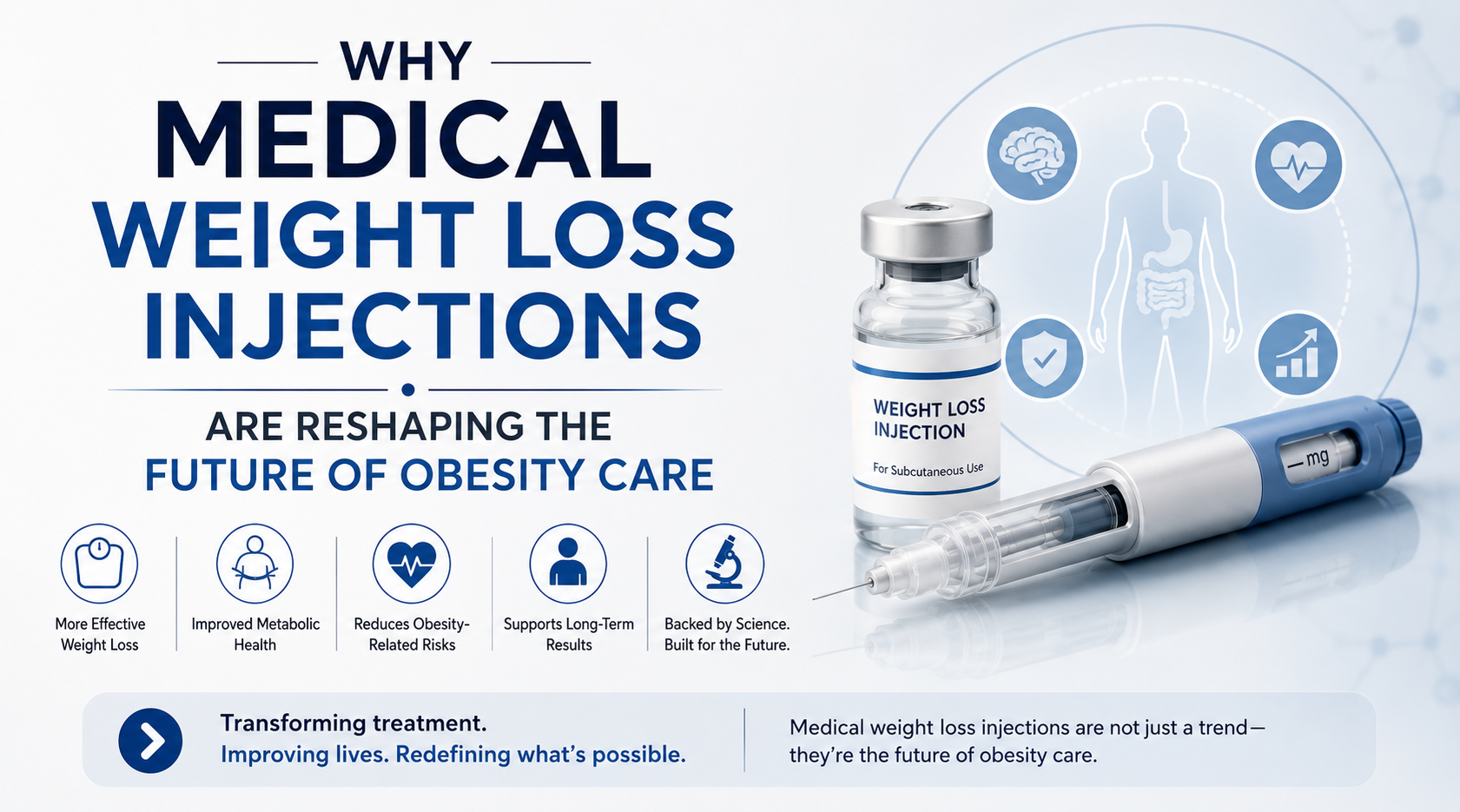
Obesity care has spent decades stuck in a frustrating loop. Lifestyle advice, calorie counting, exercise plans, and the occasional surgical option, all while success rates stayed stubbornly low for most patients. Then GLP-1 injections arrived and, almost overnight, changed what’s actually possible in a clinical setting. This isn’t an incremental improvement. It’s a genuine shift in how obesity gets treated, discussed, and understood.
Obesity Finally Gets Treated Like a Medical Condition
For years, obesity sat in an awkward space within medicine. Providers acknowledged it as a health risk, but treatment options were limited enough that many patients were simply told to eat less and move more, advice that rarely produced lasting change. The arrival of effective pharmacological therapy has pushed obesity toward being treated the way other chronic conditions are: with medication, monitoring, and a long-term management plan.
This reframing matters beyond the clinic. Insurers, employers, and public health bodies are slowly adjusting policy based on the recognition that obesity has a biological component that willpower alone rarely overcomes. That shift in framing didn’t happen because of new research on lifestyle interventions. It happened because a drug class finally produced results significant enough to force the conversation.
The Scale of Clinical Impact
What sets this current wave of treatment apart is the sheer size of the effect. Weight loss in the 15 to 20 percent range puts these medications in territory previously reserved for bariatric surgery, but without an operating table. For patients who were never candidates for surgery, or who simply didn’t want it, this opens up an entirely new pathway.
Cardiologists are watching outcomes data with particular interest, since several trials have shown reductions in major cardiovascular events among patients using these drugs, independent of diabetes status. That’s a bigger deal than it sounds. It suggests the benefit isn’t just about the number on the scale but about downstream effects on inflammation, blood vessel health, and cardiac strain. Obesity care is increasingly becoming inseparable from cardiovascular and metabolic care more broadly.
Patients Are Driving the Conversation
One of the more unusual dynamics in this shift is how much patient demand has outpaced clinical infrastructure. Patients are arriving at appointments having already researched medical weight loss injections extensively, sometimes more thoroughly than the providers they’re consulting. This has flipped the traditional dynamic where clinicians introduce treatment options. Now, providers are frequently responding to specific requests rather than initiating the conversation themselves.
That shift brings both opportunity and risk. Informed patients tend to engage more actively with their care, but they’re also vulnerable to misinformation from social media, where dosing advice and unverified claims circulate freely. Providers now carry more responsibility for correcting misconceptions than for simply explaining a new treatment option.
Specialized Clinics Are Filling a Structural Gap
Traditional healthcare systems, particularly in the UK, haven’t fully caught up with demand. Waiting lists for NHS weight management services remain long, and eligibility criteria exclude many patients who would still benefit from treatment. This gap has been filled by specialized private providers offering structured, medically supervised programmes.
Clinics like Weight Medics represent a model built specifically around this need, combining prescribing, monitoring, and patient support in a way that’s often faster and more accessible than standard referral pathways. For providers working in general practice, understanding that patients may already be receiving care through these channels is essential. It changes how intake conversations should be structured and what questions actually need asking.
Format Flexibility Is Expanding Access
Injectable therapy was the only option for a long time, and needle aversion kept a meaningful portion of eligible patients away from treatment altogether. That barrier is dropping fast. Oral formulations such as Wegovy Semaglutide Tablets UK give patients a genuine alternative, and the ripple effect is bigger than it might first appear.
Wider format options mean wider patient pools. People who avoided treatment because of injection anxiety, discomfort with self-administration, or simple preference now have a path into care that didn’t exist even a couple of years ago. That’s not a minor convenience upgrade. It’s a meaningful expansion of who obesity treatment can actually reach.
Managing Expectations Around Side Effects
None of this progress erases the reality that these medications come with real, sometimes uncomfortable, side effects. Gastrointestinal symptoms remain the most common complaint, and specific issues like the digestive changes and sulphur-smelling burps associated with certain formulations catch many patients off guard. Detailed resources addressing Mounjaro Diarrhoea and Sulphur Burps exist precisely because these symptoms are common enough to warrant dedicated explanation rather than a brief mention buried in a leaflet.
As obesity care shifts toward this pharmacological model, patient education around side effects becomes just as important as education around the benefits. Providers who skip this step tend to see higher discontinuation rates, often from patients who assume something has gone wrong rather than understanding it as an expected part of treatment.
What This Means for the Next Decade of Obesity Care
The trajectory here points toward obesity treatment becoming a standard, ongoing part of primary care rather than a specialist referral. As more molecules enter the pipeline and formulations diversify further, cost will likely come down and access will likely widen, following a pattern familiar from other drug categories that started expensive and niche before becoming mainstream.
Providers who build fluency now, understanding mechanisms, side effect profiles, format options, and the broader care ecosystem including private clinic pathways, will be better equipped for a future where obesity management looks less like occasional lifestyle counseling and more like chronic disease management. That’s a genuinely different model of care, and it’s arriving faster than most healthcare systems are prepared for.
The hype around these drugs will fade eventually, as hype always does. What won’t fade is the underlying shift they’ve triggered: obesity finally being treated with the clinical seriousness it always deserved.