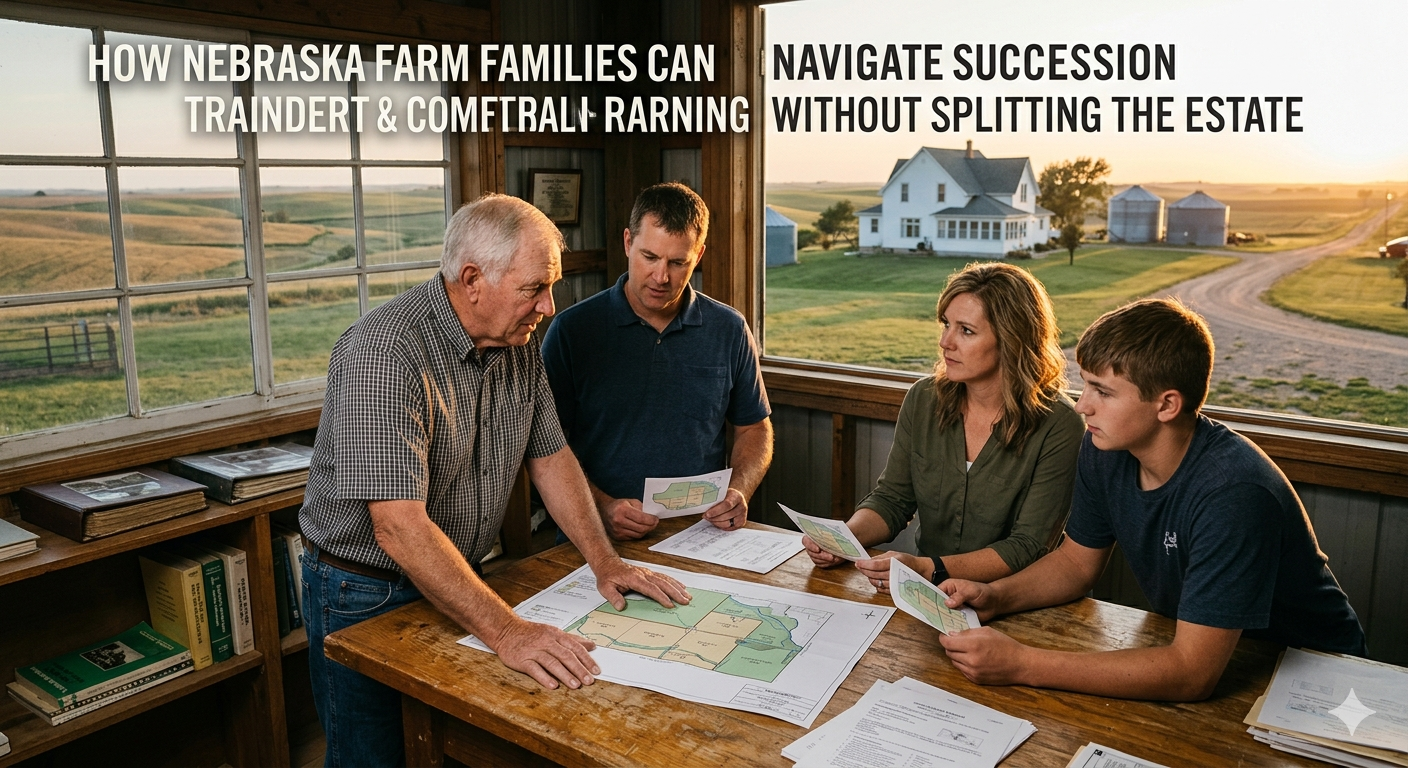
Imagine standing on a porch, looking out over hundreds of rolling acres of prime Nebraska corn, soy, or pasture. For decades, this land has been your life’s work, your retirement plan, and your family’s identity. But what happens to it when you are no longer at the helm?
Too many farm owners avoid thinking about tomorrow until tomorrow is already here. Without a rock-solid, legally sound transition plan, the legacy you spent a lifetime building can dissolve into family disputes, unexpected tax burdens, or forced liquidations.
Transitioning an agricultural operation isn’t just about passing down land; it’s about preserving a way of life. By understanding the unique intersection of family dynamics and agricultural law, you can ensure your operation thrives for generations to come.
The Complexities of the Modern Family Farm
Farms are entirely unique entities. Unlike a traditional corporate business where assets are liquid and neatly divided, a farm’s wealth is tied directly to the dirt, the machinery, and the livestock.
When it comes to passing down the operation, a standard off-the-shelf estate plan simply won’t cut it. You need a strategy tailored specifically to the unique regulations, zoning, and tax codes governing agricultural businesses.
The “Fair vs. Equal” Dilemma
One of the biggest hurdles in farm succession is managing family dynamics, particularly when some children stay on the farm while others move away.
- The On-Farm Heir: Usually invests years of sweat equity, expecting to eventually own and run the operation.
- The Off-Farm Heir: May not want to farm but still expects a fair share of their inheritance.
Dividing the land equally among all children often forces the on-farm heir to buy out their siblings at market rates they cannot afford, frequently resulting in the fragmentation or sale of the farm.
Navigating Asset Liquidity
A farm can be worth millions on paper, but cash poor. If a crisis hits or an owner passes away without a plan, paying out inheritance shares or estate taxes without selling off vital acreage or equipment becomes a massive challenge. This is where specialized agricultural law solicitors become invaluable assets to your operation’s survival.
Key Legal Frameworks for a Smooth Transition
A successful transition requires choosing the right legal structures to protect your assets from liabilities, taxes, and probate delays.
1. Utilizing Business Entities (LLCs and Corporations)
Moving ownership from an individual to a business entity is one of the most effective ways to transition a farm gradually. By forming a Family Limited Liability Company (FLLC) or an S-Corporation, you can:
- Divide ownership into shares or membership interests.
- Gift or sell shares to the next generation over time while maintaining operational control.
- Protect personal assets from farm-related liabilities and lawsuits.
2. The Power of Trusts
Trusts are excellent tools for keeping your farm out of the lengthy and public probate process. A revocable or irrevocable trust allows you to specify exactly how the land should be managed, who gets the income generated by the farm, and under what conditions the land can be sold.
Choosing the Right Legal Team for Your Legacy
You wouldn’t hire a city zoning attorney to defend your water rights, and you shouldn’t rely on a general practice lawyer to secure your farm’s future. Agriculture is heavily regulated, and local expertise matters.
When restructuring your business or planning an estate, partnering with established firms like Mid west Ag Law ensures that your strategy aligns with local state statutes, USDA programs, and complex tax laws. Experienced lawyers in Nebraska understand the hyper-local challenges Midwest farmers face, from center-pivot irrigation rights to specific state inheritance tax nuances.
Furthermore, qualified agricultural law solicitors look at your farm as a business, a home, and a legacy all at once, helping you build a bridge between generations without leaving your family exposed to unnecessary legal vulnerabilities.
Steps to Begin Your Succession Plan Today
Procrastination is the enemy of a successful transition. Here is how you can take control of your farm’s future today:
- Open the Dialogue Early: Sit down with your family to discuss goals, expectations, and realities. Don’t leave your children guessing about your intentions.
- Inventory All Assets: Document everything land deeds, water rights, machinery titles, livestock inventories, and outstanding debts.
- Identify the Successor: Clearly establish who will take over daily management and who will hold ownership shares.
- Build Your Advisory Council: Assemble a team consisting of an agricultural attorney, a specialized CPA, and a financial planner.
- Review and Update Annually: Agriculture changes rapidly. Tax laws shift, families grow, and operational goals evolve. Your plan should be a living document reviewed at least once a year.
A Secure Future for Nebraska Agriculture
Succession planning is not an admission of giving up; it is an act of stewardship. By putting a comprehensive plan in place now, you protect your family from conflict, insulate your business from financial shock, and guarantee that your land remains productive, profitable, and in the hands of those who love it most.
Key Takeaway
Successful farm succession relies on addressing the “fair vs. equal” dilemma early, utilizing strategic business entities like LLCs, and partnering with specialized agricultural legal experts to protect asset integrity across generations.
FAQs
Q1: What is the difference between estate planning and succession planning?
Estate planning dictates who gets your assets after you pass away. Succession planning focuses on the strategic, gradual transfer of business leadership, management, and operational control while you are still alive.
Q2: How can I treat my off-farm children fairly without dividing the land?
You can utilize non-farm assets, such as life insurance policies, investment portfolios, or residential property, to provide an inheritance for off-farm heirs while keeping the operational land intact for the farming heir.
Q3: Can a Family LLC help reduce inheritance taxes in Nebraska?
Yes. Transferring farm assets into a Family LLC allows you to gift discounted minority shares to your children over time, reducing the overall size of your taxable estate.
Q4: When should a farm owner start the succession planning process?
Ideally, 5 to 10 years before your anticipated retirement. Early planning allows for a gradual transition of management responsibilities and maximizes tax-saving strategies.
Q5: What happens to a farm if the owner dies without a will or a plan?
The estate enters probate and is distributed according to state intestate succession laws. This often results in the land being split equally among heirs, frequently forcing a sale to settle the estate.