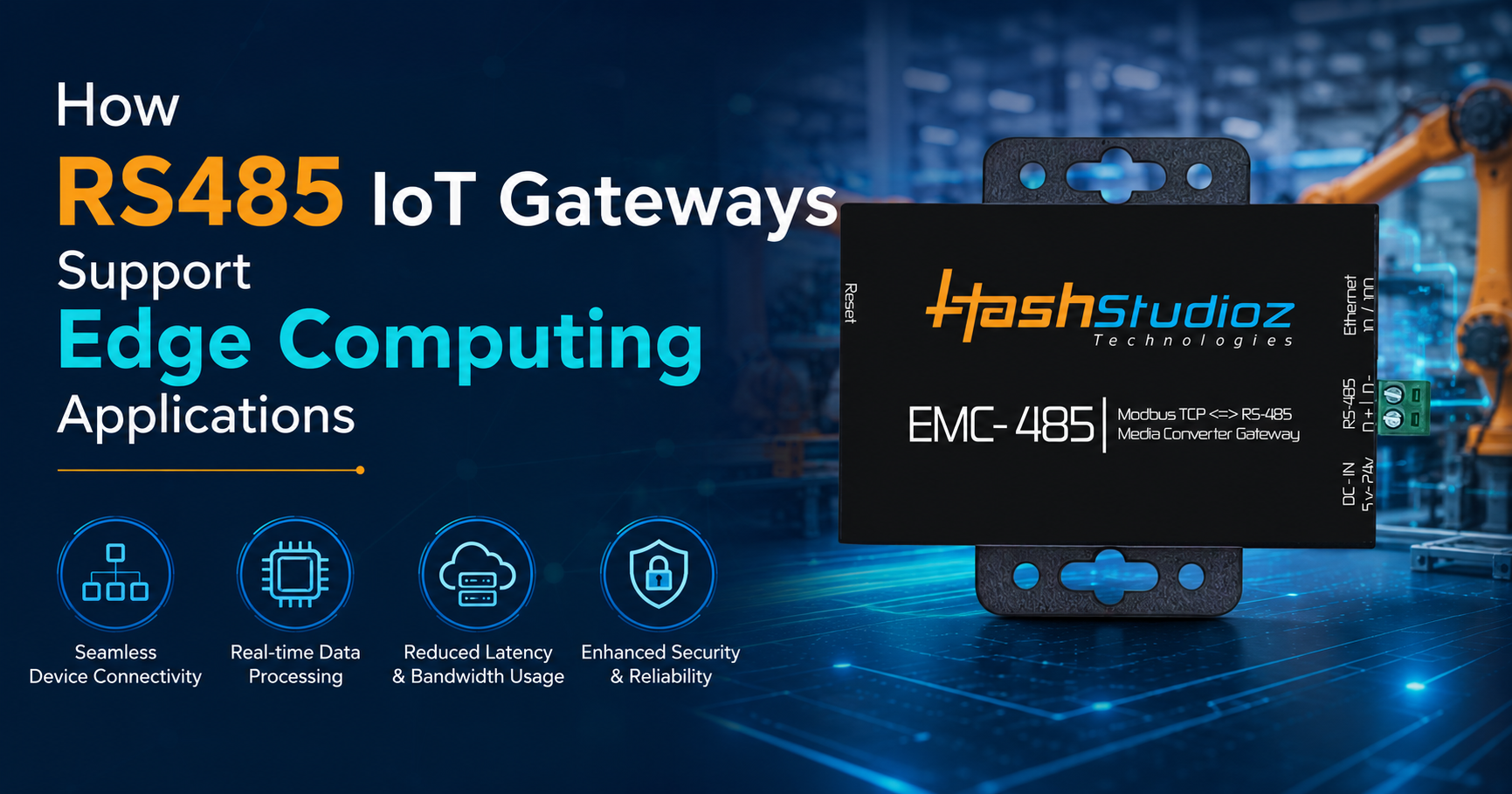
As industries rapidly adopt Industrial IoT (IIoT) technologies, the demand for faster data processing, real-time analytics, and low-latency communication continues to grow. Traditional cloud-based systems often struggle to process massive volumes of industrial data instantly. This is where edge computing plays a critical role.
An RS485 IoT Gateway acts as a bridge between industrial devices and edge computing systems, enabling efficient local data processing, device connectivity, and smart automation. These gateways are becoming essential in factories, energy systems, smart buildings, and remote monitoring applications.
In this blog, we will explore how RS485 IoT Gateways support edge computing applications and why they are vital for modern industrial infrastructure.
What is an RS485 IoT Gateway?
An RS485 IoT Gateway is an industrial communication device that connects RS485-enabled equipment such as sensors, PLCs, meters, and controllers to IoT platforms, edge servers, or cloud systems.
It converts serial communication protocols like Modbus RTU into Ethernet, Wi-Fi, 4G LTE, or MQTT-based communication for seamless industrial connectivity.
Key Functions of an RS485 IoT Gateway
- Data collection from industrial devices
- Protocol conversion
- Local edge data processing
- Remote monitoring and control
- Cloud connectivity
- Real-time communication
These gateways help industries modernize legacy systems without replacing existing hardware.
Understanding Edge Computing in Industrial IoT
Edge computing refers to processing data closer to the source instead of sending all data to a centralized cloud server.
In industrial environments, machines generate huge amounts of real-time data every second. Sending all this data to the cloud can create:
- High latency
- Network congestion
- Increased bandwidth costs
- Delayed decision-making
- Reduced system reliability
Edge computing solves these challenges by processing and analyzing data locally through gateways and edge devices.
Role of RS485 IoT Gateways in Edge Computing
RS485 IoT Gateways serve as intelligent edge devices that collect, process, filter, and transmit industrial data efficiently.
1. Real-Time Data Processing
Industrial applications often require instant decision-making. RS485 gateways process sensor and machine data locally before sending important information to the cloud.
Example:
In a manufacturing plant, temperature sensors connected through RS485 continuously monitor machinery. The gateway can instantly detect overheating and trigger alerts without waiting for cloud response.
Benefits:
- Faster response time
- Reduced downtime
- Improved operational safety
2. Reducing Cloud Bandwidth Usage
Sending raw industrial data continuously to the cloud consumes significant bandwidth.
RS485 IoT Gateways reduce unnecessary data transmission by:
- Filtering duplicate data
- Sending only critical events
- Compressing information
- Aggregating sensor readings
This minimizes network traffic and lowers operational costs.
3. Enabling Low-Latency Communication
Many industrial automation systems cannot tolerate delays.
Applications like:
- Robotic automation
- Smart manufacturing
- Predictive maintenance
- Energy monitoring
require millisecond-level response times.
RS485 IoT Gateways process commands locally, ensuring low-latency communication between machines and control systems.
4. Supporting Legacy Industrial Equipment
Many industries still use legacy RS485-based devices because they are reliable and cost-effective.
Replacing all old infrastructure can be extremely expensive.
RS485 IoT Gateways allow businesses to:
- Connect legacy devices to modern IoT systems
- Enable edge intelligence
- Extend equipment lifespan
- Modernize operations affordably
This makes digital transformation easier for industries.
Key Features That Make RS485 Gateways Ideal for Edge Computing
1. Multi-Protocol Support
Modern gateways support protocols such as:
- Modbus RTU
- Modbus TCP
- MQTT
- HTTP
- OPC UA
This enables communication between diverse industrial systems.
2. Local Data Storage
Many industrial gateways include onboard memory or SD card support for:
- Temporary data storage
- Offline operation
- Backup logging
This ensures uninterrupted operation even during network failures.
3. Edge Analytics Capabilities
Advanced RS485 IoT Gateways can perform:
- Data filtering
- Threshold monitoring
- Event detection
- Predictive analysis
This reduces dependency on centralized servers.
4. Remote Device Management
Gateways enable remote monitoring and firmware updates through:
- Cloud dashboards
- Mobile apps
- Web interfaces
This simplifies maintenance and troubleshooting.
5. Industrial-Grade Reliability
Industrial environments demand rugged devices capable of handling:
- Extreme temperatures
- Dust
- Electrical noise
- Vibration
RS485 gateways are designed specifically for harsh industrial conditions.
Industrial Applications of RS485 IoT Gateways in Edge Computing
1. Smart Manufacturing
Factories use RS485 gateways to connect:
- CNC machines
- PLCs
- Sensors
- Production equipment
Edge processing enables:
- Real-time monitoring
- Predictive maintenance
- Production optimization
2. Energy Management Systems
Industrial energy meters often communicate using RS485 Modbus protocol.
Gateways collect and analyze:
- Power consumption
- Voltage levels
- Equipment efficiency
Edge analytics helps reduce energy waste and optimize performance.
3. Smart Building Automation
RS485 gateways support building systems like:
- HVAC
- Lighting
- Access control
- Fire alarms
Edge computing enables intelligent automation and energy savings.
4. Water Treatment Plants
Water treatment facilities rely on real-time monitoring of:
- Flow meters
- Pressure sensors
- Pump systems
RS485 gateways ensure reliable local control and remote supervision.
5. Remote Asset Monitoring
Industries operating in remote areas use RS485 gateways with 4G LTE connectivity for:
- Oil & gas monitoring
- Solar power systems
- Telecom infrastructure
- Agricultural automation
Edge computing reduces reliance on unstable internet connections.
Advantages of RS485 IoT Gateways for Edge Computing
1. Faster Decision-Making
Local processing eliminates delays caused by cloud communication.
2. Improved Reliability
Operations continue even if internet connectivity fails.
3. Reduced Operational Costs
Lower bandwidth usage decreases cloud and network expenses.
4. Enhanced Security
Sensitive industrial data can be processed locally instead of being transmitted externally.
5. Better Scalability
Gateways support easy expansion of industrial IoT networks.
Future of RS485 IoT Gateways in Edge Computing
As Industry 4.0 adoption increases, RS485 IoT Gateways will become even more intelligent with features like:
- AI-based edge analytics
- Machine learning integration
- Advanced cybersecurity
- 5G connectivity
- Digital twin support
These technologies will further improve industrial automation and operational efficiency.
Conclusion
RS485 IoT Gateways play a crucial role in enabling edge computing across industrial environments. By connecting legacy RS485 devices with modern IoT systems, these gateways provide real-time data processing, low-latency communication, and intelligent automation.
From manufacturing plants to smart buildings and remote monitoring systems, RS485 gateways help industries achieve faster decision-making, improved reliability, and cost-efficient operations.
As edge computing continues to reshape Industrial IoT, RS485 IoT Gateways will remain a key technology driving smart industrial transformation.