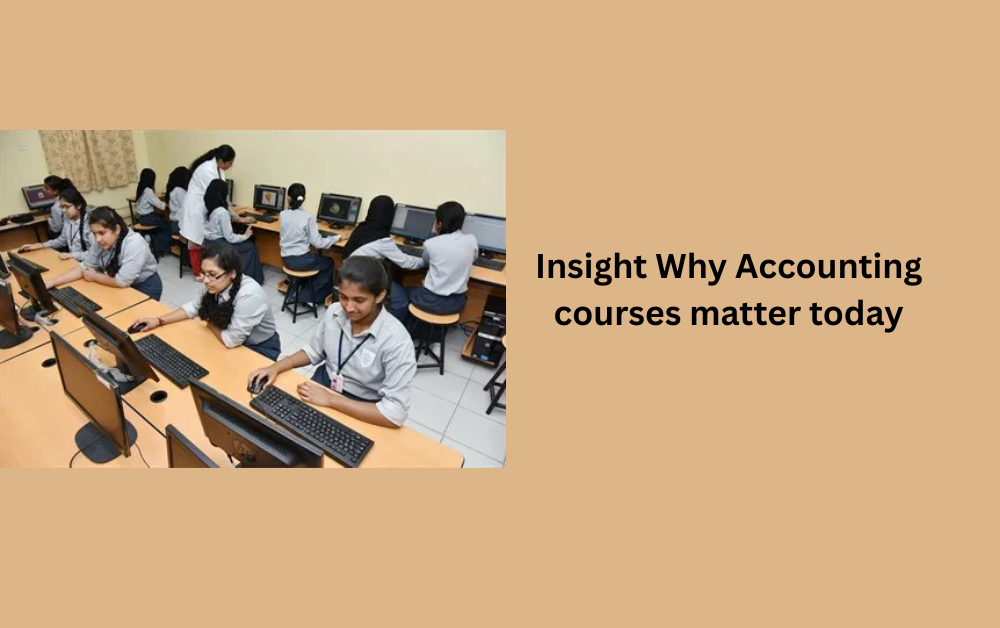
The Growing Importance of Accounting in the Modern World
Accounting has become one of the most essential functions in today’s business environment. Every organization, whether small or large, depends on accurate financial information to make decisions, manage resources, and ensure compliance with regulations. As businesses continue to expand and global markets become more competitive, the demand for skilled accounting professionals has increased significantly.
Accounting courses play a vital role in preparing individuals for this dynamic field. They provide structured learning that helps students and professionals understand financial systems, reporting methods, and analytical techniques. In today’s fast-paced economy, accounting knowledge is no longer optional but a necessary skill for career success in finance and business.
Why Accounting Courses Are More Relevant Than Ever
The relevance of accounting courses has grown due to the increasing complexity of financial systems. Businesses now operate in highly regulated environments where accuracy and transparency are critical. Financial errors can lead to serious consequences, making trained accounting professionals highly valuable.
NOTE:- Advanced Accounting courses in Sharjah had been organized by FCA Academy focused on skill development and career enhancement. Participants had gained knowledge in cost control, compliance, and financial reporting. The course had increased employability and had supported long-term professional growth in the accounting and finance field.
Another reason for their importance is the rapid advancement of technology. Modern accounting is no longer limited to manual bookkeeping. Digital tools, automation, and advanced software systems have transformed the way financial data is recorded and analyzed. Accounting courses now include training on these technologies, making learners more adaptable to modern workplace requirements.
Understanding the Core Purpose of Accounting Courses
Accounting courses are designed to build both theoretical knowledge and practical skills. They aim to teach individuals how financial transactions are recorded, processed, and interpreted. This understanding is essential for maintaining accurate financial records and supporting business decision-making.
Financial Recording and Reporting Skills
One of the primary focuses of accounting courses is financial recording. Learners are taught how to maintain journals, ledgers, and financial statements. These skills ensure that all business transactions are accurately documented and can be used for analysis and reporting.
Analytical Thinking and Decision Support
Accounting is not only about numbers but also about interpreting financial data. Courses help learners develop analytical thinking skills, enabling them to assess financial performance and provide insights that support strategic business decisions.
The Role of Accounting in Business Success
No business can operate effectively without proper accounting systems. Financial data is the backbone of decision-making in any organization. It helps managers understand profitability, control costs, and plan future growth strategies.
Accounting courses prepare individuals to contribute to this process by equipping them with the skills needed to manage financial information accurately. This ensures businesses remain financially stable and compliant with legal requirements.
How Accounting Courses Support Career Development
One of the most significant benefits of accounting courses is their impact on career development. These courses open doors to a wide range of job opportunities in finance, banking, auditing, taxation, and corporate management.

Entry-Level Opportunities
For beginners, accounting courses provide access to entry-level positions such as accounts assistant, bookkeeping clerk, payroll assistant, and finance support roles. These positions offer practical exposure and serve as a foundation for future career growth.
Advanced Career Progression
With experience and additional qualifications, individuals can progress to senior roles such as financial analyst, senior accountant, audit manager, and finance controller. Accounting courses provide the necessary foundation for this long-term career progression.
The Impact of Technology on Accounting Education
Technology has transformed the accounting profession in many ways. Automation, artificial intelligence, and cloud-based accounting systems have made financial processes faster and more accurate. As a result, accounting courses now include training in digital tools and software applications.
This technological integration ensures that learners are prepared for modern workplaces. It also enhances efficiency and reduces the chances of human error in financial reporting. Understanding these tools is now a key requirement for accounting professionals.
Why Employers Value Accounting Training
Employers highly value candidates who have completed accounting courses because they possess both theoretical knowledge and practical skills. Trained individuals require less supervision and can quickly adapt to workplace environments.
Accounting courses also demonstrate a candidate’s commitment to professional development. This increases employability and makes individuals more competitive in the job market. Employers prefer candidates who can handle financial responsibilities with accuracy and confidence.
Personal Benefits of Learning Accounting
Beyond professional growth, accounting courses also provide personal benefits. Individuals gain better financial awareness, which helps them manage personal budgets, savings, and investments more effectively.
These skills are useful in everyday life, allowing individuals to make informed financial decisions. Understanding accounting principles also improves financial discipline and planning abilities.
Global Relevance of Accounting Skills
Accounting is a universal language of business. The principles of accounting are applied worldwide, making it a globally relevant skill. This opens opportunities for international careers and remote work in multinational organizations.
Accounting courses equip learners with knowledge that can be applied across different countries and industries. This global relevance increases career flexibility and long-term opportunities for professionals.
Future Scope of Accounting Careers
The future of accounting remains strong despite technological advancements. While automation may handle repetitive tasks, human expertise is still required for analysis, interpretation, and strategic planning.
As businesses continue to grow and regulations become more complex, the demand for skilled accounting professionals will increase. Accounting courses ensure that individuals are prepared for these future challenges and opportunities.
Conclusion: The Lasting Value of Accounting Courses
Accounting courses matter today more than ever due to their strong impact on career development, business success, and financial understanding. They provide essential skills that are applicable across industries and offer long-term career stability.
From improving job opportunities to enhancing analytical thinking, accounting education plays a crucial role in shaping successful professionals. In a rapidly changing world, investing in accounting knowledge remains one of the most practical and valuable decisions for individuals aiming for a strong and secure future in finance and business.
For More Isightful Articles Related To This Topic, Feel Free To Visit: bloggingwebs.