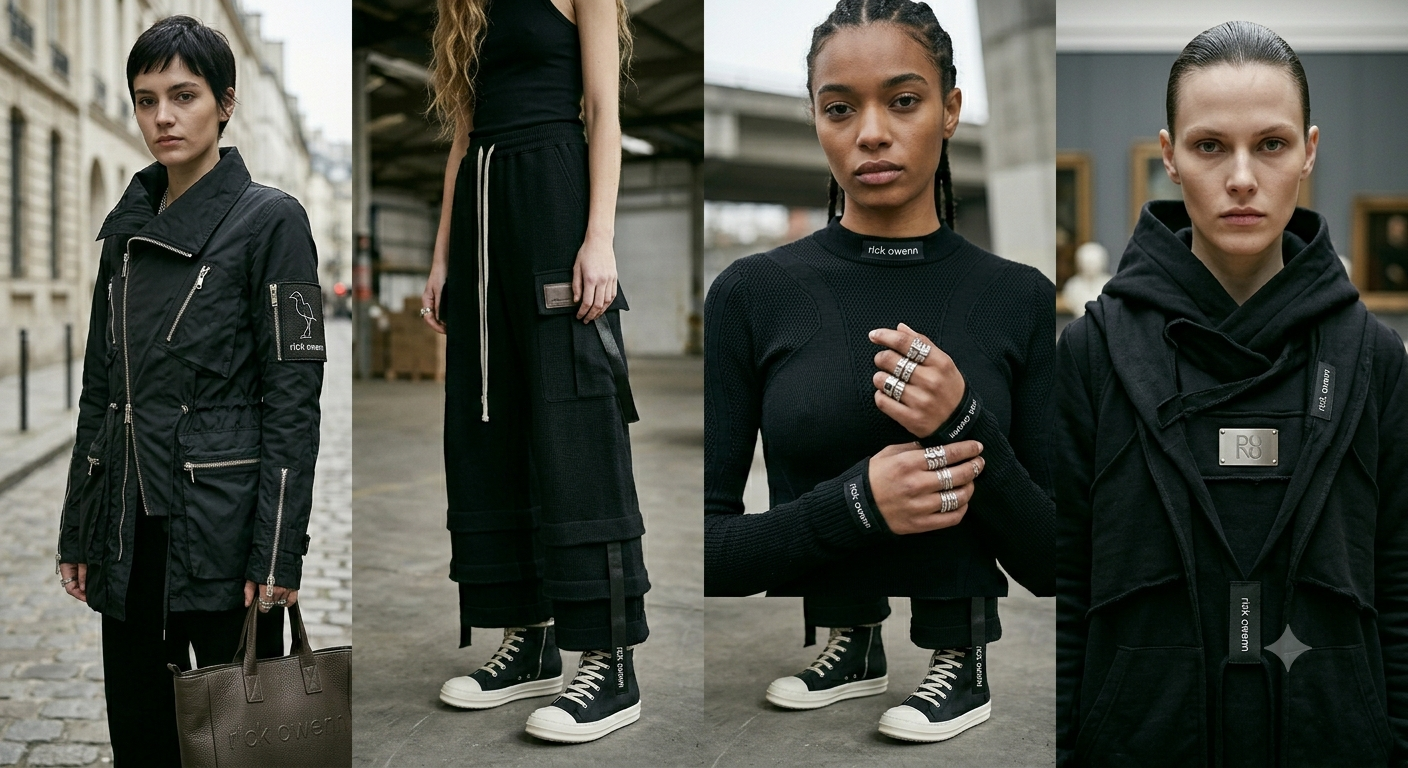
Rick Owens has spent decades building a fashion universe that feels like nothing else on the runway. His clothes carry that unmistakable mix of brutalist architecture, gothic romance, and street-level grit that has made him the patron saint of dark, avant-garde style. But a full Rick Owens wardrobe comes with a price tag that puts it out of reach for most people, and even for those who can afford it, there’s real value in exploring other designers who speak the same visual language. Whether you’re chasing that sculptural silhouette, the monochrome palette, or simply the attitude behind the clothes, there’s a whole world of labels that scratch the same itch. This guide walks through the best alternatives for dark fashion fans, from luxury Belgian and Japanese houses to more accessible streetwear-driven brands, so you can build a wardrobe that captures the Rick Owens spirit without needing his exact name on the label.
The Romantic Gothic Counterpart
If Rick Owens is architecture, Ann Demeulemeester is poetry. The Belgian designer has built her name on flowing, layered silhouettes rendered almost entirely in black and white, creating a mood that’s dark but never cold. Her pieces lean into asymmetry and draping rather than rigid structure, giving them a softer, more romantic edge compared to Owens’ sharper lines. Think billowing coats, laced-up boots, and shirts that look like they belong in a Victorian nightmare rather than a modern city street. For fans who love the emotional weight of Rick Owens but want something with a bit more fluidity and gothic tenderness, Ann Demeulemeester is often described as his “romantic cousin.” The brand has continued to evolve under new creative direction in recent years, but the moody, monochrome DNA remains fully intact, making it one of the most natural stepping stones for anyone building a darker wardrobe.
Japanese Minimalism Meets Volume
Yohji Yamamoto occupies a similarly legendary status in avant-garde fashion, and his influence on Rick Owens himself is well documented. Yamamoto’s world is built almost entirely around black, oversized tailoring, and asymmetrical draping that turns the human body into a moving sculpture. Where Owens often distorts proportion through zippers, leather, and exaggerated sneaker soles, Yamamoto works through fabric volume and traditional Japanese construction techniques, resulting in pieces that feel timeless rather than trend-driven. His designs carry a quiet, almost meditative darkness rather than an aggressive one, which appeals to fans who want the drama of avant-garde fashion without the harder industrial edge. For anyone assembling a dark, artful wardrobe, a Yohji Yamamoto coat or trouser is considered a cornerstone piece that pairs effortlessly with more experimental labels.
Conceptual Chaos
Comme des Garçons, led by Rei Kawakubo, takes the avant-garde spirit in an entirely different direction from Rick Owens, but the two brands share a deep respect for breaking fashion’s usual rules. While Owens keeps a fairly consistent dark, streamlined aesthetic season after season, CdG throws itself into deconstruction, exaggerated proportions, and ideas that sometimes barely resemble traditional clothing at all. This makes it less of a direct dupe and more of a spiritual sibling for people who want intellectually challenging fashion. Diffusion lines like Comme des Garçons Homme Plus and Junya Watanabe offer slightly more wearable entry points into the CdG universe, with plenty of black, layered, and asymmetrical pieces that slot naturally into a Rick Owens-inspired wardrobe. For dark fashion fans who care as much about concept as silhouette, CdG rewards a deeper dive.
Sharp Tailoring With Luxe Draping
Haider Ackermann offers a more polished, tailored take on the same moody sensibility that defines Rick Owens’ world. His collections blend structured jackets with unexpected draping, rich jewel tones alongside black, and asymmetric cuts that feel rebellious without abandoning refinement. This makes Ackermann a strong choice for fans who love Owens’ dark undertones but want pieces that read as slightly more formal or occasion-ready. A Haider Ackermann jacket can slide into a dressier setting in a way a Rick Owens piece sometimes can’t, while still carrying that same sense of quiet danger. For people building a wardrobe that needs to move between gallery openings and gothic-leaning nightlife, Ackermann bridges that gap particularly well.
Muted Minimalism With Sculptural Edges
Damir Doma has built a reputation on minimalist, sculptural clothing defined by innovative fabrics, oversized fits, and a muted, almost monastic color palette. The silhouettes echo the volume and drape found in Rick Owens’ work, but the overall energy is quieter and more understated, making Doma’s pieces easier to integrate into an everyday wardrobe. Raw-edged finishes and layered construction give the clothes a lived-in, textural quality that still reads as unmistakably avant-garde. Fans looking for that Rick Owens mood in a more subtle, wearable package often find Damir Doma to be an ideal middle ground between high fashion drama and daily practicality.
The Underground Japanese Cult Favorite
Julius, founded in Tokyo, has developed a devoted following among people who want an even darker, more industrial edge than mainstream avant-garde labels typically offer. The brand leans almost entirely on black and grey, with oversized, deconstructed cuts that feel simultaneously bohemian and militaristic rickowenn.com Julius shares Rick Owens’ obsession with texture and proportion, but its smaller-scale, cult-brand status gives it an underground appeal that resonates with fans who want something less recognizable than the bigger designer names. For shoes and outerwear especially, Julius is frequently mentioned alongside Rick Owens in conversations about avant-garde footwear and leatherwear.
Gothic Drama on a Grand Stage
For fans who want theatricality layered on top of darkness, Alexander McQueen brings a more overtly gothic, romantic intensity to high fashion. The house has always shared Owens’ love of powerful, sculptural silhouettes, whether through structured blazers, dramatic dresses, or bold accessories that feel almost architectural in their own right. McQueen’s designs tend to carry more narrative and craftsmanship-driven detail than Owens’ stripped-back minimalism, making it a good pick for those who want their dark fashion to feel a little more like storytelling and a little less like pure structure. It’s a heavier investment, but the emotional payoff and craftsmanship are considerable.
Deconstruction as a Philosophy
Maison Margiela remains one of the defining houses of avant-garde deconstruction, and its influence overlaps heavily with the world Rick Owens operates in. Margiela built its reputation on exposed seams, raw hems, and reworked vintage pieces long before “deconstructed” became a fashion buzzword, and that philosophy continues to shape the brand today. The Tabi boot alone has become a symbol of dark, intellectual fashion in the same way Owens’ Geobasket sneaker has, and both brands share a devoted, almost cult-like following. For anyone who wants pieces with real conceptual weight behind the black fabric, Margiela is essential.
Futuristic and Experimental Edges
For fans who want to push further into experimental territory, Gareth Pugh and Craig Green both offer takes on avant-garde fashion that go beyond what Rick Owens typically explores. Pugh works with unconventional materials like PVC and metallics, building bold, architectural shapes that lean theatrical and futuristic rather than grounded in wearability. Craig Green, meanwhile, built his reputation on conceptual yet utilitarian menswear, blending workwear references with sculptural, almost ritualistic silhouettes. Neither brand is a direct substitute for Owens, but both are natural next steps for fans whose taste skews toward the wilder, more experimental end of dark fashion.
Budget-Friendly Ways to Capture the Rick Owens Look
Not everyone building a dark, avant-garde wardrobe wants to spend designer money, and thankfully the aesthetic has trickled down into more accessible spaces. Streetwear-adjacent brands and even mainstream retailers now regularly stock oversized hoodies, distressed knits, wide-leg trousers, and faux-leather jackets that echo the Rick Owens mood at a fraction of the cost. Layering pieces in black, grey, and muted earth tones, paying attention to proportion and drape, and hunting through secondhand or resale platforms for past-season pieces from labels https://rickowenn.com/ like Yohji Yamamoto or Ann Demeulemeester can also stretch a budget significantly further. Building this kind of wardrobe is less about chasing a specific logo and more about understanding the core elements that make the aesthetic work: volume, texture, monochrome tones, and a willingness to look a little unconventional. With the right eye, dark fashion fans can build a genuinely striking, Rick Owens-inspired wardrobe at almost any budget.