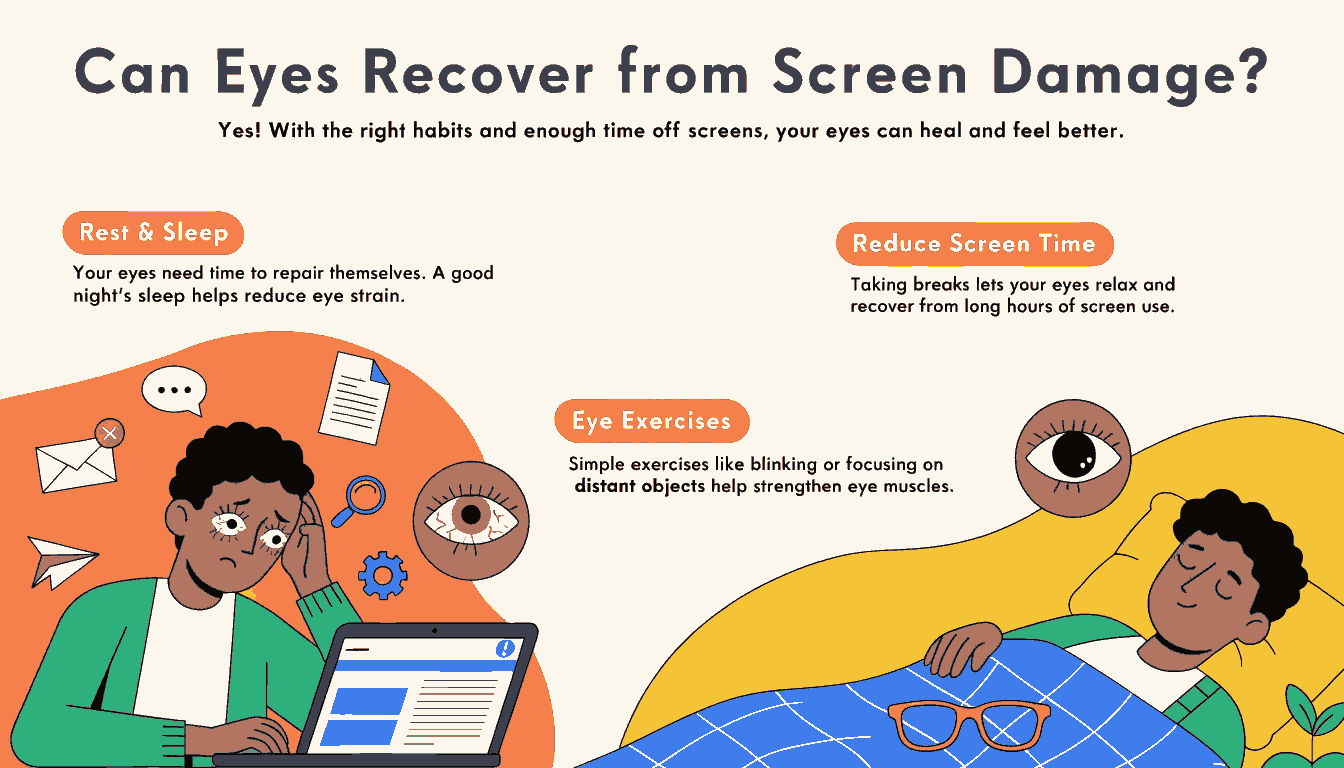
In today’s digital world, screens have become an unavoidable part of daily life. Whether it’s working on a computer, attending online classes, scrolling through social media, or watching entertainment content, many people spend several hours each day staring at screens. As a result, concerns about eye health are growing, leading many to ask: “Can eyes recover from screen damage?”
The good news is that most screen-related eye problems are temporary and can improve with proper care and healthy habits. However, understanding the effects of prolonged screen exposure is essential to protect your vision and overall eye comfort.
Just as people explore solutions like Skincare for Long Screen Days to combat skin fatigue caused by digital exposure, it is equally important to take steps to care for your eyes during extended screen use.
What Is Screen Damage?
The term “screen damage” is commonly used to describe a group of symptoms known as Digital Eye Strain or Computer Vision Syndrome. These symptoms occur when the eyes become fatigued after prolonged use of digital devices.
Common symptoms include:
- Dry eyes
- Blurred vision
- Eye fatigue
- Headaches
- Burning sensation
- Difficulty focusing
- Neck and shoulder pain
These symptoms are usually caused by prolonged screen viewing rather than permanent damage to the eyes.
Can Screens Permanently Damage Your Eyes?
Current research suggests that normal use of digital screens does not typically cause permanent eye damage. However, excessive screen time can contribute to ongoing discomfort and worsen existing vision problems.
Most screen-related symptoms are temporary and improve when screen habits are adjusted.
That said, prolonged screen use can indirectly affect eye health by:
- Reducing blinking frequency
- Increasing eye strain
- Contributing to dry eye syndrome
- Disrupting sleep patterns
Therefore, while screens may not permanently damage healthy eyes, they can significantly impact eye comfort and quality of life.
Why Do Screens Cause Eye Strain?
Several factors contribute to digital eye strain.
Reduced Blinking
People blink less frequently when looking at screens. Blinking helps keep the eyes lubricated.
When blinking decreases:
- Tears evaporate faster
- Eyes become dry
- Irritation increases
Prolonged Focus
Staring at a screen for long periods forces the eye muscles to work continuously.
This can result in:
- Fatigue
- Difficulty focusing
- Temporary blurred vision
Screen Glare
Glare from screens and surrounding lighting can make the eyes work harder.
Poor Posture
Long hours of screen use often lead to poor posture, which contributes to headaches and discomfort around the eyes.
Can Eyes Recover from Digital Eye Strain?
Yes, in most cases, eyes can recover from digital eye strain.
Once screen exposure is reduced and proper eye care practices are followed, symptoms often improve significantly.
Recovery may involve:
- Resting the eyes
- Improving screen habits
- Maintaining hydration
- Getting adequate sleep
Many people notice improvement within a few hours or days after reducing screen strain.
Signs Your Eyes Need a Break
Pay attention to these warning signs:
- Frequent headaches
- Blurry vision
- Eye dryness
- Difficulty focusing
- Watery eyes
- Sensitivity to light
These symptoms indicate that your eyes may be overworked and need rest.
The 20-20-20 Rule
One of the most effective ways to reduce eye strain is the 20-20-20 rule.
Every 20 minutes:
- Look at something 20 feet away
- For at least 20 seconds
This simple habit helps relax the eye muscles and reduce fatigue.
Tips to Help Eyes Recover from Screen Fatigue
1. Take Regular Breaks
Avoid staring at screens continuously for several hours.
Short breaks throughout the day help reduce strain and improve comfort.
2. Blink More Often
Conscious blinking helps keep the eyes moist and comfortable.
If your eyes feel dry:
- Blink slowly several times
- Use artificial tears if recommended by an eye specialist
3. Adjust Screen Brightness
Your screen should not be significantly brighter or darker than the surrounding environment.
Proper brightness reduces unnecessary eye strain.
4. Increase Text Size
Small text forces your eyes to work harder.
Use comfortable font sizes to reduce strain.
5. Maintain Proper Viewing Distance
Keep screens approximately:
- 20–28 inches away from your eyes
- Slightly below eye level
This position is generally more comfortable for prolonged use.
6. Improve Lighting
Avoid:
- Excessive glare
- Bright reflections
- Poor room lighting
Balanced lighting creates a more eye-friendly environment.
Importance of Sleep for Eye Recovery
Sleep plays a crucial role in eye health.
During sleep:
- Eyes receive moisture
- Muscles relax
- Tissues recover
Lack of sleep can worsen:
- Eye strain
- Dryness
- Redness
- Blurred vision
Most adults should aim for 7–9 hours of quality sleep per night.
Nutrition for Healthy Eyes
Proper nutrition supports long-term eye health and recovery.
Vitamin A
Supports vision and eye surface health.
Sources:
- Carrots
- Sweet potatoes
- Spinach
Omega-3 Fatty Acids
May help improve tear production.
Sources:
- Fish
- Flaxseeds
- Walnuts
Vitamin C
Supports healthy blood vessels in the eyes.
Sources:
- Citrus fruits
- Berries
- Bell peppers
Lutein and Zeaxanthin
These antioxidants support eye health.
Sources:
- Kale
- Spinach
- Broccoli
Blue Light and Eye Health
Blue light from screens has become a popular topic of discussion.
While blue light may contribute to discomfort and sleep disruption, current evidence suggests that normal screen exposure does not cause permanent retinal damage.
However, reducing screen exposure before bedtime may help improve sleep quality.
Helpful strategies include:
- Night mode settings
- Blue light filters
- Limiting screen use before sleep
When Should You See an Eye Doctor?
Although digital eye strain is usually temporary, certain symptoms require professional evaluation.
Consult an eye specialist if you experience:
- Persistent blurry vision
- Severe headaches
- Eye pain
- Sudden vision changes
- Ongoing dryness despite treatment
An eye examination can identify underlying vision problems that may be contributing to symptoms.
Long-Term Habits for Healthy Eyes
Maintaining healthy screen habits can prevent recurring eye strain.
Healthy Habits Include:
- Following the 20-20-20 rule
- Staying hydrated
- Using proper lighting
- Maintaining good posture
- Getting enough sleep
- Scheduling regular eye exams
These practices support both comfort and long-term eye health.
Final Thoughts
So, can eyes recover from screen damage? In most cases, yes. The symptoms commonly associated with screen use—such as dryness, fatigue, headaches, and blurred vision—are usually temporary and improve with proper eye care and healthier screen habits.
By taking regular breaks, improving your workstation setup, staying hydrated, and prioritizing sleep, you can significantly reduce digital eye strain and help your eyes recover from the effects of prolonged screen exposure.
As digital devices continue to play a central role in everyday life, maintaining healthy habits is the best way to protect your vision and overall well-being.
FAQs:
1. Can screen time permanently damage eyesight?
Normal screen use generally does not cause permanent eye damage, but it can lead to temporary eye strain and discomfort.
2. How long does it take eyes to recover from screen fatigue?
Many people experience improvement within a few hours or days after reducing screen exposure and following proper eye care habits.
3. What is the 20-20-20 rule?
Every 20 minutes, look at something 20 feet away for 20 seconds to help reduce eye strain.
4. Why do my eyes feel dry after using a computer?
People tend to blink less while looking at screens, causing tears to evaporate more quickly and leading to dryness.
5. Does blue light permanently harm the eyes?
Current evidence suggests that normal blue light exposure from screens does not cause permanent eye damage, although it may affect sleep and comfort.
6. Can eye exercises improve digital eye strain?
Taking breaks and changing focus regularly can help relax eye muscles and reduce fatigue.
7. When should I see a doctor for screen-related eye problems?
You should consult an eye specialist if symptoms are severe, persistent, or accompanied by sudden vision changes or eye pain.