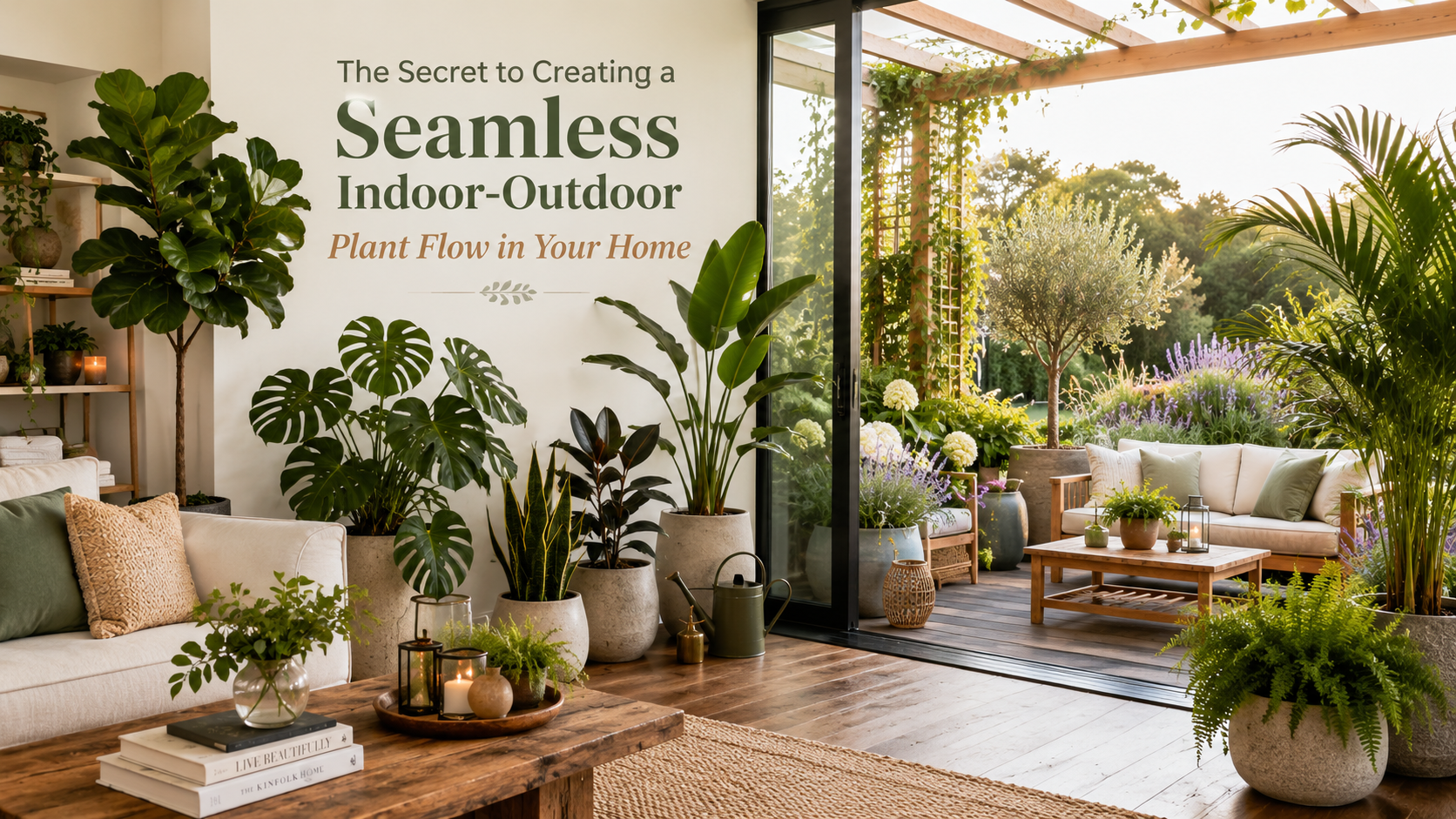
Many homeowners view their living rooms and backyards as two completely separate worlds. However, you can easily connect them by using greenery to bridge the physical gap. Creating a cohesive environment requires a bit of planning, but the visual payoff is immense. You can achieve this fluid transition by matching your design choices across the glass threshold.
Blur the Boundaries with Visual Sightlines
First, you should look at what you see when you stand inside your house. If you see bare dirt outside, the transition feels jarring. You can change this by placing similar types of pots on both sides of your glass doors. For example, if you use terracotta pots inside, you should probably put terracotta pots right outside on the deck too. This trick tricks the eye into thinking the space continues endlessly.
Next, think about the heights of your potted containers. You can put tall figs inside near the windows, and then you can plant tall shrubs just outside the glass. The human brain naturally links these shapes together. Consequently, the hard wall seems to disappear completely. It is a simple layout strategy that alters your perception of the room.
Select the Right Greenery and Visual Accents
You need to pick choices that handle your specific local climate well. If you live in Colorado, you know that weather shifts occur quite rapidly. Therefore, using hardy options helps maintain your design look throughout the changing seasons.
Here are four practical methods to help you establish a unified design scheme:
- Mirror Leaf Shapes: Place round-leafed rubber plants by the sofa and round-leafed hostas on the porch.
- Keep Planters Uniform: Utilize matching ceramic containers to establish a clean rhythm that links the separate zones.
- Coordinate Floral Colors: Pick a specific hue, like bright yellow, to feature in your rugs indoors and your garden blossoms outdoors.
- Incorporate Seasonal Highlights: Use fresh cuts like the best flowers for summer centerpieces on your dining table to mirror the active garden growth outdoors.
By repeating these elements, the layout flows gracefully from your cozy couch to your open patio.
Establish Physical and Textured Pathways
Another helpful idea involves matching your indoor flooring textures with your outdoor walkway materials. If your kitchen features gray stone tiles, you might want to pick gray concrete pavers for your patio. This design choice forms an uninterrupted line that guides your footsteps outside. Furthermore, leaving your curtains wide open during the day helps maximize this effect.
You can also utilize hanging baskets to draw the eyes upward. Hanging ferns from the ceiling indoors can match the ferns hanging from your porch roof structure. This repetition creates a vertical connection that complements the ground-level containers.
Bring Nature Inside for Special Occasions
Sometimes, you cannot move large dirt pots around easily. Instead, you can use smaller arrangements to carry the garden theme deep into your interior rooms. Fresh blossoms add immediate life to your kitchen counters or desks. If you do not have time to grow everything yourself, consulting a professional Grand Junction florist can provide excellent local ideas.
Adding these natural touches keeps your home feeling vibrant all year long. Local flower choices reflect the current outdoor season perfectly.
Conclusion:
Creating a smooth plant flow simply takes a little bit of careful placement. By matching your pots, choosing smart shapes, and keeping your windows clear, you merge your indoor and outdoor areas.
If you want to start enhancing your home design today, you can get beautiful arrangements sent directly to your door through flower delivery in Grand Junction, CO. Visit Kannah Creek Florist to browse local options and discover fresh additions for your living spaces.
Also read Personalized Petals: Building a Birthday Arrangement Based on Their Favorite Hobbies.