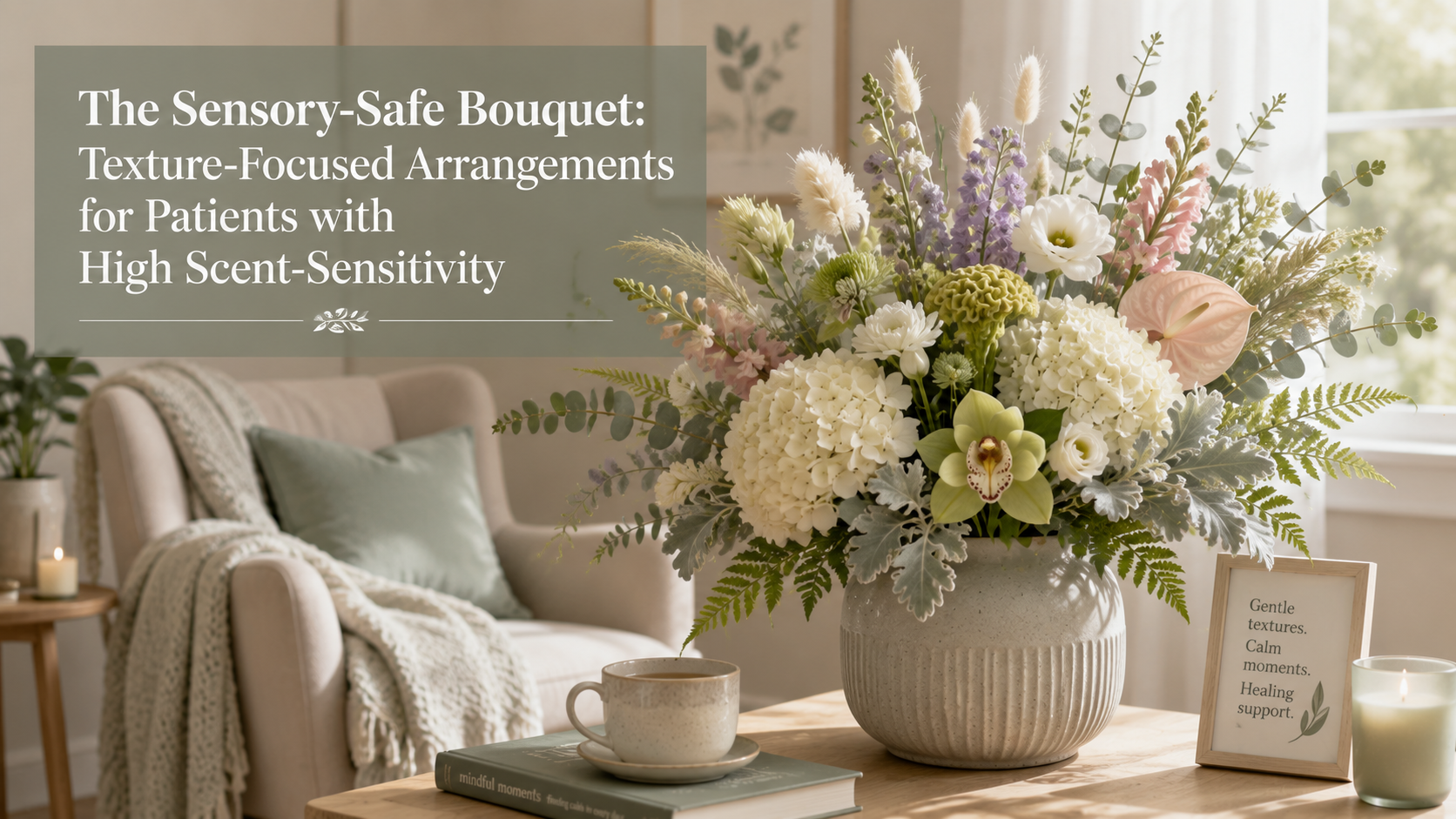
Picking flowers for someone who’s recovering from an illness, or even just getting steady care, can feel kind of tricky, because what looks nice isn’t always what feels right in real life. Like yeah, bright blooms can lift the mood in a room, but if the person is more sensitive to scents, then those strong fragrances can be way too much. So honestly, choosing a bouquet that leans into texture more than heavy perfume can still look gorgeous; it feels like a warm little message, not some loud signal.
Why texture usually wins over fragrance
A sensory-safe bunch is really about touch, shape, and visual calm. Soft petals, layered forms, and interesting foliage create a gentle comfort, and it tends to look inviting, not “look at me” and not loud in a scent sort of way. When the textures are doing the talking, patients can enjoy the flowers without it feeling uncomfortable, and the whole space feels a bit steadier, calmer.
Best Sensory-Safe Bouquet
Roses: velvety elegance, but not overwhelming scent
A lot of modern rose varieties keep their fragrance on the subtle side, more like a whisper than a big perfume moment. Then you still get those plush layered petals, rich-looking, and it feels timeless. A bouquet with soft white, blush, or peach roses can be a really comforting pick for recovery settings, where calm is basically the whole job.
Lisianthus: delicate layers, graceful form
If you want that delicate but comforting vibe, lisianthus is a great direction. West Islip flower shop folks often recommend mixing it with complementary flowers, because lisianthus has that soft, ruffled look that just works. Lisianthus brings those airy ruffled petals and a graceful structure, almost like the arrangement happened naturally. The stems add a quiet movement, and everything looks refined without needing a strong aroma to feel “special”.
Hydrangeas: soft volume, gentle presence
Hydrangeas give you cluster after cluster of tiny blossoms, which adds fullness without feeling harsh. They kind of act like a cloud in the design, and they usually keep scent fairly low. White, blue, or green hydrangeas can make the display feel fresh, airy, and steady, especially indoors where people are resting.
Foliage that actually helps the texture
Greenery isn’t only “filler” in the sensory-safe plan. It brings structure, depth, and real contrast. Eucalyptus can also work; even if it has a mild aroma, it usually doesn’t hit as hard as the strongest scented flowers. Dusty miller, ruscus, and seeded eucalyptus also add different textures, and they stop the bouquet from feeling flat or like it’s one-note.
And when people ask for flower delivery Farmingdale, a lot of them are after those textured greens with lightly scented blooms, especially for hospitals, rehab centers, or home recovery situations.
Orchids: sculptural sophistication, easy on the senses
Orchids have that almost architectural feel. The petals look smooth and intentional, and the flowers last a long time. Their scent is typically subtle, and the structure feels elegant. White or lavender orchids can add sophistication while still being something most patients can enjoy indoors without discomfort.
Snapdragons: vertical interest, gentle charm
Snapdragons bring height with their upright flower spikes, and the texture shows up right away. In many cases they’re lightly scented, so they can sit next to softer flowers without causing a problem. They add dimension, help the bouquet feel balanced, and they don’t usually compete with everything else going on.
Building the perfect sensory-safe bouquet
The best sensory-safe bouquet is the one that relies on texture instead of fragrance. Think roses, hydrangeas, lisianthus, orchids, snapdragons, dusty miller, and ruscus, all working together like a layered design rather than a “smell-first” setup.
Soft color combinations help too, like ivory, blush, pale lavender, muted peach, and gentle greens. Those shades usually feel soothing. And it’s smart to avoid very fragrant types like gardenias, hyacinths, or strongly scented lilies, especially if the recipient is sensitive to smells.
You can also finish the look with natural wrapping materials, satin ribbon, or even a textured ceramic vase. It boosts the presentation without turning the whole bouquet into something overwhelming.
Why thoughtful floral design really matters
During treatment or recovery, many people become more scent-sensitive. So a bouquet that’s designed carefully is real care, not just appearance. Texture, color harmony, and freshness that lasts can matter more than strong fragrance alone.
Whether you’re sending flowers to a hospital, a rehabilitation center, or a private home, a professionally made sensory-safe arrangement can feel genuinely considerate. At Tom’s Towers Flowers, the designers focus on balancing beauty, comfort, and real-world practicality for each person who receives it.
Choose a thoughtfully designed sensory-safe bouquet from Tom’s Towers Flowers to brighten someone’s recovery with elegance, comfort, and lasting beauty. Each arrangement is made with individual preferences in mind, and instead of being endured, it delivers warmth and encouragement through flowers that are actually enjoyable.
Also read Al Fresco Entertaining: Heat-Resistant Flowers for Summer Dinner Parties.