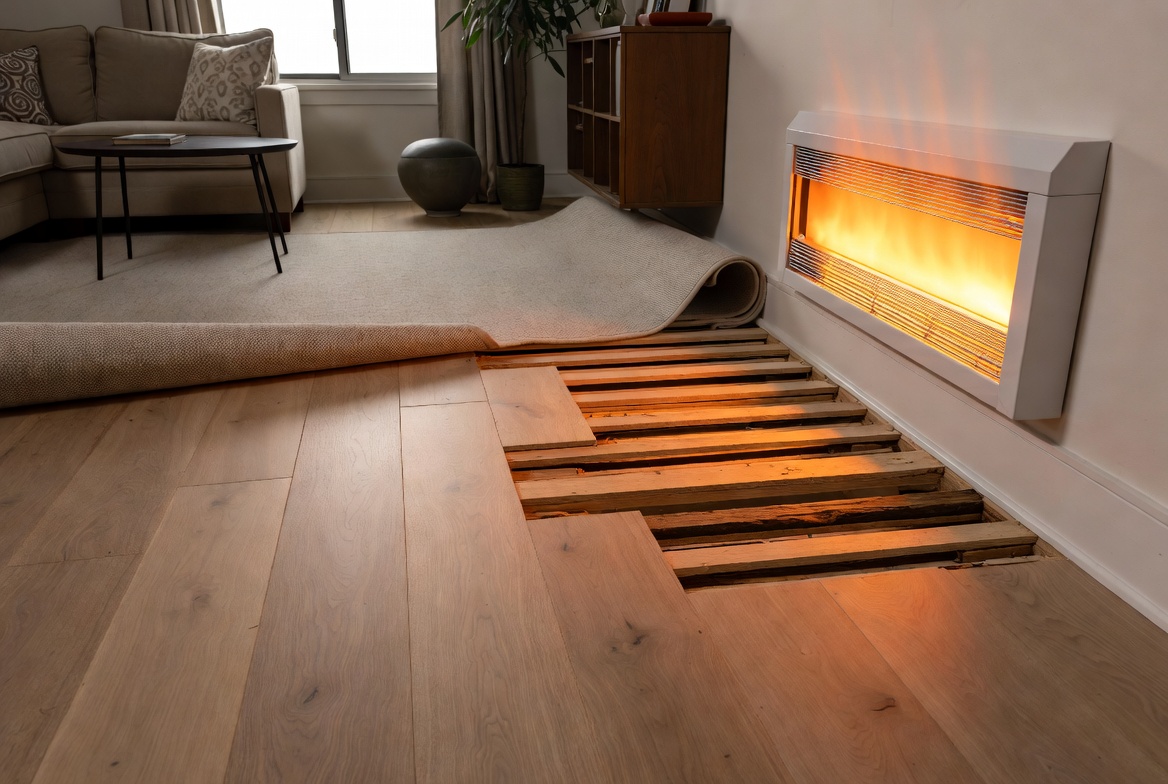
It all starts with a sound, maybe a small creak somewhere near the radiator, followed by a gap that appears between two boards that definitely wasn’t there last spring. Then someone crouches down, runs a finger along the edge of a plank, and says the words that send a mild panic through every homeowner who spent good money on a wood floor.
“Is this normal?”
In most cases, yes, this is completely normal. But the fact that most people are asking that question for the first time in year two or three of owning a wood floor, rather than having understood it before they bought, is a failure of information that the flooring industry has quietly tolerated for too long.
Why Wood Moves in the First Place
The Science Behind It
Wood is a hygroscopic material. This means that wood absorbs and releases moisture from the surrounding air, causing it to change in dimension. When the air is humid, wood absorbs moisture and expands slightly across its width. When the air is dry, wood releases moisture and contracts.
Nothing makes this expansion and contraction stop entirely. The goal of excellent flooring specification and installation is not to prevent movement. It’s to manage it so that the movement that happens is within acceptable limits and doesn’t cause visible or structural problems.
What Central Heating Actually Does to Your Floor
When central heating is turned back on after a summer of inactivity or low operation, it simultaneously raises the room temperature and significantly reduces the relative humidity of the air. It raises the temperature of the room and also reduces the relative humidity of the air significantly. Warm air holds more moisture than cool air, but heated indoor air in a UK home in October is typically much drier than the summer air the floor has been sitting in for the previous four or five months.
That sudden shift in humidity causes wood flooring to release moisture and contract. Boards that were sitting comfortably against each other through the warmer months develop small gaps between them as they pull inward across their width. In severe cases, boards can also cup, bowing slightly upward at the edges as the top surface dries faster than the underside.
Which Floors Are Most Affected
Solid Wood Flooring
Solid wood flooring moves the most. A solid oak board is a single piece of timber from face to back, and across its width it can move by a millimetre or more through a seasonal cycle. Narrow boards move less in absolute terms than wide ones, which is why traditional narrow strip solid wood floors are more stable than the wide plank formats that have become fashionable recently.
For UK homes with significant seasonal heating variation, solid wood flooring requires careful specification, careful installation with adequate expansion gaps, and a degree of acceptance that small seasonal gaps are part of owning it.
Engineered Oak Flooring
Engineered oak flooring exists, in large part, because of the movement problem with solid wood. The layered construction of engineered boards is specifically designed to counteract the tendency of wood to move with humidity changes.
The core layers run in alternating directions, and those opposing grain directions resist each other’s movement. The result is a board that moves significantly less across its width than a comparable solid wood board would in the same conditions. Engineered oak flooring does experience seasonal movement, but it manages changes from heating and cooling much better than solid wood does. With the right board and proper installation, the small gaps that show up in autumn are usually too tiny for most people to notice.
Unfinished Engineered Flooring
Unfinished engineered flooring has a specific advantage in the context of seasonal movement that most buyers never hear about.
When this flooring is finished on site, the oil or hard wax oil treatment penetrates the wood fibres rather than sitting on top of them as a surface film. This penetrating finish allows the wood to continue breathing more naturally than a factory-applied lacquer finish, which creates a surface barrier that can stress and crack when the boards beneath it move.
For homeowners who want the most natural, responsive relationship between their floor and their home environment, unfinished engineered wooden flooring finished on-site is worth understanding properly before being dismissed as too much effort. The effort is real, but so is the reward. It provides you with a floor that moves with the seasons quietly and gracefully, rather than one that fights its nature and eventually shows the strain.
Black Laminate Flooring
Black laminate flooring deserves specific mention here because seasonal movement is more visible on dark floors than on lighter ones. Gaps between boards show up more clearly when the boards themselves are very dark. Dust and debris that accumulates in seasonal gaps is more visible against a dark background.
This doesn’t make black laminate flooring a poor choice for homes with central heating. But it does mean that anyone choosing a very dark laminate floor needs to understand that the small gaps that appear when the heating comes on will be more noticeable than they would be on a medium oak or grey-tone floor.
What Goes Wrong
The Expansion Gap That Wasn’t Left
The single most common cause of wood floor problems related to seasonal movement is an inadequate expansion gap around the perimeter of the room. Every wood-based floor needs a gap between the edge of the boards and the wall to allow for expansion when humidity rises. Standard guidance is around 10–15 millimetres, though wider rooms and more dimensionally active floor types need more.
If you don’t leave that gap, the floor has no space to expand. It buckles, and boards lift in the middle of the room. A floor that was fine through the dry heating season becomes a problem when spring humidity arrives and the boards try to expand against walls that won’t move.
This is one of those installation errors that is completely invisible until the first seasonal cycle reveals it. At this point, the floor is installed and the skirting is fitted, and resolving the issue requires lifting and relaying, which serves as an expensive lesson in the importance of expansion gaps.
Summing Up
When planning to install wood flooring, especially with underfloor heating systems, it is important to have a clear understanding of the wood’s nature and how it behaves in different seasons. This knowledge will enable you to make informed decisions and ensure that you are ready to maintain your flooring appropriately.