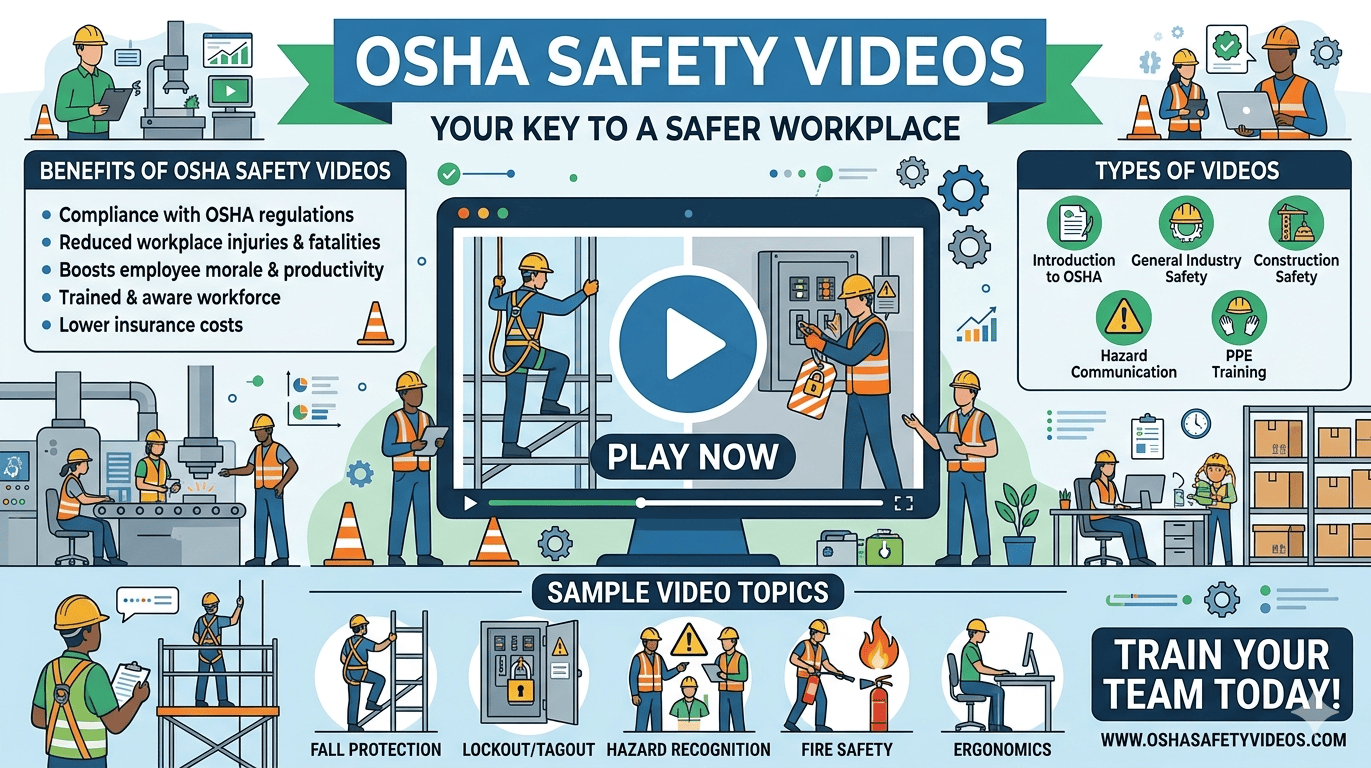
Workplace safety has become a top priority for businesses across the United States, especially with increasing regulatory standards and surprise inspections. OSHA Safety Videos play a critical role in helping companies prepare employees for real-world safety situations while improving compliance with federal workplace regulations. These videos provide clear visual demonstrations of hazard prevention, proper equipment handling, emergency procedures, and inspection readiness. Businesses in construction, manufacturing, warehousing, healthcare, and industrial sectors often use video-based learning to reduce accidents and strengthen workplace awareness before an OSHA inspection occurs.
Why OSHA Inspection Preparation Matters
An OSHA inspection can happen without advance notice, and employers must be prepared at all times. Companies that fail to meet OSHA standards may face penalties, legal issues, and reputational damage. Proper preparation helps organizations maintain a safer work environment while ensuring employees understand workplace protocols.
One of the most effective ways to prepare for inspections is through structured employee education. Visual learning methods help workers retain important safety information faster than traditional manuals alone. OSHA inspectors often evaluate whether employees understand safety procedures, know how to report hazards, and follow company compliance policies.
The Importance of Video-Based Workplace Learning
Video-based instruction is widely used because it provides practical examples employees can easily understand. Workers can visually see how to operate machinery safely, wear personal protective equipment correctly, and respond to emergencies. This learning method also helps employers create consistent training standards across all departments.
Many organizations integrate Safety Training programs into their onboarding and ongoing compliance strategies. Consistent education reduces workplace injuries and demonstrates that a company actively supports OSHA compliance requirements. Training programs that include engaging visual materials can also improve employee participation and knowledge retention.
Key Topics Covered in OSHA Preparation Videos
Companies preparing for inspections often focus on several essential workplace safety topics. These areas are commonly reviewed during OSHA evaluations and should be clearly understood by employees.
Hazard Communication
Employees must know how to identify hazardous materials, read warning labels, and access Safety Data Sheets (SDS). Proper hazard communication reduces chemical-related incidents and improves workplace awareness.
Personal Protective Equipment (PPE)
Workers should understand when and how to use gloves, helmets, respirators, eye protection, and fall protection equipment. PPE compliance is one of the most commonly reviewed OSHA requirements.
Emergency Response Procedures
Emergency preparation includes fire evacuation plans, first aid procedures, lockout/tagout protocols, and reporting workplace incidents quickly. Effective emergency response can prevent severe injuries and reduce operational disruptions.
Machine and Equipment Safety
Employees operating heavy equipment or industrial machinery must understand safe operational procedures and maintenance requirements. Visual demonstrations help reinforce proper workplace practices.
Benefits of OSHA Safety Videos for Employers
Employers across the United States continue to adopt OSHA Safety Videos because they offer several long-term benefits beyond inspection readiness.
Improved Employee Awareness
Visual instruction helps workers understand workplace hazards more effectively than text-only materials. Employees can better recognize unsafe conditions and respond appropriately.
Reduced Workplace Accidents
Consistent safety education lowers the risk of injuries, workers’ compensation claims, and operational downtime. Businesses that invest in safety awareness often experience stronger workplace performance.
Better OSHA Compliance
Organizations with documented training programs are better positioned during inspections. Training records and employee participation demonstrate a commitment to workplace safety standards.
Consistent Training Across Teams
Videos provide standardized instruction for employees in different departments or locations. This consistency ensures all workers receive the same compliance information and expectations.
Building a Strong Safety Culture
A successful workplace safety strategy goes beyond compliance requirements. Employers should encourage open communication, regular inspections, and employee involvement in identifying workplace hazards. Safety meetings, refresher courses, and digital learning tools can strengthen long-term compliance efforts.
Many organizations also include a Safety Orientation Course for new employees to establish safety expectations from the first day of work. Early education helps workers understand company procedures, reporting systems, and emergency response responsibilities before entering active job sites.
Choosing the Right OSHA Training Resources
When selecting workplace training materials, employers should focus on content that is current, industry-specific, and easy for employees to understand. Effective resources should include clear visuals, practical demonstrations, and OSHA-aligned information relevant to the company’s operations.
Businesses should also review training materials regularly to ensure compliance with updated OSHA regulations and evolving workplace risks. Combining video instruction with hands-on demonstrations and routine safety meetings creates a stronger overall compliance strategy.
Conclusion
Preparing for an OSHA inspection requires more than paperwork and policies. Employee knowledge and workplace awareness are essential components of regulatory compliance and accident prevention. Companies that invest in effective educational tools create safer work environments while reducing operational risks.
Using OSHA Safety Videos as part of a broader compliance strategy can help businesses improve workforce readiness, strengthen safety culture, and maintain OSHA standards across all levels of operation. With proper preparation and consistent employee education, organizations can confidently approach inspections while protecting both workers and business operations.