When businesses decide to explore blockchain technology, one of the first and most important decisions they face is choosing between a private blockchain and a public blockchain. Both have distinct advantages and trade-offs, and the right choice depends entirely on what your business actually needs. Working with a reliable blockchain development company can help you navigate this decision with clarity and confidence.
This article breaks down the key differences, use cases, and strategic considerations so you can make a well-informed choice for your organization. Whether you are just starting your research or actively evaluating solutions, having a blockchain development company guide you through the process can be the difference between a powerful deployment and an expensive misstep.
What Makes a Public Blockchain Stand Out
A public blockchain is exactly what it sounds like. It is open to anyone. Anyone can join the network, validate transactions, and review the data stored on it. There are no gatekeepers and no central authority controlling who participates.
This level of openness creates powerful transparency. Every transaction is visible to all participants, which makes it incredibly difficult to alter records without the entire network noticing. For businesses that want to build trust with a broad audience, public blockchains offer a compelling foundation.
The trade-off, however, is speed and privacy. Because so many nodes need to reach consensus before a transaction is confirmed, public blockchains can be slower and less efficient. Sensitive business data is also exposed to the public eye, which is not ideal for every type of organization.
What Makes a Private Blockchain Unique
A private blockchain operates within a controlled environment. Access is restricted to approved participants only, and a central entity or consortium typically governs the network. This means faster transaction speeds, greater privacy, and more control over who can see and interact with your data.
For enterprises handling confidential information such as financial records, supply chain data, or internal workflows, a private blockchain offers a more practical and focused structure. You get the immutability and traceability that blockchain is known for without exposing sensitive operations to the outside world.
The downside is that a private blockchain is inherently more centralized. This reduces one of the core benefits of blockchain, which is trustless decentralization. If the governing authority acts in bad faith, the integrity of the entire system can be compromised. This is why governance design is such a critical component when building these systems.
Key Differences Every Business Decision Maker Should Know
Understanding the practical differences between the two models is essential before making any investment. Here is a straightforward comparison to help clarify your thinking.
Public blockchains offer full transparency, open participation, and strong decentralization. They are slower, consume more energy, and offer little to no privacy for the data they record.
Private blockchains offer restricted access, high performance, and strong data control. They are faster and more efficient but rely on trust in the governing authority and the integrity of those who manage the network.
A knowledgeable blockchain development company will help you evaluate these trade-offs in the context of your specific goals, industry requirements, and technical infrastructure. Getting this foundational decision right is what sets successful deployments apart from costly ones.
Which Industries Benefit Most From Each Model
The industry you operate in plays a large role in determining the right blockchain architecture. Not every sector has the same priorities, and understanding those priorities is the first step toward the right solution. This is also one of the most valuable conversations you can have with a blockchain development company before making any commitments.
Businesses in finance, insurance, healthcare, and logistics often lean toward private blockchains. These sectors deal with sensitive data, require compliance with strict regulations, and need high-speed processing. A private setup allows these organizations to benefit from blockchain-grade security without sacrificing operational control.
On the other hand, businesses building decentralized applications, digital asset platforms, or community-driven ecosystems tend to favor public blockchains. The openness and accessibility of a public network align well with products that need broad adoption and transparent governance from the ground up.
A seasoned blockchain development company will have experience across both models and can help you identify which framework aligns best with your business objectives and user expectations.
Scalability and Performance Considerations
Scalability is often overlooked in early-stage blockchain discussions, but it is critical for long-term success. If your business anticipates high transaction volumes, performance under load becomes a top priority that cannot be ignored.
Private blockchains generally handle scalability more effectively. Because access is limited and the number of validators is smaller, consensus can be reached quickly. This results in faster transaction finality and greater throughput across your entire operation.
Public blockchains have historically struggled with scalability, though the ecosystem has evolved significantly. Various consensus mechanisms and layered solutions have improved performance, but the fundamental challenge of coordinating a massive, open network still creates bottlenecks under heavy load.
If your business model depends on processing a large number of transactions with minimal delay, a private setup managed by a qualified blockchain development company may be the smarter and more cost-effective starting point for your organization.
Security and Trust in Both Models
Security looks different depending on which model you choose, and both have genuine strengths worth understanding. Public blockchains derive their security from the sheer number of participants. The more nodes that validate transactions, the harder it is for any single actor to manipulate the ledger. This distributed trust model is one of the most powerful aspects of open blockchain networks.
Private blockchains rely on permissioned validators and administrative controls for security. While this can be implemented rigorously and effectively, it does introduce a level of concentrated trust. If your business is the governing authority, that is manageable. If you are participating in a consortium chain, you need to trust every stakeholder involved.
Security architecture is not something to improvise. The best blockchain development company for your needs will design security protocols tailored to your chosen model, ensuring that both access controls and data integrity meet the highest standards throughout the lifecycle of your system.
How to Choose the Right Blockchain Model for Your Business
Choosing between private and public blockchain is not a one-size-fits-all decision. Every business has a unique combination of goals, risks, and technical realities. Start by asking these fundamental questions before committing to either path.
Do you need public transparency or controlled access? If you are building something that requires public trust and open participation, a public chain makes sense. If you need confidentiality and governance, a private architecture will serve you better.
How important is speed to your operations? High-volume transactional businesses will almost always benefit from the performance advantages of a private blockchain and should plan for that accordingly.
What is your risk tolerance around centralization? If decentralization is a core part of your value proposition, a public blockchain aligns better with that philosophy and the expectations of your users.
Partnering with the right blockchain development company early in the process will save you significant time and resources. The right partner will ask these questions alongside you, analyze your technical requirements, and architect a solution that truly serves your business goals at every stage of growth.
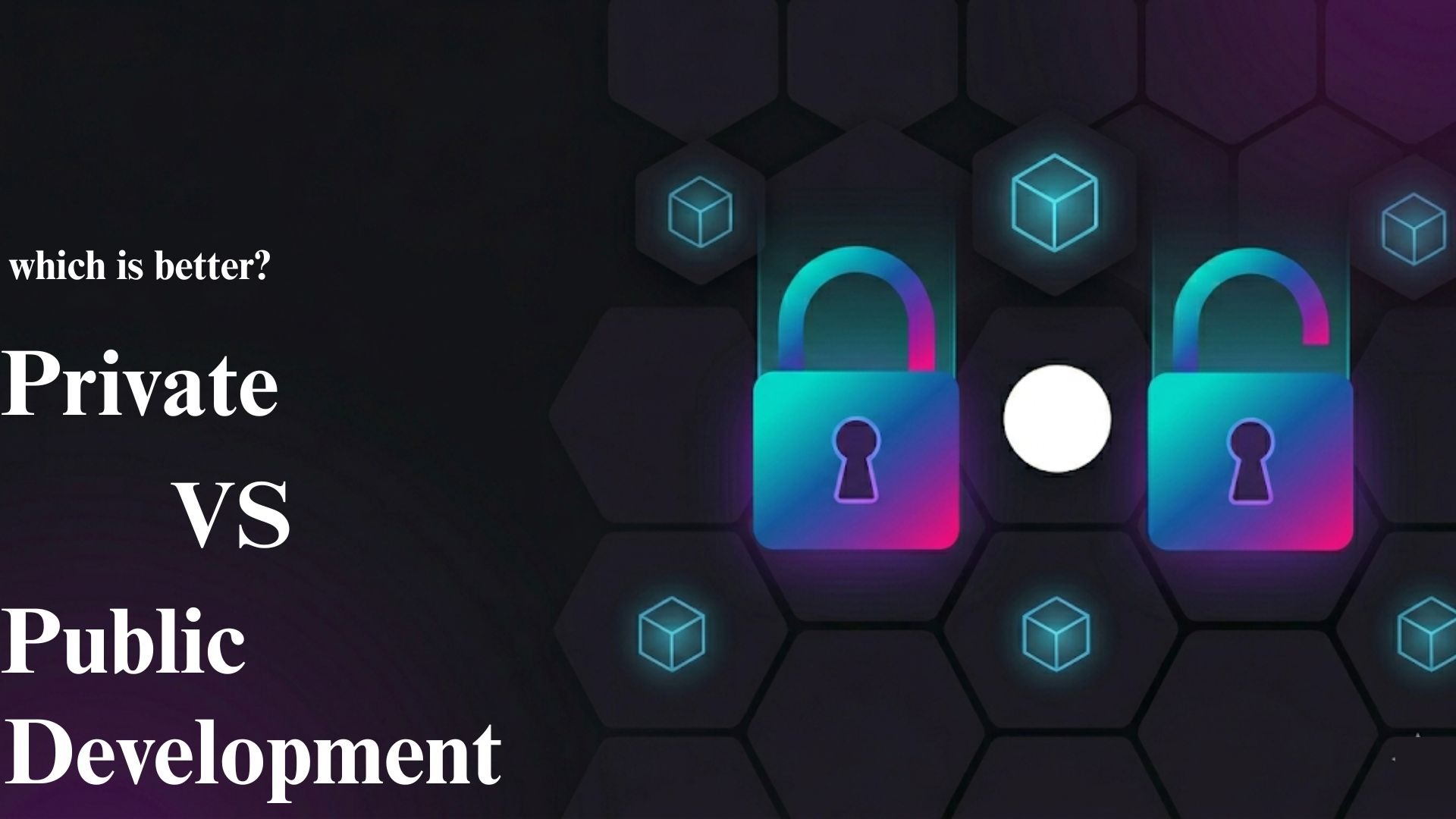
There is no universally superior option between private and public blockchains. Each model serves a different set of needs, and the smartest choice is the one that aligns with your business goals, regulatory environment, and operational demands.
What matters most is that you approach this decision with clarity, a strong understanding of your requirements, and the right guidance by your side. A skilled blockchain development company brings the technical depth and strategic insight needed to build blockchain solutions that actually deliver measurable value in the real world.
If you are ready to move from exploration to execution, connect with a blockchain development company that truly understands your vision and has the expertise to bring it to life. The right architecture, built the right way, can unlock transformative potential for your business. Take the first step and start the conversation.