India is building like never before.
From elevated metro corridors in Hyderabad to luxury residential townships in Pune, from industrial warehouses on the outskirts of Chennai to flyovers cutting through Bengaluru’s traffic — construction is happening at a pace that would have seemed impossible two decades ago.
And at the centre of almost every serious project today is one material: Ready Mix Concrete.
If you’ve been in the construction industry for even a few years, you already know the shift that has happened. Site-mixed concrete — the old method where labourers manually measured and blended materials on-site — is slowly making way for factory-batched, quality-controlled RMC. And there are very good reasons for that.
This article explores what makes Ready Mix Concrete the preferred choice for modern builders, what factors actually matter when choosing an RMC supplier, and how this material is shaping India’s infrastructure future.
What Exactly Is Ready Mix Concrete?
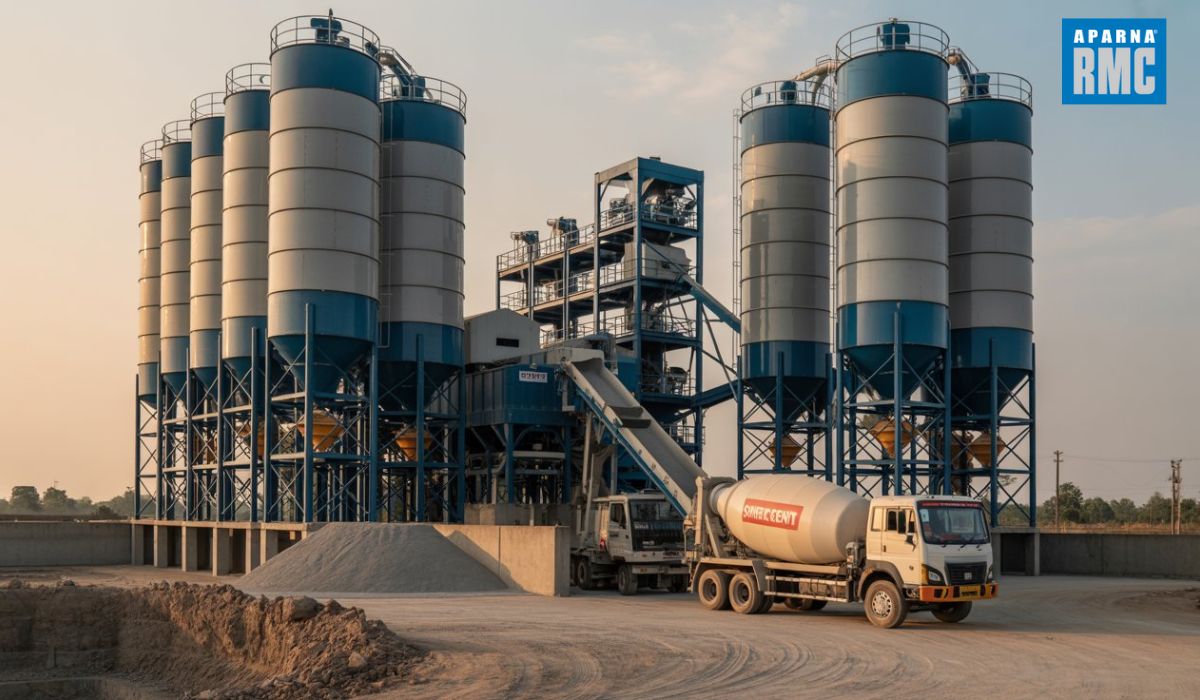
Ready Mix Concrete, commonly known as RMC, is concrete that is manufactured in a batching plant under controlled conditions and delivered to the construction site in a transit mixer — ready to be poured directly.
Unlike site-mix concrete, where quality can vary depending on the skill of workers, weather conditions, and the accuracy of manual mixing, RMC is produced with precise ingredient ratios. Water-cement ratio, aggregate grading, admixtures — all of it is measured and monitored before the concrete even leaves the plant.
This makes a significant difference in the final structure’s strength, durability, and consistency.
The Real Advantages That Matter on a Construction Site
1. Consistent Quality Across the Entire Project
One of the most underrated benefits of RMC is consistency.
When you’re constructing a multi-storey building, you cannot afford variations in concrete grade from floor to floor. Even minor inconsistencies in the mix can lead to structural vulnerabilities over time. With a centralised batching plant, every load that arrives at your site meets the same specification.
This is particularly important in commercial construction and large-scale infrastructure projects where structural integrity is non-negotiable.
2. Significant Time Savings
Time is money in construction — and this isn’t just a cliché.
RMC eliminates the need for on-site storage of raw materials, manual weighing, and mixing. The moment the transit mixer arrives, work can begin. This dramatically reduces idle time for labour and equipment, and speeds up the overall construction schedule.
For contractors working on tight timelines — and in India, which contractor isn’t? — this is a genuine advantage.
3. Reduced Wastage and Better Cost Control
When concrete is mixed on-site, overestimation is common. Workers mix more than needed “just to be safe,” and the excess is often wasted.
With RMC, you order exactly what you need for each pour. Modern batching plants can calculate quantities with precision. Over a large project, this reduction in material wastage adds up to substantial cost savings.
4. Suitable for Complex Structural Demands
Modern architecture demands concrete that does more than just hold up walls. High-rise buildings, long-span bridges, and underground structures require specialised mixes — high-strength concrete, self-compacting concrete, pumpable concrete for high-rise pours, and more.
RMC plants are equipped to produce these specialised grades consistently. This is not something feasible with on-site mixing.
How RMC Is Enabling India’s Infrastructure Boom
India’s infrastructure story over the last decade has been remarkable.
The government’s push under schemes like PM Gati Shakti, Smart Cities Mission, and the National Infrastructure Pipeline has put enormous demand on construction materials — especially concrete. Roads, flyovers, bridges, metro rail, airports, and affordable housing projects are all consuming vast quantities of concrete every year.
RMC has become the material of choice for most of these infrastructure projects — and for good reason.
Large civil contractors need concrete that can be delivered on-demand, in large volumes, at predictable quality. A delay in concrete supply can stall an entire project. The batching-plant model of RMC supply addresses this requirement directly.
For example, the construction of elevated road corridors in Indian cities often requires continuous pours at height — something that demands pumpable, high-workability concrete. Site-mixed concrete simply cannot meet these demands reliably.
Choosing the Right RMC Supplier: What to Look For
Not all RMC suppliers are equal. Here’s what experienced project managers and civil engineers actually evaluate when selecting a concrete solutions partner.
Plant Proximity to the Site
Concrete has a limited workability window — typically 90 to 120 minutes from the time of batching. The closer the batching plant to your site, the better. Long transit times affect workability and can lead to quality compromises.
Range of Concrete Grades Offered
Projects have different structural requirements. A supplier who can only offer standard M20 or M25 grades will fall short when your structural engineer specifies M50 or M60 for critical elements. Look for suppliers who offer the full range — from standard residential grades to high-strength concrete for commercial and infrastructure use.
Quality Certifications and Testing Protocols
Ask potential suppliers about their quality control processes. Is the plant BIS-certified? Do they conduct regular cube tests? Is there a dedicated lab on-site? These aren’t just formalities — they’re indicators of how seriously the supplier takes mix quality.
Reliability of Supply Chain
A batching plant is only as good as its raw material supply. Suppliers with integrated or well-managed supply chains for cement, aggregates, and admixtures are better positioned to maintain quality consistency and avoid supply disruptions.
For builders and contractors across Telangana and Andhra Pradesh, Aparna Concrete has established itself as a trusted name in ready mix concrete supply — known for its engineering rigour, range of concrete grades, and reliable delivery infrastructure for both residential and commercial construction projects.
Sustainable Construction: RMC’s Growing Role
Sustainability is no longer an optional checkbox in modern construction — it is an expectation.
Ready Mix Concrete contributes to sustainable construction in several ways.
Centralised batching plants can incorporate supplementary cementitious materials like fly ash, GGBS (Ground Granulated Blast Furnace Slag), and silica fume into the mix. These industrial by-products reduce the clinker content in concrete, which directly lowers the carbon footprint of the structure.
Additionally, precise batching reduces overuse of cement — which is both a cost saving and an environmental benefit.
Water management is another area. Modern RMC plants are increasingly implementing water recycling systems to reduce freshwater consumption — a meaningful step in a country where water scarcity is a real concern in many construction zones.
For developers pursuing green building certifications like IGBC or LEED, using RMC from a responsible supplier can contribute directly to certification points.
RMC for Residential Construction: Not Just for Big Projects
There’s a common misconception that Ready Mix Concrete is only relevant for large commercial or infrastructure projects.
That’s no longer true.
Individual house builders and small residential developers are increasingly adopting RMC — even for plots as small as 1,000 to 2,000 sq ft. The reasons are straightforward: better quality, no need to supervise manual mixing, and the ability to complete slabs faster.
In cities like Hyderabad, Vijayawada, and Visakhapatnam, the demand for RMC in residential construction has grown substantially over the last five years. Smaller transit mixer capacities and flexible ordering options have made RMC accessible even for modest-scale construction.
Common Mistakes to Avoid When Using RMC
Even with a good supplier, site-level errors can compromise the quality of your concrete. Here are a few things to watch out for.
Adding water at the site: This is perhaps the most damaging practice. Adding extra water to increase workability dilutes the cement paste and significantly reduces strength. Never allow this on-site.
Delays in placement after arrival: Once the transit mixer reaches the site, the concrete should be placed promptly. Extended waiting in the drum — even with slow rotation — degrades quality.
Poor curing practices: The concrete doesn’t gain its full strength at the time of pouring. Proper curing over the following 7 to 28 days is essential. Many site teams underestimate this.
Incorrect pump pipe cleaning: For pumpable concrete, ensure the pump line is primed correctly. Dry pipe resistance can cause segregation in the first few cubic metres.
Conclusion
Ready Mix Concrete is not simply a product — it is a system that brings reliability, precision, and efficiency to modern construction.
India’s construction industry is at an inflection point. The scale of infrastructure investment, the complexity of new structures, and the increasing focus on quality and sustainability all demand better building materials and smarter processes.
RMC, when sourced from a capable and accountable supplier, delivers on all these fronts. For professionals in the construction industry — whether you’re a contractor, structural engineer, developer, or project manager — understanding and correctly specifying RMC is increasingly a core competency, not an optional one.
Build smart. Build strong. Build to last.
Frequently Asked Questions (FAQs)
Q1. What is the minimum order quantity for Ready Mix Concrete?
Most RMC batching plants have a minimum order of 3 to 6 cubic metres per load, though this varies by supplier. Some suppliers in urban markets now offer smaller quantities for residential projects. It’s best to confirm with your local supplier before planning your pour schedule.
Q2. How is the grade of RMC selected for a project?
The concrete grade is typically specified by the structural engineer based on the load requirements and design standards. Common grades for residential construction range from M20 to M30. Commercial structures and infrastructure projects may require M40, M50, or even M60 for critical elements like columns, piers, or prestressed components.
Q3. How long does RMC remain workable after batching?
Standard RMC is typically workable for 90 to 120 minutes from the time of batching, depending on ambient temperature and the admixtures used. In hot weather conditions common across much of India, the window can shorten. Always coordinate delivery timing closely with your pouring schedule.
Q4. Can RMC be used for foundations and underground structures?
Yes. In fact, RMC is often the preferred choice for foundations, basement walls, and underground structures. Specialised mixes with waterproofing admixtures or sulphate-resistant cement can be produced at the batching plant to meet specific underground conditions.
Q5. Is Ready Mix Concrete more expensive than site-mixed concrete?
The direct cost per cubic metre of RMC may appear higher than site-mixed concrete. However, when you account for savings in labour, reduced material wastage, elimination of mixing equipment, time saved, and improved structural quality, RMC often proves more economical over the full project lifecycle. For any project above a certain scale, the total cost comparison typically favours RMC.