Are you still using SAP ECC? If yes, you are among many others, but time is running out. With the end of SAP ECC support scheduled for 2027, it is high time you started considering moving your system to SAP S/4 HANA. This guide will help you understand everything about the migration, including cost considerations and pitfalls to avoid.
Why Migrate from ECC to S/4HANA?
The SAP S/4HANA system is not simply an enhancement, but a total redesign of ERP that runs on the SAP HANA in-memory database. This platform provides real-time analytics, a streamlined data model, and a contemporary user interface called Fiori. If you continue using ECC after 2027, you will miss out on security patches, updates, and new features such as SAP Joule.
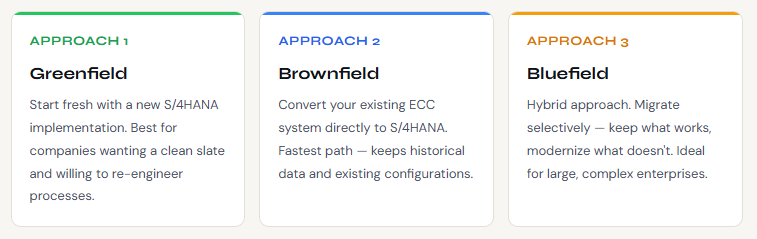
3 Migration Approaches: Which One Is Right for You?
SAP offers three proven paths to S/4HANA. Choosing the right one depends on your business complexity, customization level, and timeline.
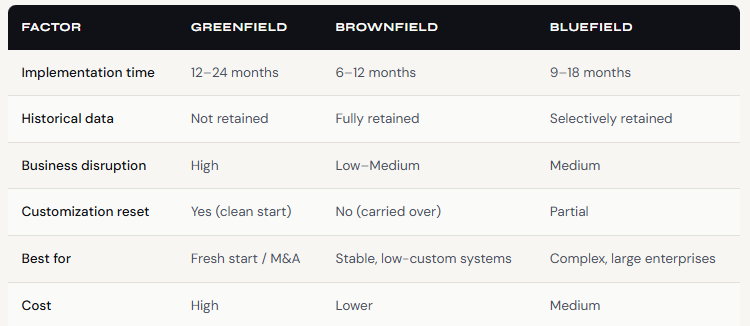
Greenfield vs Brownfield vs Bluefield — Quick Comparison
Step-by-Step SAP S/4HANA Migration Process
Regardless of the approach you choose, every successful migration follows these six critical phases.
- Assessment & Readiness Check: Conduct an analysis of the existing ECC environment – custom code, integrations, and data quality. Use SAP Readiness Check 2.0 to spot potential problems. This stage helps define your migration scope and budget.
- Choose Your Migration Path: After conducting the assessment, select either Greenfield, Brownfield, or Bluefield strategy. Make sure that the choice aligns with your business objectives, not preferences.
- Clean Core & Custom Code Remediation: Audit all ABAP custom code. Shift any non-standard coding to SAP Business Technology Platform extensions. Clean core helps with faster upgrades and reduced maintenance costs in the future.
- Data Migration & Cleansing: Utilize SAP Data Migration Cockpit (LTMC) to map, cleanse, and migrate master data. Poor data quality is the main reason why migrations fail – spend extra effort here.
- Testing & User Acceptance (UAT): Perform all required tests – integration testing, regression testing, and end-user UAT for all business processes. Plan for at least two complete test cycles before going live.
- Go-Live & Post-Migration Stabilization: Plan your cutover process in detail. Maintain hyper-care support for 4-8 weeks after go-live to deal with any issues promptly.
Five Common Migration Mistakes to Avoid
- Skipping the Assessment Phase: Starting migration without knowing your existing landscape will bite you in the back midway through the process.
- Migrating Customizations As-Is: Moving years of accumulated technical debt to S/4HANA will be counterproductive. Fix your custom code prior to migration.
- Underestimating Data Quality Issues: Poor master data quality will make go-live impossible. Spend 20-30% of project effort on data cleansing.
- Insufficient User Training: The Fiori interface represents a big difference for ECC users. Allocate resources for change management and training.
- No Post-Go-Live Hyper-Care Plan: The first 4-6 weeks post-go live are crucial. Have a dedicated support team ready to deal with issues.