
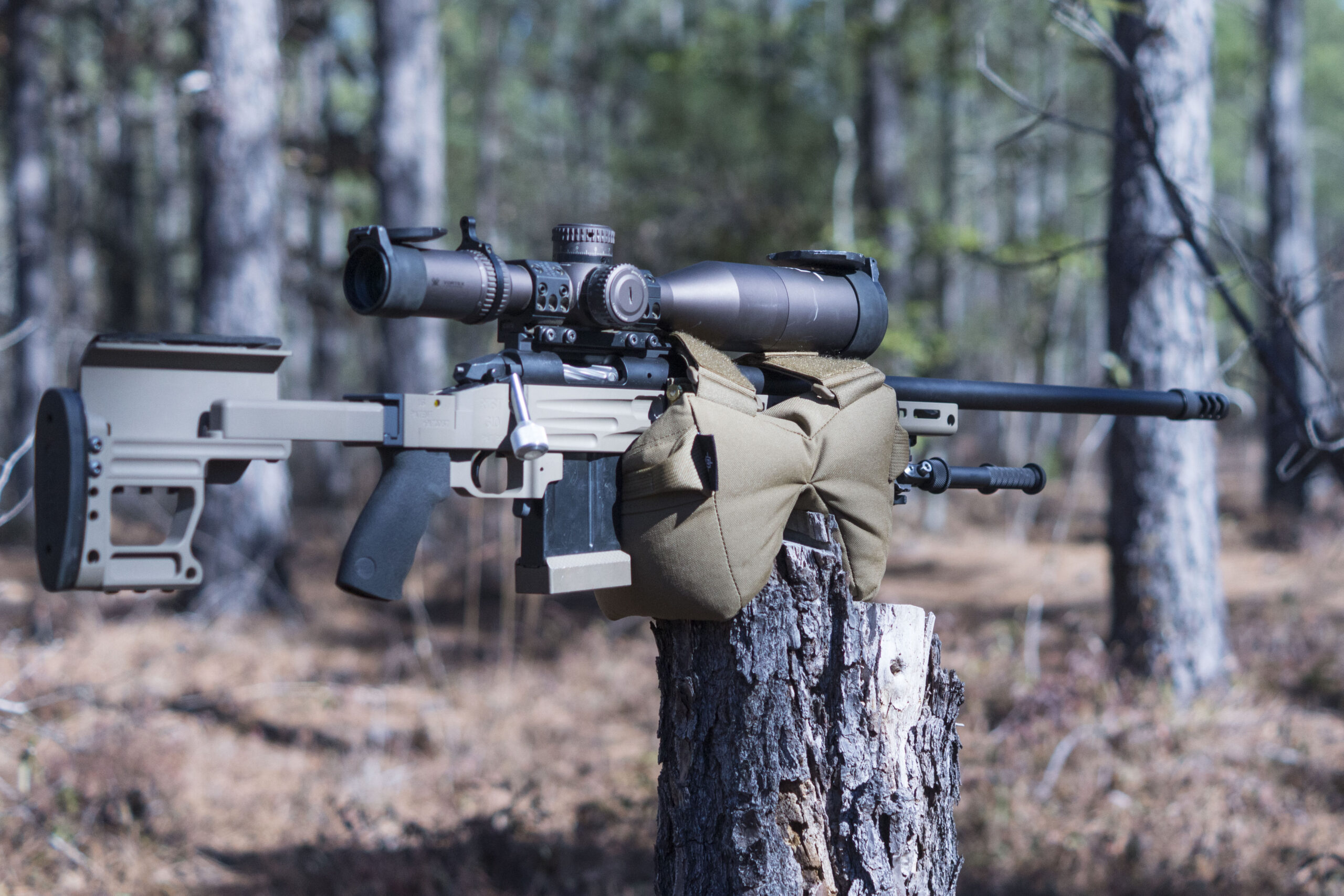
Ten years ago, the average Canadian precision rifle shooter trained almost exclusively from a bipod in prone position. PRS competition changed everything. The introduction of dynamic stages — shooting from barricades, vehicles, rooftops, and improvised field rests under time pressure — created an immediate demand for versatile support equipment that could adapt to any surface in seconds. Shooting bags answered that demand and permanently changed how Canadian precision rifle athletes train.
The Problem With Bipod-Only Training
A bipod is an excellent prone support tool, but it has one critical limitation in PRS competition: it only works when there is ground below the rifle’s forend. On a barricade stage, vehicle hood position, or elevated platform, a bipod provides zero support. Competitors who trained exclusively with a bipod found themselves completely unprepared for the majority of stages in a modern PRS match.
How Shooting Bags Solved the Positional Problem
Quality shooting bags — particularly versatile designs like the Armageddon Gear Game Changer — can be deployed on any surface in under two seconds. A bag wedged into the corner of a barricade, laid across a vehicle hood, or placed under a bolt action rifle forestock on a shooting table provides immediate, stable support regardless of the stage architecture. This adaptability is what makes shooting bags the dominant support system in Canadian PRS competition.
How Top Canadian Competitors Integrate Bags Into Training
Bench Work — Building the Zero Baseline
Every serious Canadian PRS competitor begins each training session with bench work using front and rear shooting bags. This establishes a mechanical baseline — confirming the rifle’s zero and identifying any mechanical issues before moving to dynamic positions. A bolt action rifle that groups poorly from bags has a mechanical problem that needs solving before any field practice is meaningful.
Positional Practice — Replicating Match Conditions
Competitors set up field stages in their backyard or at the range, using shooting bags to replicate the barricade, vehicle, and improvised rest positions they encounter at matches. Practicing bag deployment speed — going from carrying position to stable shot — is as important as trigger technique for competitive PRS performance.
Dry Fire With Bags — The Highest ROI Training
Dry fire practice (with an unloaded, confirmed-clear bolt action rifle) using shooting bags builds the muscle memory for consistent bag placement without the cost of ammunition. Ten minutes of dry fire bag practice daily produces faster results than a once-weekly live fire session for most Canadian shooters at the intermediate skill level.
What the Data Shows About Bag Use in Canadian Competition
- 90%+ of top-ranked Canadian PRS competitors use a minimum of 2 bags per match
- Competitors using 3+ bags of different sizes consistently outperform single-bag competitors on barricade and vehicle stages
- Average time-to-stable-position using bags is 1.8–2.5 seconds for experienced competitors vs 3.5–5 seconds for bipod repositioning
Conclusion
Shooting bags transformed Canadian PRS training by solving the positional support problem that bipods cannot address. For any Canadian shooter pursuing PRS competition or improving their precision rifle skills, investing in a quality set of bags is the single highest-impact equipment decision after the rifle and scope. Browse the full range at Victory Ridge Sports.