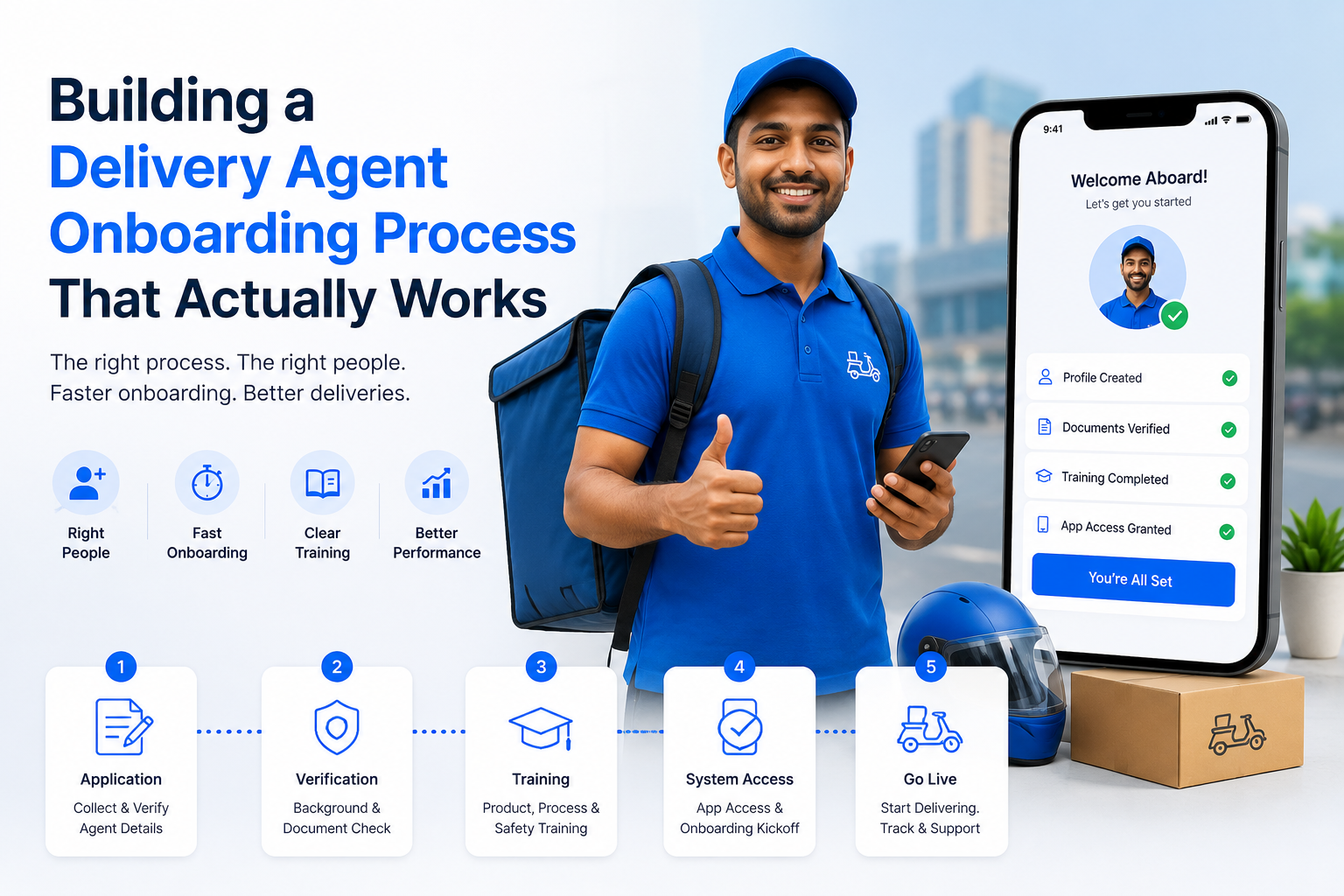
In the dynamic delivery sector, hiring new agents is only half the battle. Employers must invest in the onboarding process to set delivery drivers up for success.
Modern delivery businesses must leverage a delivery tracking app and delivery management software to onboard new drivers effectively.
This article discusses the best practices of delivery agent onboarding.
Why Delivery Agent Onboarding Is Important
Delivery drivers represent businesses’ image in the market. Each interaction with the delivery personnel reflects on the company’s credibility. Hence, poor onboarding results in the following:
• Higher error rates
• Inefficient routing
• Driver turnover
• Negative customer experience
• Poor technology adoption
A strong onboarding process builds drivers’ experience and provides businesses with the assurance of having professionals in the delivery team.
Preparing New Drivers Before They Start Working
Before new drivers come on board, companies must prepare the following:
• Information about the required paperwork, company rules, and dress code
• Instructions for downloading and installing the mobile application
• Onboarding schedule
• Supervisors’ contact information
Doing so helps new drivers avoid confusion and gives them a good impression of the employer.
Businesses that use delivery management software can automate this process to make sure there is no manual intervention.
Getting New Drivers Familiarized With the Company’s Culture
New drivers often miss out on the most crucial aspect: company culture. Businesses must educate their new delivery agents on the following:
• Mission of the company
• Service standards in the delivery process
• Safety guidelines
• Communication etiquette
• Corporate values
When drivers understand the purpose of their work, they feel more engaged and committed to achieving the organization’s goals.
A simple way to foster company culture is by conducting a brief welcome meeting. It helps create a positive impression and ensures that drivers become more productive within a short time.
Training Delivery Drivers on the Technology They Will Use
Modern delivery companies use technology as the backbone of their operations.
One of the common mistakes during driver onboarding is assuming that they already know how to use the application. Employers must conduct one-on-one training and provide directions on the following:
• How to log in to the delivery tracking software
• How to receive delivery information
• How to view optimized delivery routes
• How to update delivery status
• How to provide proof of delivery
• How to report delivery issues
• How to contact dispatch
• How to manage failed deliveries
Employers can begin by letting them practice delivery before assigning actual customer orders.
Technology training is vital to enhance the drivers’ performance and prevent them from contacting dispatch in case of minor problems.
Making Sure Drivers Understand How to Navigate the Roads
Paperwork and technological training are not enough for new delivery drivers. Companies must conduct practical training with their new delivery agents instead of leaving them to figure out everything on the road.
Employers can organize a ride-along with professional delivery drivers.
The new drivers must shadow-experienced delivery agents with no less than three shifts. This way, they will learn various techniques and gain confidence before working independently.
Teaching Drivers How to Communicate With Customers Efficiently
Almost every aspect of delivery involves interacting with customers. Therefore, it is essential to equip drivers with communication skills to handle the following:
• Delivery delays
• Order updates
• Hard-to-navigate addresses
• Delivery confirmation
• Issues in transit
Effective delivery communication can prevent customers from complaining about the delivery team.
Conducting role-play on customer communication scenarios can provide drivers with the confidence they need when interacting with clients.
Providing Safety Training to New Delivery Drivers
Employers should include safety training in the onboarding process of delivery drivers. In addition to general safety guidelines, professionals must undergo driver safety training, which includes defensive driving courses and inspections.
It is essential to conduct frequent driver safety refresher courses to remind them of the critical aspects of driving, such as vehicle maintenance, proper loading of goods and equipment, and road rules.
Doing so helps reduce accident rates, costs associated with repairs, and delivery disruptions.
Setting Performance Expectations for New Drivers
Most drivers underperform mainly because they do not fully understand the expectations upon starting their jobs. Employers must define performance benchmarks and provide drivers with the metrics used to monitor their performance.
Examples of performance measurements include first-time delivery attempts, on-time delivery rates, customer satisfaction, route optimization effectiveness, attendance records, application compliance, and safety regulations. Employers should explain how to measure these indicators using delivery management software.
Once the drivers understand what to do, it becomes easy to hold them accountable if performance standards are not met.
Offering Continuous Support to New Drivers
Onboarding drivers should not be a one-day or even one-week event. Employers should conduct a check-in meeting with new delivery drivers to address concerns and answer questions.
The meeting can also involve discussing customer feedback, performance evaluations, and technology-related challenges the drivers face. In addition, employers can consider assigning mentors to new delivery drivers. It helps the drivers feel supported and encourages them to share their concerns in a healthy environment.
Asking New Drivers for Suggestions
New delivery drivers often raise more questions than experienced agents. Employers should seek their suggestions on the onboarding process, such as:
• What did they like about the onboarding process?
• What did they find challenging?
• How did they find the technology training?
• How did they find the overall experience?
This way, companies can continuously refine the onboarding process for upcoming drivers based on the feedback of the current drivers.
Even small adjustments to the onboarding process can significantly improve the experience of new drivers while reducing the time spent on training.
Using Technology to Automate Driver Onboarding
The onboarding process for delivery drivers is not always smooth, especially as more drivers join the company. Delivery management software can help automate the onboarding process, removing the need to undertake manual tasks such as sending emails, creating accounts, and activating applications.
By automating the onboarding process, using delivery management software and a delivery tracking app make it easier for employers to offer a consistent onboarding experience in every location.
Drivers pick up on the tools and technology as they become more familiar with the application.
Assessing the Effectiveness of the Onboarding Process
Like any other business process, onboarding new delivery drivers needs regular evaluation to determine the strengths and weaknesses and make the necessary improvements. Employers should consider the following metrics to evaluate the effectiveness of the onboarding process:
• First-time delivery time
• Driver retention rates
• Customer satisfaction
• Delivery accuracy
• Technology adoption
• Supervisor feedback
• Training success metrics
These process improvement indicators help employers identify if the onboarding process develops delivery drivers’ competencies.
Drivers who finish the onboarding process must feel confident about their capabilities as delivery agents.
Final Thoughts
Hiring new delivery agents is not the end of the road. Delivery companies must invest time in the onboarding process of these new drivers. A strong onboarding process ensures that workers understand the company’s expectations and have the necessary skills, attitudes, and knowledge to enhance performance.
In addition, employers can utilize a delivery tracking app and delivery management software to improve the onboarding process of new delivery agents.