⚡ Hospitals and Distributors Are Quietly Rethinking Their Electrosurgical Manufacturer — Here’s What They Check First
In 2026, buyers are no longer comparing suppliers the way they did a few years ago. They are no longer impressed by broad catalogs alone, polished introductions, or promises that sound good in a first conversation. What they really want is proof that an Electrosurgical Manufacturer can support a steady program over time. They want structure, clarity, and confidence that the supply relationship will still feel strong long after the first order is placed.
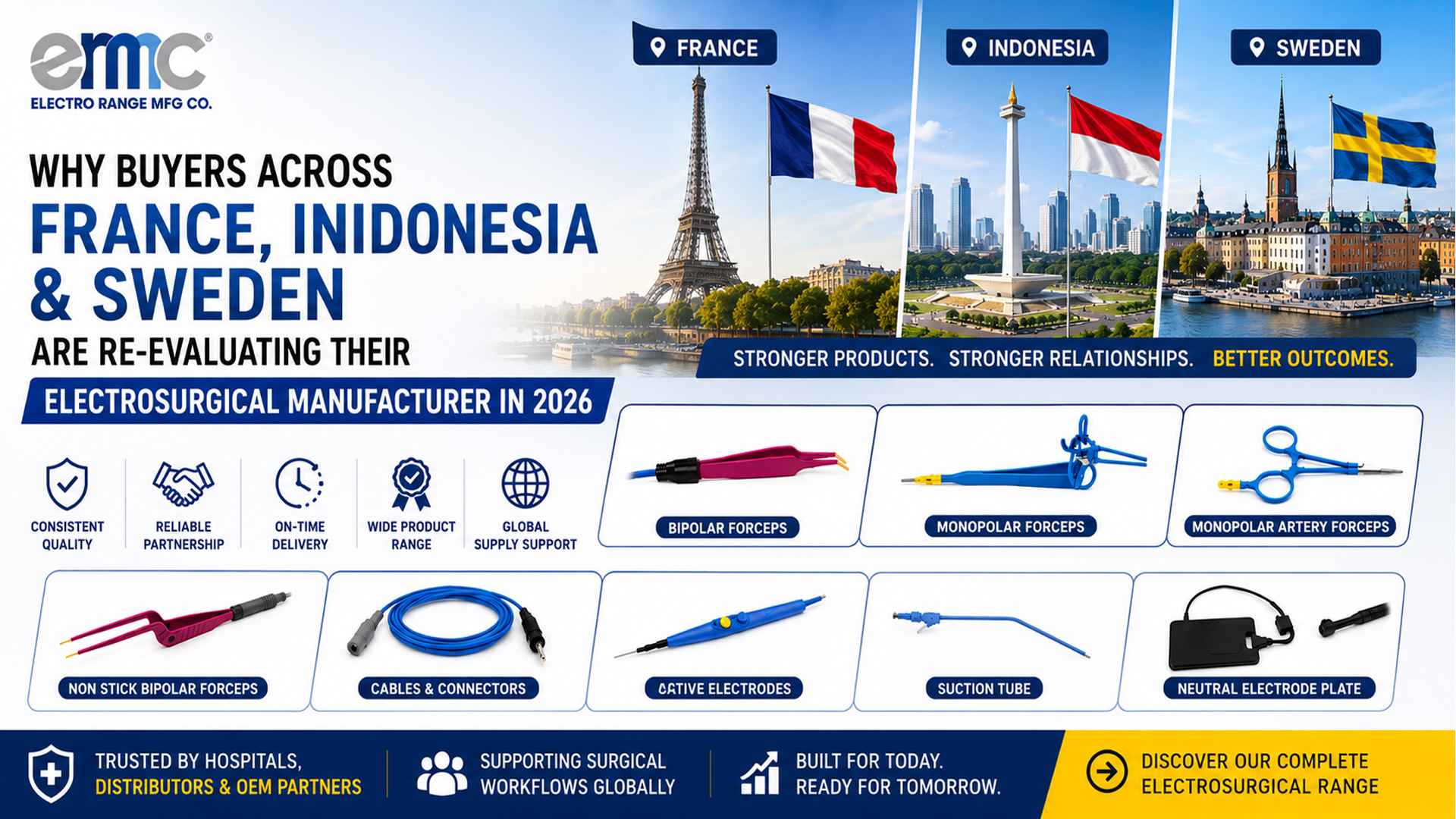
That shift is happening across France, Indonesia, and Sweden. The markets are different, the purchasing styles are different, and the pace of decision-making can vary, but the core expectation is becoming surprisingly similar. Buyers want fewer surprises. They want a supply partner that makes procurement easier to manage, not harder. That is exactly why more hospitals, distributors, and OEM-focused buyers are taking a fresh look at how they choose an Electrosurgical Manufacturer.
One of the clearest changes is that product availability alone is no longer enough. Serious buyers are now asking a better question: can this supplier support a dependable commercial program across repeat orders, portfolio expansion, and regional growth? That question immediately changes the conversation. Instead of looking at one item in isolation, buyers start assessing how the full electrosurgical range fits together.
This is why bipolar forceps are often one of the first categories used to test trust. They sit in a practical, high-interest position in the product mix. Buyers know that if a supplier cannot present bipolar forceps clearly and confidently, it becomes harder to trust the wider range. The same logic applies when the conversation expands into surgical forceps, bipolar electrode compatibility, and more specialized categories. These are not just products in a catalog. They are signals of how organized the supplier really is.
Another reason buyers are rethinking their supplier choices is the growing importance of cleaner, easier procurement models. That is where single use bipolar forceps and single use forceps keep gaining commercial attention. Buyers are increasingly drawn to categories that support simpler stock planning, cleaner repeat ordering, and fewer operational grey areas. The appeal is not flashy. It is practical. A product line that behaves predictably becomes much easier to approve internally and much easier to expand later.
That is especially important when procurement teams are trying to reduce friction between purchasing, receiving, storage, and clinical use. When a supplier handles single use bipolar forceps well, buyers often assume the company understands real workflow pressures. When the same supplier can also support single use forceps as part of a broader, well-organized range, confidence rises even further. It starts to feel less like a transaction and more like a stable long-term fit.
There is also a growing difference between buyers who are casually browsing and buyers who are seriously evaluating a future supply partner. That difference often becomes visible when interest moves toward non stick bipolar forceps. This category usually enters the conversation after the buyer has already moved beyond basic pricing and basic availability. At that point, the discussion becomes more mature. The buyer is thinking about handling, procedural fit, user confidence, and whether the supplier has the depth to support more tailored needs without losing consistency.
The same pattern shows up with monopolar forceps. Even when a project begins with bipolar-focused demand, many buyers still want to know whether the manufacturer can support monopolar forceps as well. It is a practical question. Buyers are often thinking ahead. They may not need the full expansion immediately, but they want to know they are not building a relationship with a supplier that will become limiting later. A manufacturer with both bipolar and monopolar forceps coverage naturally appears more scalable.
Minimally invasive growth is also pushing buyers to think more broadly than before. This is where laparoscopic forceps are becoming more commercially important inside supplier evaluations. Buyers increasingly prefer relationships that can grow with them. If a hospital group, distributor, or OEM partner expands procedure coverage, they do not want to start the supplier search all over again. They want to work with a manufacturer that already has the depth to support that shift.
That is why bipolar forceps laparoscopic demand matters more than it used to. It tells buyers that the manufacturer is not restricted to a narrow product window. It also signals that the supplier understands how portfolios evolve in real-world procurement. A serious Electrosurgical Manufacturer should feel prepared for both core and expanding procedure needs. When the range includes laparoscopic forceps and bipolar forceps laparoscopic options in a structured way, the supplier immediately looks more future-ready.
Regional expectations still matter, of course. In France, buyers tend to respond strongly to structured procurement logic, clear product references, and stable repeat-order discipline. A supplier does not earn long-term confidence there by sounding aggressive. It earns trust by looking calm, clear, and dependable. In many cases, French buyers are quietly assessing whether the supplier can support a wider electrosurgical program, not just a single category quote.
In Indonesia, buyers often value supply confidence that feels practical and commercially grounded. Clear product positioning matters. Organized communication matters. A manufacturer that can present bipolar forceps, single use bipolar forceps, single use forceps, and laparoscopic forceps in a straightforward, distributor-ready way usually has a stronger advantage.
In Sweden, buyers frequently lean toward long-term value, structure, and repeat-order reliability. They want a supplier that looks prepared, not improvised. That is why single use forceps, single use bipolar forceps, laparoscopic forceps, and bipolar forceps laparoscopic can become such important trust categories. These products help reveal whether the manufacturer can support a serious portfolio rather than a one-product pitch.
What ties all of these markets together is a bigger commercial truth: buyers are no longer rewarding noise. They are rewarding stability. They want supplier relationships that feel easier with time, not more complicated. That is why so many procurement conversations now revolve around repeatability, range logic, communication quality, and how confidently a supplier can support adjacent categories when demand expands.
For many buyers, bipolar forceps and single use bipolar forceps are the first trust-test categories because they reveal so much so quickly. If those categories are presented clearly, supported properly, and connected naturally to the wider electrosurgical range, the supplier looks stronger. If the presentation feels thin or fragmented, confidence drops fast. From there, the buyer naturally starts asking harder questions about non stick bipolar forceps, monopolar forceps, laparoscopic forceps, surgical forceps, bipolar electrode, and future portfolio support.
That is why the best-performing manufacturers in 2026 are not simply the ones with the biggest range. They are the ones that make the range feel commercially usable. They help buyers understand how one category connects to another. They show that they can support today’s requirement without making tomorrow’s expansion harder. They bring order to the conversation, and that matters more than ever.
The quiet reality is that many hospitals and distributors are not “switching suppliers” because of one dramatic failure. They are re-evaluating because they want a better long-term fit. They want a partner that can support cleaner decisions, stronger repeat-order confidence, and more reliable growth across regions. That is exactly why the role of the Electrosurgical Manufacturer is being redefined in 2026.
The manufacturers that stand out now are the ones that understand this shift. They know buyers are comparing more than products. They are comparing how safe the relationship feels over time. They are comparing whether the supplier can support bipolar forceps, single use bipolar forceps, single use forceps, non stick bipolar forceps, monopolar forceps, laparoscopic forceps, surgical forceps, bipolar electrode, and bipolar forceps laparoscopic supply in a way that remains clear, stable, and commercially intelligent.
When buyers find that kind of partner, they stop feeling like they are placing isolated orders. They start feeling like they are building a program they can trust.
Read the full Electro Range guide for region-specific procurement insight and electrosurgical product support.