Packaging lines don’t fail because of bad materials. They fail because folding and gluing are two operations that repeat hundreds of times per minute drift, slow down, or produce rejects that pile up faster than anyone can catch them.
A folder gluer machine fixes this at the source. It takes flat, die-cut cardboard blanks and converts them into sealed, finished cartons in a single continuous pass, no manual folding, no inconsistent glue application, no bottleneck.
This guide covers how these machines work, where they’re used, what separates a good specification from a bad one, and what to watch out for when you’re buying or upgrading.
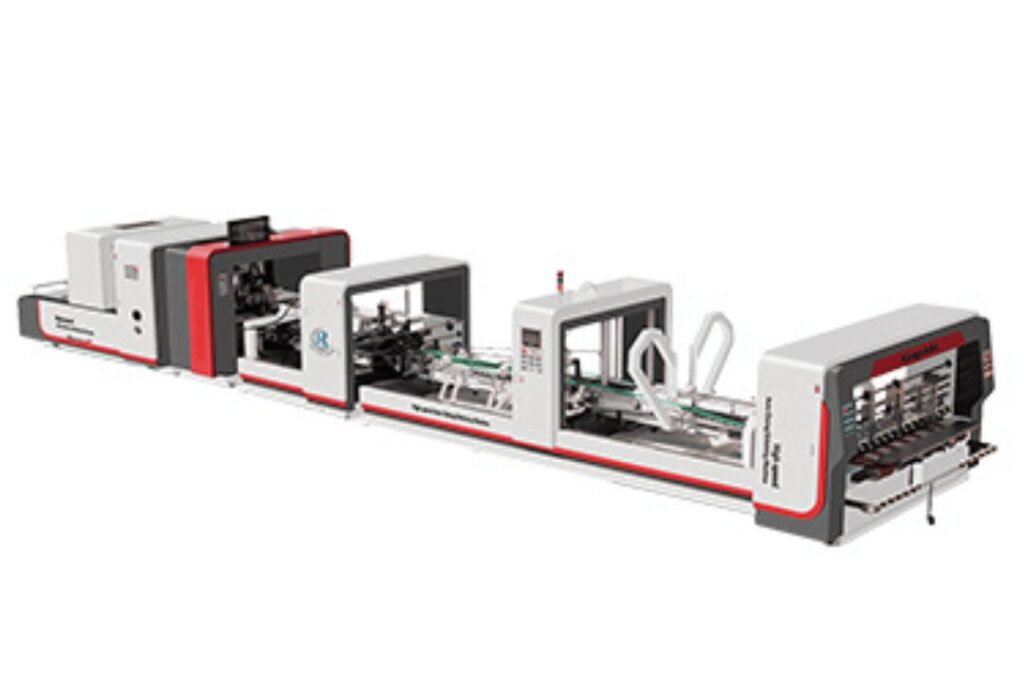
What a Folder Gluer Machine Actually Does
The machine takes a flat die-cut blank from the feeder, folds it progressively through a series of guide rails and folding tools, applies adhesive at precise points, and compresses the folds until the glue sets. The output is a finished, counted stack of cartons ready for the packing line.
Production speeds on most machines run between 100 and 600 metres per minute. High-output lines in FMCG and pharmaceutical plants often push past that. The speed you can actually use depends on your carton style and substrate the rated speed and the practical speed are two different numbers.
The main components:
- Feeder section: separates and feeds flat blanks at controlled intervals into the machine
- Folding section: progressive guide rails and folding tools create the box shape across multiple stages
- Gluing unit : hot-melt or cold glue applied via nozzle or roller at defined positions
- Pressing/compression section : holds folds under pressure while the adhesive sets
- Delivery section : collects finished cartons into counted stacks for downstream handling
Industries That Run Folder Gluers
Food and Beverage
Cereal boxes, confectionery cartons, dairy packaging, frozen food boxes volumes here are large enough that manual folding isn’t a conversation worth having. Speed and consistency matter most.
Pharmaceuticals
Medicine cartons need tight dimensional tolerances. A misaligned flap doesn’t just look wrong; it can cause failures on downstream cartoning lines or create problems during regulatory inspection. Glue placement precision is non-negotiable.
Cosmetics and Personal Care
Perfumes and skin and personal care boxes are often reverse tuck, auto-bottom or special structural styles that need multi-fold capability. These jobs need machines that can handle more complex fold sequences without slowing down excessively.
E-Commerce and Retail
Corrugated and microflute cartons for direct-to-consumer shipping need to perform under stack pressure during transit. Fold quality consistent glue lines, flat bond areas directly affects how the box holds up.
Types of Folder Gluer Machines
Straight-Line Folder Gluers
The most widely used type. They handle straight-tuck cartons and standard folding styles at high speed. Most food and pharmaceutical carton production runs on straight-line machines. If your carton range is relatively standard, this is probably the right starting point.
Crash-Lock Bottom Folder Gluers
These produce cartons with an auto-lock base that clicks into position without manual folding at the packing station. Retail display boxes and heavier cartons often use this style. The machine handles additional fold sequences compared to straight-line models, which typically means a lower top speed.
4/6-Corner Folder Gluers
For boxes requiring four or six glue points, typically rigid and semi-rigid formats used in premium packaging. These run slower but produce structurally more demanding cartons where appearance and structural integrity are both critical.
Combination Folder Gluers
Can switch between multiple folding styles via adjustable guide systems. Useful for converters running varied jobs across clients. The flexibility costs you in changeover time, which is a real production consideration on short runs.
How Automation Improves Efficiency
The productivity case for folder gluers isn’t only about raw speed. It’s about what happens when you replace manual folding with a process that doesn’t vary.
Consistency: A machine applies the same fold angle and the same glue volume on carton 500 as on carton 1. Manual work drifts over a shift, and that drift shows up as rejects, rework, and customer complaints.
Speed: Even a mid-range machine runs 5 to 10 times faster than a trained manual crew on comparable work. At 200 metres per minute, one machine handles volumes that would otherwise require multiple operators working in parallel.
Waste reduction: Precise glue metering reduces adhesive consumption. Consistent folding reduces rejects from misaligned cartons.
Labour dependency: For high-volume operations where the hiring and retention of production-line workers is a real constraint. Machines don’t fall sick during the peak season.
For specifications and production capacities suited to Indian packaging operations,
You can explore Robus India folder gluer machine range for configurations built around local production requirements and service support.
Key Features to Check Before Buying
Speed range and adjustability: What’s the actual usable speed on your carton style and material? Ask for a trial run on your own blanks, not a demonstration on a standard format.
Glue system: Hot-melt sets are important at high speeds. Cold glue suits certain food-contact applications. Some machines support both. Know which you need before you spec the machine.
Changeover time: On short-run jobs, changeover is a bigger cost factor than production speed. Ask how long a format change actually takes on the floor, not in a sales brochure.
Jam detection: Any serious machine detects jams instantly and stops without damaging the substrate or the machine. Verify how the jam-clearing process works in practice, not just that the feature exists.
Waste ejection: Automatic waste ejection keeps the output stack clean.Worth checking on machines to be used on pharmaceutical or cosmetic lines where contamination of output is important.
Control system: Modern folder gluers come with PLC controls and touchscreen interfaces. Older machines may need mechanical adjustment. PLC controlled machinery often has less operator training time.
Troubleshooting & How to Fix Common Problems
Glue stringing: At high speeds hot-melt glue can string between nozzle and substrate. Usually solved by changing the nozzle temperature, the glue pressure or the machine speed. If stringing persists after adjustment check nozzle condition.
Misunderstanding complex carton types: Crash-lock and multi-panel cartons are more difficult to run at full speed. Some drop in speed in the first setup is normal. Continuous misfolding is usually a sign of worn folding tools or incorrect guide rail settings.
Build-up of static: Cardboard moving at speed builds static which can cause stacking problems and attract dust. Most machines solve this with ionization bars.
Adhesive inconsistency across seasons: Glue that bonds well in summer but fails in cooler months is typically a temperature or open-time issue. Test adhesive performance across seasonal temperature ranges before locking in a supplier.
Conclusion
A folder gluer machine is a production asset. For any packaging operation running meaningful volumes, it’s the difference between a line that keeps pace and one that becomes the constraint everything else waits on.
The right machine comes down to your carton range, your volumes, and your maintenance capacity, not the highest speed rating in a spec sheet. Get those three things right and the machine pays for itself.
If you’re evaluating machines for a new line or an upgrade, ask for a trial run on your actual carton styles before committing. A machine that handles your specific formats at your required speed is worth more than one that performs well on somebody else’s jobs.