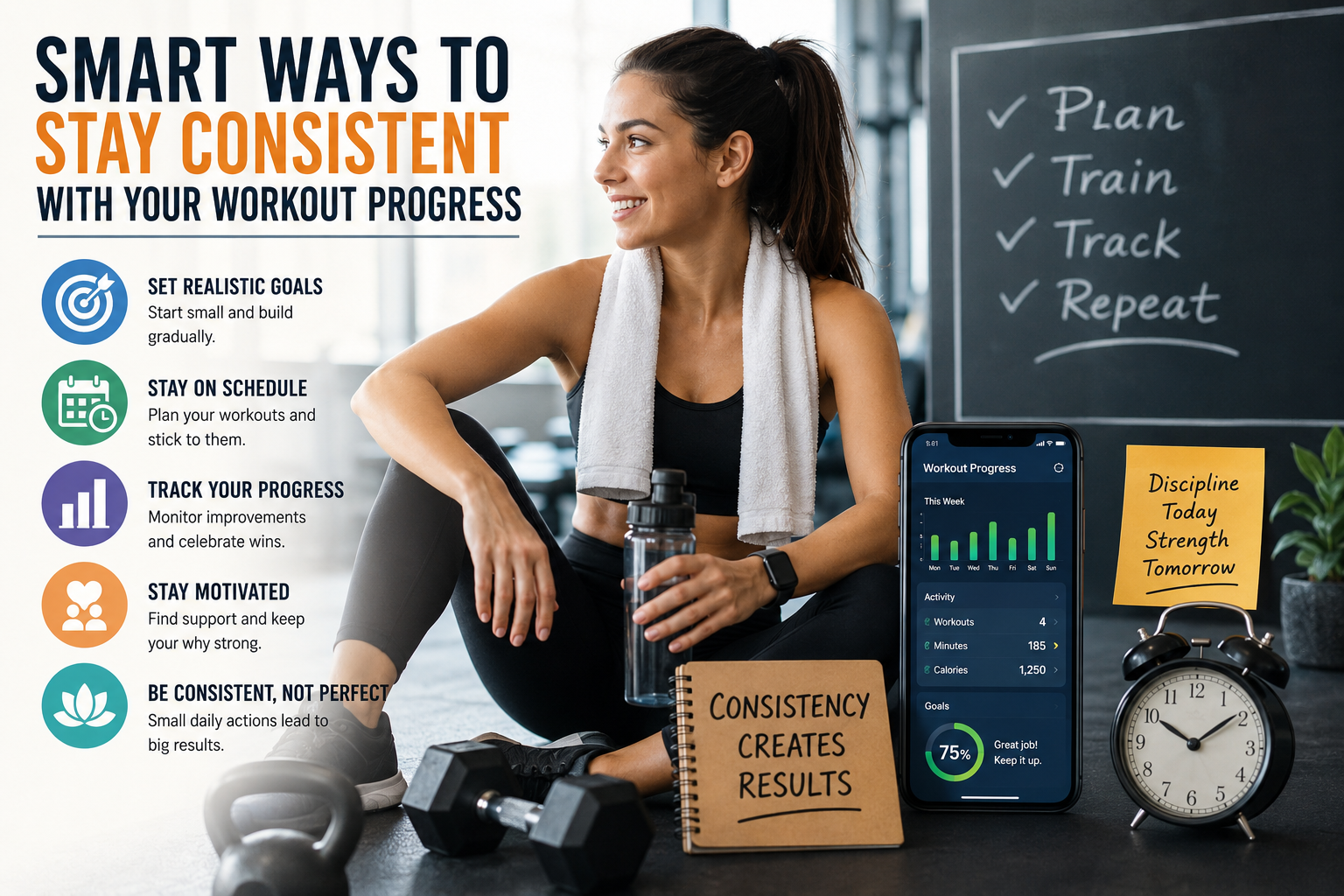
Staying committed to a workout routine is often more challenging than starting one. Many people begin with enthusiasm but struggle to maintain momentum when life becomes busy or motivation declines. Consistency is the foundation of lasting fitness results because it allows small daily efforts to accumulate into meaningful progress over time. Rather than focusing on extreme workouts or rapid transformations, individuals who prioritize sustainable habits are more likely to improve their strength, endurance, mobility, and overall health while reducing the risk of burnout and injury.
Key Statistics That Reveal the Power of Workout Consistency
Research and industry reports consistently show the value of maintaining regular exercise habits:
- Adults who engage in regular physical activity experience lower risks of cardiovascular disease and metabolic disorders.
- Consistent exercise has been linked to improved mental well-being, reduced stress levels, and better sleep quality.
- Studies indicate that habit formation often requires several weeks of repeated behavior before it becomes automatic.
- Individuals who track their workouts are generally more likely to remain committed to fitness goals over extended periods.
- Regular strength and endurance training can contribute to gradual but measurable improvements in physical performance throughout the year.
These findings reinforce an important principle: long-term success is usually driven by repetition and discipline rather than short bursts of intense effort.
Set Realistic Exercise Targets That Fit Your Daily Routine Well
One of the biggest reasons people abandon fitness plans is setting unrealistic expectations. Ambitious goals can be motivating initially, but they often become overwhelming when daily responsibilities interfere.
Instead of aiming for dramatic changes in a short period, focus on achievable milestones. A realistic goal provides direction while remaining flexible enough to accommodate unexpected challenges.
Consider the following approaches:
- Start with three to four workout sessions per week.
- Establish measurable targets such as completing a certain number of steps daily.
- Break larger goals into monthly objectives.
- Focus on behavior-based goals rather than appearance-based outcomes.
- Review and adjust goals regularly as fitness levels improve.
For example, someone new to exercise may begin with twenty-minute workouts and gradually increase duration as endurance develops. This gradual progression is far more sustainable than attempting demanding routines immediately.
Consistency becomes easier when goals align with lifestyle realities. Small victories create confidence, and confidence strengthens commitment.
Build a Structured Schedule That Removes Decision Fatigue
Many fitness setbacks occur because exercise is treated as an optional activity rather than a scheduled priority. When workouts depend entirely on daily motivation, they are more likely to be skipped.
Creating a structured schedule reduces the mental effort required to decide when to exercise. By assigning specific times for workouts, individuals transform exercise into a routine behavior.
Effective scheduling strategies include:
- Choosing fixed workout days each week.
- Exercising at the same time whenever possible.
- Preparing workout clothes and equipment in advance.
- Blocking exercise time on digital calendars.
- Planning alternative sessions for unexpected disruptions.
Decision fatigue can significantly affect adherence to fitness routines. Throughout the day, people make countless choices related to work, family, and personal responsibilities. A predefined exercise schedule eliminates one more decision and increases the likelihood of follow-through.
Even when a full workout is not possible, maintaining the habit through a shorter session helps preserve consistency and prevents prolonged interruptions.
Track Small Improvements to Strengthen Daily Motivation
Progress tracking is one of the most effective methods for sustaining workout momentum. Many people become discouraged because physical changes often occur gradually. Without measurable indicators, it can seem as though efforts are producing little benefit.
Tracking provides objective evidence of improvement.
Useful metrics include:
- Workout frequency
- Distance covered
- Weight lifted
- Number of repetitions completed
- Recovery time
- Energy levels
- Sleep quality
Recording these metrics allows individuals to identify trends and celebrate progress that might otherwise go unnoticed.
For instance, increasing from ten push-ups to fifteen push-ups may appear minor, but it represents a significant improvement in strength. Similarly, completing workouts more consistently than the previous month reflects meaningful behavioral progress.
Many organizations offering fitness app development services emphasize tracking features because they help users visualize achievements and remain engaged with long-term goals.
A progress journal can also reveal patterns. Individuals may notice that certain workout times produce better performance or that specific recovery practices improve consistency. These insights enable more informed decisions and better results.
Use Technology Wisely to Support Sustainable Fitness Habits
Technology has transformed how people approach health and exercise. From wearable devices to digital coaching platforms, modern tools can provide valuable support when used effectively.
The key is using technology to reinforce healthy behaviors rather than relying on it as the sole source of motivation.
Several technological tools can enhance consistency:
- Activity trackers
- Workout planning applications
- Progress dashboards
- Smart reminders
- Recovery monitoring systems
- Virtual coaching platforms
The growing demand for fitness app development services reflects the increasing role digital solutions play in helping individuals maintain accountability and monitor progress.
The broader field of wellness app development has also expanded significantly, enabling users to integrate exercise, nutrition, sleep tracking, and mental wellness into a single experience. This holistic approach can improve adherence by addressing multiple aspects of health simultaneously.
As artificial intelligence becomes more sophisticated, discussions around how to build ai fitness app solutions have gained momentum. AI-driven systems can analyze workout behavior, personalize recommendations, and adapt training plans according to individual performance patterns.
Another emerging trend is the white label fitness app model, which allows organizations and fitness professionals to deliver customized digital experiences without developing software entirely from scratch.
Despite these innovations, technology should complement discipline rather than replace it. Sustainable progress still depends on consistent action and personal commitment.
Overcome Common Setbacks Without Losing Workout Momentum
Every fitness journey includes obstacles. Illness, travel, workload increases, family commitments, and unexpected events can disrupt even the most carefully planned routines.
What separates successful individuals from those who quit is not the absence of setbacks but the ability to recover quickly.
Several strategies can help:
- Accept temporary interruptions without self-criticism.
- Resume workouts as soon as circumstances allow.
- Reduce workout intensity during stressful periods.
- Focus on maintaining the habit rather than maximizing performance.
- Keep backup workout options available.
Many people fall into an all-or-nothing mindset. Missing a few sessions can lead to feelings of failure, which often trigger complete abandonment of a routine.
A more productive perspective recognizes that consistency is measured over months and years, not individual days. Missing one workout has minimal impact. Missing several weeks because of discouragement creates a much larger setback.
Organizations involved in fitness app development services frequently incorporate reminder systems and habit-building features designed to help users re-engage after interruptions. These mechanisms can provide useful support during challenging periods.
Flexibility is often more important than perfection. Adapting a workout plan to changing circumstances allows progress to continue despite obstacles.
Create a Supportive Environment That Encourages Action
Environment plays a powerful role in behavior. Even highly motivated individuals can struggle when their surroundings create constant friction.
A supportive environment makes healthy choices easier and unhealthy choices less convenient.
Practical ways to optimize the environment include:
- Keeping workout equipment visible and accessible.
- Organizing exercise clothes in advance.
- Joining fitness communities.
- Exercising with a training partner.
- Limiting distractions during workout time.
- Creating dedicated exercise spaces at home.
Social support can be especially influential. Friends, family members, coaches, and workout partners often provide accountability and encouragement during periods of low motivation.
Positive reinforcement also matters. Celebrating milestones helps reinforce the connection between effort and achievement. Rewards do not need to be extravagant. Acknowledging progress and recognizing commitment can strengthen long-term adherence.
Many people underestimate the impact of small environmental changes. However, reducing barriers and increasing convenience can significantly improve consistency over time.
Long-Term Strategies for Maintaining Progress Year After Year
Achieving fitness goals is only part of the challenge. Maintaining results over the long term requires a strategic approach that evolves with changing circumstances.
Several principles support sustainable success:
- Prioritize habits over temporary motivation.
- Introduce variety to prevent boredom.
- Periodically reassess goals.
- Focus on recovery and injury prevention.
- Continue learning about training methods.
- Maintain realistic expectations.
Long-term fitness should not feel like a temporary project. Instead, it should become an integrated component of daily life. Individuals who view exercise as part of their identity are often more successful at maintaining consistency than those who treat fitness as a short-term objective.
Another important factor is adaptability. Personal schedules, responsibilities, and priorities change over time. A workout routine that worked five years ago may no longer be practical today. Regular evaluation ensures that fitness strategies remain relevant and achievable.
The continued growth of fitness app development services demonstrates how technology can assist individuals in managing evolving fitness needs. However, lasting success ultimately depends on cultivating habits that remain effective regardless of changing tools and trends.
Conclusion
Consistency is the true driver of meaningful fitness progress. While motivation may fluctuate, sustainable habits create lasting results that accumulate over time. Setting realistic goals, maintaining a structured schedule, tracking improvements, adapting to setbacks, and creating a supportive environment all contribute to long-term success. By focusing on steady progress rather than perfection, individuals can build routines that remain effective through changing circumstances. The most successful fitness journeys are not defined by occasional intense effort but by repeated actions that become part of a healthy and balanced lifestyle.