🏭 Why Industrial Businesses in Pakistan Are Rebuilding Wastewater Infrastructure for Compliance, Uptime & Long-Term Water Security
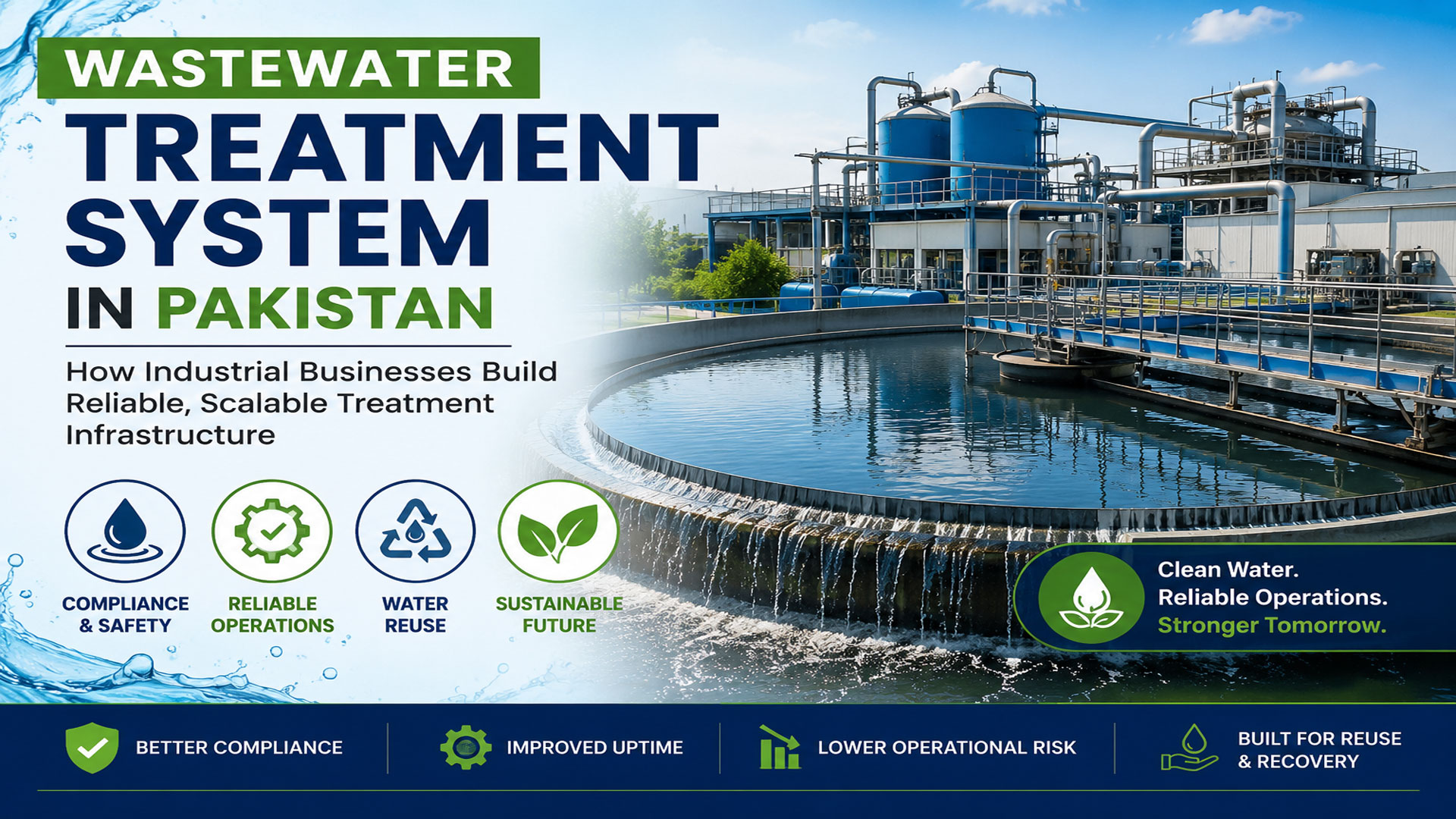
Industrial wastewater management in Pakistan is no longer a side function handled only when problems appear. In 2026, it has become a core infrastructure priority for factories and process-based facilities that depend on stable operations, water availability, and environmental performance. A properly designed Wastewater Treatment System in Pakistan helps businesses reduce operational risk, improve treatment reliability, and build a stronger foundation for compliance and water reuse planning.
For industrial facilities in Karachi, Faisalabad, Lahore, Sialkot, and other manufacturing hubs, wastewater challenges often affect more than discharge quality. Poor treatment performance can disrupt production, increase maintenance costs, damage downstream equipment, and weaken long-term sustainability planning. That is why businesses are now moving from reactive treatment setups to engineered, scalable wastewater infrastructure.
If you are evaluating industry-specific discharge treatment first, review:
Effluent Treatment Plant
What Is a Wastewater Treatment System?
A Wastewater Treatment System is a complete process-based setup designed to treat contaminated water generated from industrial, commercial, or institutional operations before discharge, reuse, or advanced recovery. Depending on the source and treatment goals, the system may include physical, chemical, biological, and membrane-based treatment stages.
In practical business terms, a well-designed Wastewater Treatment System in Pakistan helps facilities:
- Control wastewater quality and discharge risk
- Reduce pollutant load through staged treatment
- Improve plant reliability and operational stability
- Support inspection and audit readiness
- Create a treatment base for recycling and reuse expansion
Why Wastewater Treatment Systems Matter More in Pakistan in 2026
Industrial facilities across Pakistan are working in an environment shaped by water stress, rising utility costs, and stronger sustainability expectations. These pressures are pushing decision-makers to treat wastewater infrastructure as a strategic operational investment—not just a compliance expense.
Key reasons businesses are upgrading Wastewater Treatment System in Pakistan infrastructure include:
- Rising water supply risk and inconsistent source quality
- Need to protect production continuity and uptime
- Growing pressure to improve environmental management standards
- Higher maintenance costs from poor-quality water handling
- Long-term demand for water reuse and recovery planning
In Karachi and other industrial clusters, the need is even stronger due to high industrial density and increasing operational dependence on reliable water management.
Industries That Need a Wastewater Treatment System in Pakistan
A Wastewater Treatment System in Pakistan is essential for any facility generating process wastewater with contaminants that require controlled treatment before discharge or reuse.
Common sectors include:
- Textile industry (dyeing, bleaching, washing, finishing)
- Chemical and process manufacturing
- Food and beverage processing
- Pharmaceutical manufacturing
- Hospitals and healthcare facilities
- Commercial and institutional facilities
- Mixed industrial plants with variable wastewater characteristics
For textile-specific wastewater planning, these related resources are useful:
- Textile Wastewater Treatment in Pakistan
- Textile Effluent Plant in Pakistan
- Textile Effluent Recycling Pakistan
How a Wastewater Treatment System Works (Typical Industrial Treatment Flow)
A Wastewater Treatment System is not a single machine. It is a staged process built around influent quality, treatment goals, and operational conditions. The exact configuration varies by industry, but most systems follow a structured sequence.
Typical stages in a Wastewater Treatment System in Pakistan:
- Collection & Screening
Wastewater is collected from plant process points and screened to remove large solids and debris before entering primary treatment stages. - Equalization
Flow and pollutant fluctuations are balanced in an equalization tank to stabilize downstream treatment performance, especially in batch-process industries such as textiles and chemicals. - pH Adjustment & Chemical Treatment
pH correction and coagulation/flocculation help remove suspended solids, color, and chemical contaminants. - Primary Clarification
Settling and separation processes remove heavier solids and reduce load on biological and polishing stages. - Biological Treatment (Where Required)
Biological processes reduce organic load (BOD/COD) using aeration and microbial activity. Reliable aeration often depends on properly selected components such as:
SSI Diffusers and Blowers in Pakistan - Secondary Clarification & Polishing
Further settling, filtration, or polishing improves treated water quality for discharge compliance or reuse preparation. - Advanced Treatment / Reuse Integration (Optional but Increasingly Important)
Depending on reuse goals, treated water may be upgraded using:- Ultrafiltration Plant
- Industrial RO Plants in Pakistan
- Zero Liquid Discharge (ZLD) Plant
This staged approach allows businesses to build a Wastewater Treatment System in Pakistan that is both compliant and scalable.
Wastewater Treatment System vs ETP vs Recycling: What Industrial Buyers Should Know
These terms are related, but they are not interchangeable. Understanding the difference improves procurement decisions and system planning.
Wastewater Treatment System:
- Broad infrastructure category covering treatment, polishing, reuse, and recovery stages
- Can be designed for industrial, commercial, or institutional applications
- May include ETP, filtration, RO, and advanced reuse units
Effluent Treatment Plant (ETP):
- Focused on treating industrial effluent before discharge or further treatment
- Often the base stage for textile and industrial wastewater management
- Critical for pollutant reduction and treatment stability
Recycling / Reuse Systems:
- Focused on recovering treated water for reuse in operations
- Reduce freshwater dependence and improve water efficiency
- Usually depend on strong base treatment performance
To understand the industrial effluent treatment foundation:
Effluent Treatment Plant
Key Benefits of a Properly Designed Wastewater Treatment System in Pakistan
A reliable Wastewater Treatment System in Pakistan provides operational, technical, and commercial benefits across the facility.
Key benefits include:
- Better wastewater control and reduced treatment-related disruptions
- Improved compliance readiness and audit support
- Protection of downstream recycling and membrane systems
- Improved environmental management and plant hygiene standards
- Stronger foundation for water reuse and recovery projects
- Long-term support for sustainability and buyer expectations
For broader industrial planning, businesses often assess complete solutions from an:
Industrial Water Treatment Company in Pakistan
Common Wastewater Treatment System Mistakes (and How to Avoid Them)
Many systems fail to deliver stable performance because planning decisions are made on price alone instead of process requirements and lifecycle value.
Common mistakes include:
- Choosing generic treatment designs without wastewater characterization
- Designing only for average flow and ignoring peak load conditions
- Underestimating sludge handling and disposal requirements
- Skipping maintenance access and spare planning
- Using incompatible equipment combinations
- Lack of operator training and routine monitoring discipline
Performance improves significantly when businesses plan for:
- Detailed influent testing and profiling
- Industry-specific treatment design
- Scalable infrastructure layout
- Preventive maintenance and technical support
For long-term operational support:
Water Maintenance Services in Pakistan
How Industrial Businesses Build Reliable, Scalable Wastewater Infrastructure
A high-performing Wastewater Treatment System in Pakistan is built through process planning—not equipment selection alone. Industrial businesses that scale successfully usually follow a practical infrastructure approach:
- Step 1: Wastewater Characterization — Understand flow, pH, solids, COD/BOD, chemical load, and variation patterns.
- Step 2: Define Treatment Goals — Clarify whether the target is discharge compliance, reuse, recycling, or phased expansion.
- Step 3: Build Core Treatment Reliability — Design equalization, clarification, and biological/chemical stages for stable real-world performance.
- Step 4: Plan for Scalability — Keep room for future UF, RO, or recovery systems as water demand and compliance goals grow.
- Step 5: Secure O&M Support — Ensure monitoring, preventive maintenance, troubleshooting, and operator training are in place.
This approach helps companies avoid repeated redesign costs and supports long-term wastewater management resilience.
Why Industries Choose Water World PK for Wastewater Treatment Solutions
Water World PK supports industrial and commercial clients across Pakistan with practical, performance-focused water and wastewater solutions designed around actual plant conditions.
Core solution areas include:
- Wastewater Treatment System in Pakistan
- Effluent Treatment Plant (ETP)
- Textile Effluent Recycling Pakistan
- Industrial RO Plants in Pakistan
- Ultrafiltration Plant
- Zero Liquid Discharge (ZLD) Plant
- SSI Diffusers and Blowers in Pakistan
- Water Maintenance Services in Pakistan
For facilities in Karachi, Lahore, Faisalabad, Sialkot, and beyond, the goal is not just installation—it is building treatment infrastructure that remains reliable as operations scale.
Final Thoughts: Wastewater Treatment Infrastructure Is Now a Growth Enabler
A properly engineered Wastewater Treatment System in Pakistan helps industrial businesses move beyond short-term compliance fixes and build reliable, scalable infrastructure for long-term operations. In 2026, wastewater treatment performance is directly tied to plant uptime, water risk management, and future reuse potential.
When planned correctly, a wastewater treatment system becomes more than an environmental requirement—it becomes a business continuity and growth-enabling asset.
Looking for Wastewater Treatment System Planning in Pakistan?
Visit Water World PK to explore Wastewater Treatment System in Pakistan, Effluent Treatment Plant, Industrial RO Plants in Pakistan, Ultrafiltration Plant, and Textile Effluent Recycling Pakistan solutions for industrial and commercial facilities across Pakistan.