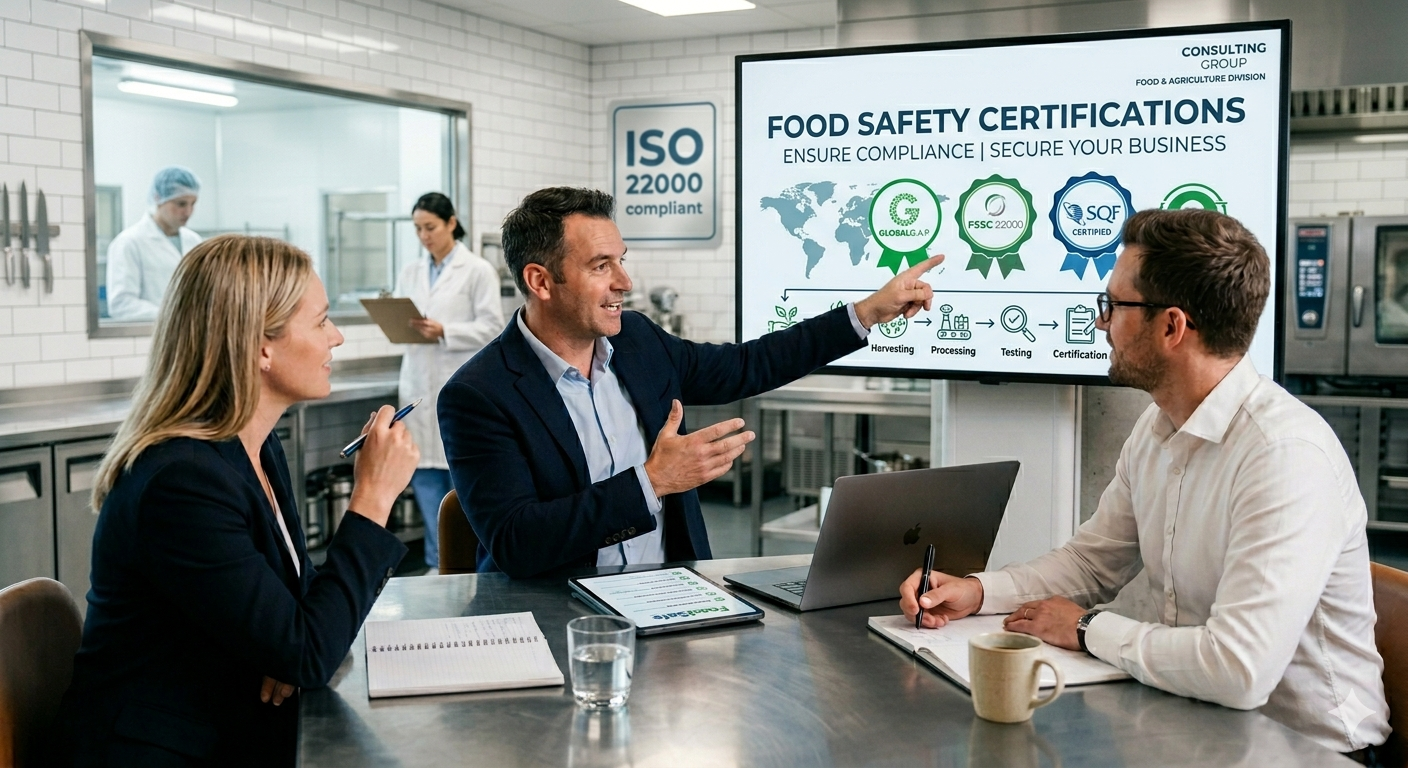
In today’s global food supply chain, retailers are under increasing pressure to ensure that every product on their shelves meets strict safety, hygiene, and quality standards. Consumers are more aware than ever of foodborne risks, ethical sourcing, and regulatory compliance. As a result, food safety certifications have become a non-negotiable requirement for suppliers and manufacturers aiming to work with leading retail brands in 2026.
These certifications not only demonstrate compliance with international standards but also build trust, reduce risks, and improve supply chain transparency. In this blog, we explore the most important food safety certifications retailers require and why they matter in modern retail ecosystems.
Why Food Safety Certifications Matter in Retail
Food safety is not just about preventing contamination—it is about ensuring end-to-end control across sourcing, production, packaging, storage, and distribution.
Retailers rely on food safety certifications to:
- Ensure product safety and quality consistency
- Meet global regulatory requirements
- Reduce risk of recalls and legal penalties
- Strengthen brand reputation
- Improve supplier accountability
With increasing globalization of food supply chains, certifications act as a universal language of trust between suppliers and retailers.
1. ISO 22000 – Food Safety Management System
One of the most widely recognized standards globally is:
- International Organization for Standardization 22000
Why retailers require it:
ISO 22000 provides a comprehensive framework for food safety management systems. It integrates hazard analysis and critical control points (HACCP) principles into a structured system.
Key benefits:
- End-to-end food safety control
- Risk-based process management
- Strong traceability systems
- Compliance with international food safety laws
Retailers prefer suppliers with ISO 22000 certification because it ensures consistent safety standards across the supply chain.
2. HACCP Certification – Hazard Analysis and Critical Control Points
HACCP is one of the foundational food safety certifications required in nearly every food-related industry.
What it focuses on:
- Identifying potential biological, chemical, and physical hazards
- Establishing critical control points in production
- Implementing preventive measures instead of reactive solutions
Why retailers require it:
HACCP ensures that food safety risks are identified and controlled before products reach consumers. It is often a mandatory requirement for entering retail supply chains globally.
3. BRCGS Food Safety Standard
The Brand Reputation Compliance Global Standards certification is one of the most respected global food safety standards, especially in Europe and the UK.
Why retailers require it:
BRCGS certification ensures that suppliers meet strict requirements for:
- Product safety
- Operational controls
- Quality management systems
- Supply chain transparency
Key advantages:
- Strong retailer acceptance worldwide
- Improved audit readiness
- Higher consumer confidence
Many major supermarket chains require BRCGS certification before onboarding suppliers.
4. FSSC 22000 – Food Safety System Certification
FSSC 22000 is another globally recognized standard based on ISO principles and HACCP requirements.
Why retailers prefer it:
- Recognized by the Global Food Safety Initiative (GFSI)
- Strong focus on food safety risk management
- Suitable for manufacturers, packaging companies, and logistics providers
Benefits:
- Global acceptance
- Robust certification structure
- Improved supply chain credibility
Retailers often prefer FSSC 22000 because it aligns with international compliance expectations.
5. SQF Certification – Safe Quality Food Standard
The Safe Quality Food Institute certification is widely used in North America and increasingly globally.
Why retailers require it:
SQF certification ensures strict compliance with food safety and quality standards across production and distribution processes.
Key features:
- Comprehensive food safety codes
- Strong focus on preventive controls
- Retailer-specific compliance programs
Many U.S. retailers require SQF certification as part of their supplier approval process.
6. FDA Compliance Standards (U.S. Market Requirement)
The Food and Drug Administration plays a critical role in regulating food safety in the United States.
Why retailers require it:
Retailers operating in or sourcing from the U.S. require compliance with FDA regulations, including:
- Food Safety Modernization Act (FSMA) compliance
- Proper labeling and packaging standards
- Facility registration and inspection readiness
FDA compliance ensures that food products meet strict safety requirements before reaching consumers.
7. Global GAP Certification – Agricultural Safety Standard
Global GAP is essential for agricultural producers supplying fresh produce to retailers.
Why retailers require it:
- Ensures safe and sustainable farming practices
- Reduces pesticide and chemical risks
- Improves traceability of fresh produce
Retailers use Global GAP certification to ensure that fruits, vegetables, and raw agricultural products meet safety standards.
8. Organic Certifications
Organic certifications are increasingly important in retail due to rising consumer demand for clean-label products.
Common organic standards include:
- USDA Organic (U.S.)
- EU Organic Certification
- Other regional organic standards
Why retailers require it:
- Ensures no synthetic pesticides or fertilizers are used
- Supports sustainable farming practices
- Increases consumer trust and product value
Organic certification is a strong differentiator in competitive retail markets.
9. ISO 9001 – Quality Management System
Although not food-specific, ISO 9001 is widely used in food manufacturing and retail supply chains.
Why retailers require it:
- Ensures consistent quality management systems
- Improves operational efficiency
- Enhances customer satisfaction
Many retailers prefer suppliers who combine ISO 9001 with food-specific certifications for stronger quality assurance.
10. Importance of Multiple Certifications in 2026
In 2026, retailers increasingly prefer suppliers who hold multiple food safety certifications rather than just one.
Why multi-certification matters:
- Covers different aspects of safety and quality
- Enhances global market access
- Reduces compliance risks
- Builds stronger retailer partnerships
For example, a supplier with HACCP + ISO 22000 + BRCGS certification is far more competitive than one with only a single certification.
The Future of Food Safety Certifications
The future of food safety compliance is becoming more digital and data-driven. Trends shaping 2026 include:
- Blockchain-based traceability systems
- AI-driven food safety monitoring
- Real-time compliance tracking
- Sustainability-linked certifications
- Automated audit systems
Retailers are moving toward fully transparent and tech-enabled supply chains.
FAQs
1. What are food safety certifications?
Food Safety Certifications are official standards that ensure food products are safe, hygienic, and compliant with international regulations.
2. Why are food safety certifications important for retailers?
They help retailers ensure product safety, reduce risks of contamination, and comply with global food regulations.
3. What is the most important food safety certification?
HACCP and ISO 22000 are among the most widely required certifications globally, especially for retail suppliers.
4. Is HACCP certification mandatory?
In many countries and retail supply chains, HACCP is either mandatory or a basic requirement for food manufacturers.
5. Which certification is best for global food supply chains?
FSSC 22000 and BRCGS are widely accepted globally and preferred by major international retailers.
Final Thoughts
In 2026, food safety certifications are more than regulatory requirements—they are essential tools for building trust, ensuring compliance, and gaining access to global retail markets. From HACCP and ISO 22000 to BRCGS and SQF, each certification plays a critical role in strengthening food safety across the supply chain.
Retailers are increasingly strict about supplier compliance, and companies that invest in recognized certifications gain a significant competitive advantage. As consumer awareness continues to rise, food safety will remain at the core of retail success, making certifications a key driver of long-term growth and credibility.