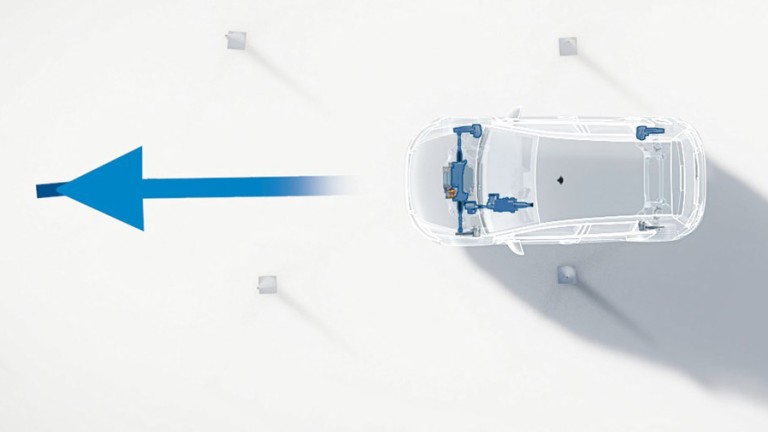
If you’ve ever glanced at your dashboard and noticed a light labeled VDC flickering on, you might have wondered what it means – and whether it’s something to worry about. Understanding vehicle dynamic control can help you become a safer, more informed driver. In this guide, we’ll break down the VDC meaning, how the system works, and why it matters for everyday driving.
What Is Vehicle Dynamic Control?
Vehicle dynamic control (VDC) is an advanced safety system built into modern vehicles that helps drivers maintain control during challenging driving situations. It is a form of electronic stability control (ESC) that monitors and adjusts a car’s behavior in real time especially during sudden maneuvers, slippery roads, or emergency braking situations.
In simple terms, what is vehicle dynamic control? It’s a computer-based system that acts as an invisible co-pilot, constantly working behind the scenes to keep your car stable, predictable, and on its intended path.
The term “VDC” is particularly associated with Nissan and Subaru vehicles, though similar systems are found across virtually every major automotive brand under different names such as Electronic Stability Program (ESP), Dynamic Stability Control (DSC), or StabiliTrak.
The VDC Meaning: Breaking It Down
To fully appreciate the VDC meaning, it helps to understand what each word in the phrase represents:
- Vehicle — The car, truck, or SUV being driven
- Dynamic — Relating to motion, forces, and how the vehicle responds to changing conditions
- Control — The system’s ability to actively manage and correct those forces
Together, vehicle dynamic control refers to a system that governs the forces of motion acting on your car and intervenes when those forces threaten to cause a loss of control. This is closely related to the broader concept of car dynamics, the study of how vehicles behave under various physical forces like acceleration, braking, cornering, and road friction.
How Does the Vehicle Dynamic System Work?
The vehicle dynamic system relies on a network of sensors working together in milliseconds. Here’s a look at how it operates:
1. Sensor Monitoring
VDC continuously reads data from multiple onboard sensors, including:
- Wheel speed sensors — detect if one or more wheels are spinning faster than others (a sign of skidding)
- Steering angle sensor — tracks where the driver is pointing the wheel
- Yaw rate sensor — measures how much the car is rotating around its vertical axis
- Lateral acceleration sensor — detects sideways forces on the vehicle
2. Data Processing
The VDC control unit compares the driver’s intended direction (from the steering angle sensor) with the car’s actual movement (from the yaw rate and wheel speed sensors). This is a core principle of automotive vehicle dynamics: understanding the difference between what a driver wants and what physics allows.
3. Active Intervention
When the system detects a discrepancy, say, the rear end is sliding out during a corner, it intervenes automatically by:
- Reducing engine torque
- Applying braking force to individual wheels
- Adjusting throttle response
This intervention corrects the vehicle moment, the rotational force that causes oversteer or understeer, and brings the car back in line with the driver’s intended path.
Vehicle Dynamics and Why They Matter
Vehicle dynamics is the science that underpins systems like VDC. It encompasses everything that affects how a car moves: suspension geometry, weight distribution, tire grip, aerodynamics, and the forces generated during acceleration, braking, and cornering.
In the world of automotive dynamic engineering, designers use vehicle dynamics principles to make cars both fun to drive and safe in emergencies. VDC is one of the most direct applications of these principles in a production vehicle a technology that bridges the gap between engineering theory and real-world safety.
Poor car dynamics such as a high center of gravity, uneven weight balance, or worn tires — can overwhelm even the best VDC system. That’s why manufacturers design VDC as one layer in a multi-layered safety architecture.
Oversteer, Understeer, and Vehicle Moment
Two key concepts in automotive vehicle dynamics are oversteer and understeer:
- Understeer — The front wheels lose grip first. The car pushes wide in a corner, turning less than intended.
- Oversteer — The rear wheels lose grip first. The back of the car swings outward.
Both conditions create unwanted vehicle moment rotational forces that push the car away from its intended trajectory. VDC detects these moments and applies corrective braking to the appropriate wheels to neutralize them before the driver even has time to react.
For example:
- If the car is understeering, VDC may reduce engine power and apply the brake to the inside rear wheel.
- If the car is oversteering, VDC may brake the outside front wheel to counteract the spin.
When Does VDC Activate?
The vehicle dynamic system is designed to operate transparently; you may never notice it working. However, you’ll typically experience VDC activation during:
- Wet or icy roads — Reduced tire traction makes skidding more likely
- Sharp cornering — Taking a bend too fast can trigger oversteer or understeer
- Emergency lane changes — Sudden steering input can unsettle the vehicle
- Sudden braking — Especially on uneven or slippery surfaces
- Towing heavy loads — Increased vehicle moment makes stability harder to maintain
The VDC light on your dashboard may flash briefly when the system is actively working; this is normal. However, if the VDC light stays on permanently, it could indicate a system fault that needs professional inspection.
VDC vs. ABS vs. Traction Control: What’s the Difference?
Many drivers confuse VDC with related systems. Here’s a quick comparison:
ABS (Anti-lock Braking System)
- Prevents the wheels from locking during hard braking.
- Helps maintain steering control while braking.
Traction Control System (TCS)
- Reduces excessive wheel spin during acceleration.
- Improves grip on slippery or uneven surfaces.
VDC (Vehicle Dynamic Control)
- Integrates ABS and Traction Control functions.
- Monitors vehicle movement and stability.
- Applies selective braking and/or adjusts engine power when needed.
- Adds yaw correction to help keep the vehicle on its intended path.
- Provides overall vehicle stability and control, especially during cornering or emergency maneuvers.
VDC is the most comprehensive of the three. It integrates the functions of ABS and traction control while adding the ability to correct rotational instability, making it the most sophisticated layer of automotive dynamic safety available in consumer vehicles.
Should You Ever Turn Off VDC?
Most VDC-equipped vehicles include a button to disable the system. There are a few situations where experienced drivers might choose to turn it off:
- Getting unstuck from snow or mud — VDC may cut power when you need wheel spin to get traction
- Track driving — Motorsport enthusiasts may prefer to manage dynamics manually
- Off-road driving — Some terrain requires controlled wheel slip
For everyday road use, however, it’s strongly recommended to keep VDC enabled. The system works far faster than any human reaction, making it an invaluable safety net.
The Role of VDC in Modern Automotive Safety
From the perspective of automotive vehicle dynamics engineering, VDC represents one of the most significant advances in passive and active vehicle safety. Studies by the National Highway Traffic Safety Administration (NHTSA) have shown that electronic stability control systems, under which VDC falls, can reduce the risk of single-vehicle crashes by up to 35% and fatal rollover accidents by as much as 70–80%.
This is why, since 2012, electronic stability control has been mandatory on all new passenger vehicles sold in the United States. VDC is simply Nissan’s and Subaru’s branded name for this now-essential technology.
Maintaining Your Vehicle Dynamic System
Like any automotive system, VDC works best when the supporting components are in good condition. To keep your vehicle dynamic system performing optimally:
- Maintain your tires — VDC relies on tire grip; worn or mismatched tires reduce its effectiveness
- Keep sensors clean — Wheel speed sensors can be affected by brake dust and debris
- Address dashboard warnings promptly — A persistent VDC warning light should be diagnosed quickly
- Perform regular brake maintenance — VDC uses the braking system for its interventions
- Keep the steering system in good condition — The steering angle sensor must be accurately calibrated
Frequently Asked Questions
Is VDC the same as traction control?
No. While VDC includes traction control functionality, it goes further by also managing vehicle moment and yaw rotational instability that traction control alone cannot address.
Does VDC affect fuel economy?
Only marginally during active interventions. Under normal driving conditions, VDC operates passively and has no meaningful impact on fuel consumption.
Can VDC prevent all accidents?
No safety system is foolproof. VDC is highly effective within the limits of physics; it cannot create grip where none exists, and it cannot overcome excessive speed. It is a supplement to, not a substitute for, attentive and skilled driving.
What does it mean when my VDC light stays on?
A steady VDC warning light typically indicates a fault in the system, possibly a faulty sensor, a wiring issue, or a low battery. Have your vehicle inspected by a qualified technician.
Final Thoughts
Understanding vehicle dynamic control gives you a deeper appreciation for the engineering that keeps you safe every time you get behind the wheel. The VDC meaning goes beyond a simple dashboard abbreviation; it represents decades of automotive engineering research in vehicle dynamics, car dynamics, and automotive dynamic safety technology.
Whether you’re navigating a rain-slicked highway or making a sudden lane change to avoid an obstacle, VDC is quietly working to correct unwanted vehicle moments and keep your car pointed in the direction you intend. It’s one of the most important and most underappreciated safety systems in your vehicle.