
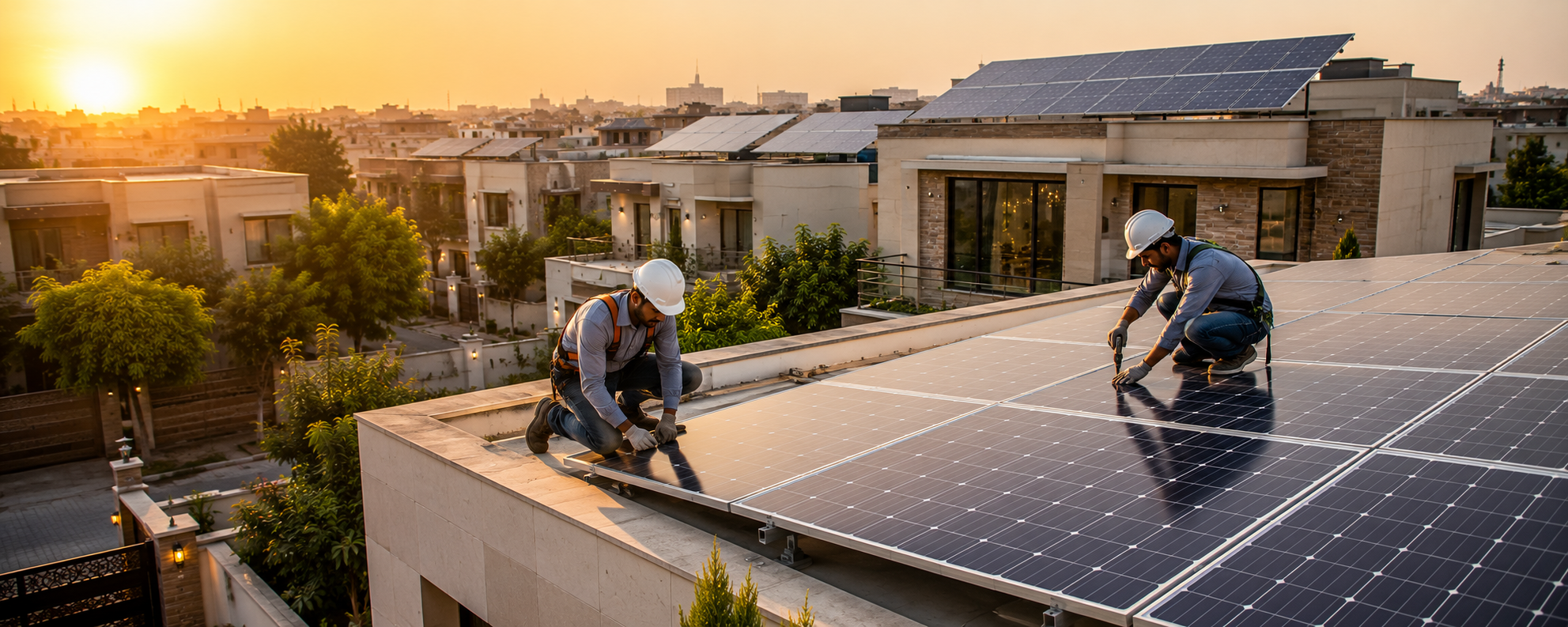
Switching to solar energy is one of the most effective ways to lower monthly electricity expenses while securing a dependable power supply. With rising utility tariffs and frequent power outages across urban centers, renewable energy has evolved from an optional luxury into an essential household investment. Investing in a properly designed solar setup allows homeowners to produce clean energy directly on their rooftops, reducing dependency on the conventional electrical grid.
Understanding how rooftop solar systems function helps property owners make educated decisions about system capacity and design. A standard solar installation converts sunlight into usable direct current electricity using high efficiency photovoltaic modules. Modern setups utilize tier one monocrystalline panels paired with high performance smart inverters to convert direct current into alternating current, which seamlessly runs household appliances such as air conditioners, refrigerators, and lighting systems.
Finding a certified installer ensures that your equipment is safely connected and operates at peak performance for decades. Working with a dedicated solar company in lahore ensures that your system is customized according to local weather patterns, roof shading, and local distribution company regulations. Professional engineering teams evaluate structural load capabilities, select optimal tilt angles, and install proper protection devices to maximize generation year round.
Key Components of a Modern Residential Solar Power Setup
Every reliable solar power arrangement relies on high quality components designed to endure harsh outdoor weather. Photovoltaic panels act as the primary generation source, capturing sunlight throughout the daylight hours. Monocrystalline bifacial panels are widely chosen today due to their higher efficiency ratings and ability to generate extra power from light reflected onto the rear side of the panel.
The solar inverter acts as the brain of the whole setup, controlling power flow, monitoring system efficiency, and coordinating energy conversion. On grid inverters transfer excess power directly to the main electric grid, while hybrid inverters allow battery storage connections to maintain continuous power during grid load shedding. Selecting robust inverters with high surge capabilities guarantees smooth operation for heavy inductive loads like motors and water pumps.
Proper mounting structures, cabling, and safety accessories are equally important for overall system longevity. Custom elevated mounting structures made from galvanized steel prevent rust and withstand strong wind forces during severe weather. Dedicated DC circuit breakers, AC breakers, surge protection devices, and proper grounding earthing pits protect home appliances from electrical surges and voltage fluctuations.
Understanding On Grid Hybrid and Off Grid Solar Systems
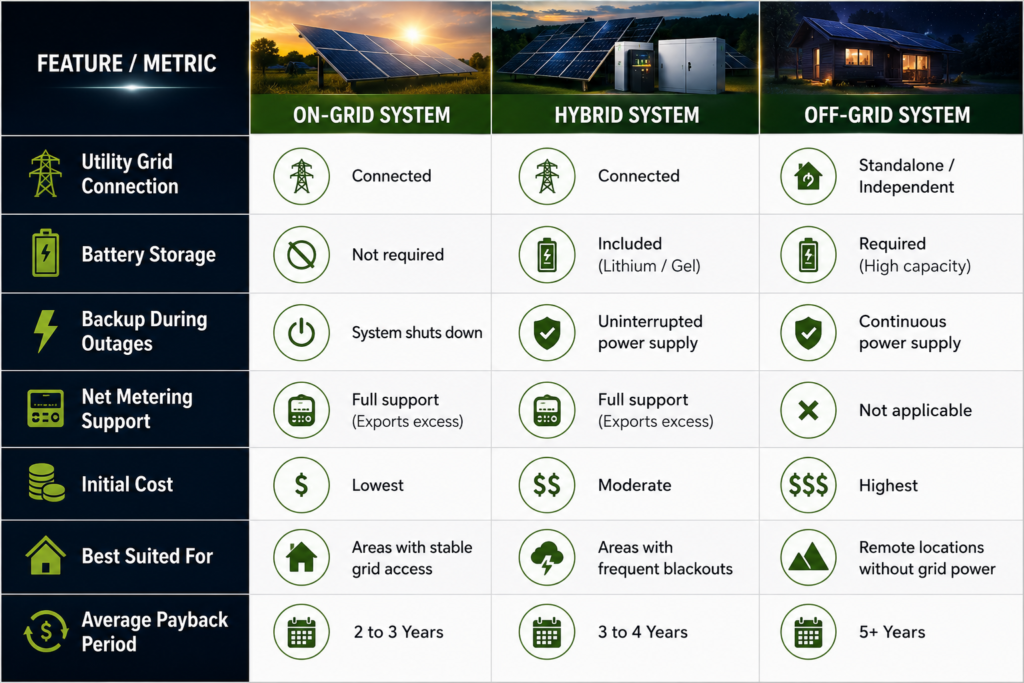
Selecting the right system topology depends on your specific energy goals, daytime power usage, and local power reliability. On grid solar systems remain the most popular choice for urban areas with reliable grid connectivity. These systems allow homeowners to export excess daytime electricity back to the utility grid through bidirectional net metering, offsetting nighttime consumption costs.
Hybrid solar systems combine grid connectivity with advanced lithium battery backup solutions. This setup provides uninterrupted power supply during unexpected power outages while maintaining the cost saving advantages of grid exports. Hybrid systems store excess solar energy produced during peak sunlight hours into high capacity lithium iron phosphate batteries for use during evening hours or grid failure.
Off grid power solutions operate entirely independently from local power utilities, making them ideal for remote properties or regions without utility infrastructure. Off grid setups rely heavily on large battery banks and backup power generators to ensure reliable energy availability around the clock. Proper capacity planning is critical for off grid installations to avoid power shortfalls during cloudy weather.
Major Advantages of Switching to Clean Solar Energy
Transitioning to solar power offers immediate financial relief through drastically reduced monthly utility bills. Electricity costs continue to rise, but producing your own clean energy locks in fixed, low energy costs for the long term. Most residential solar installations pay for themselves within two to three years through energy savings, delivering decades of virtually free electricity afterward.
Environmental sustainability is another significant benefit of adopting solar power solutions. Traditional power generation relies heavily on fossil fuels, contributing significantly to atmospheric carbon emissions and air pollution. Generating electricity from clean sunlight reduces your carbon footprint, helping create a healthier environment for future generations.
Solar energy installations also enhance overall property value. Homes equipped with certified grid tied solar systems and operational net meters command higher market values and attract buyers looking for energy efficient properties with minimal operating costs. Renewable energy upgrades deliver both immediate operational savings and long term real estate value.
Solar System Capacity & Appliance Guide
| System Capacity | Average Daily Output | Recommended Battery Storage | Typical Supported Appliances |
| 3 kW | 12 – 15 kWh | 5 kWh – 10 kWh | Lights, ceiling fans, refrigerator, LED TV, laptop, small water pump |
| 5 kW | 20 – 25 kWh | 10 kWh – 15 kWh | Lights, fans, refrigerator, 1.5 Ton Inverter AC, water pump |
| 10 kW | 40 – 50 kWh | 15 kWh – 30 kWh | Full home load, 2 to 3 Inverter ACs, refrigerator, deep freezer, water pump |
| 15 kW | 60 – 75 kWh | 30 kWh – 45 kWh | Large residences / commercial units, 4 to 5 ACs, heavy motor pumps |
Steps involved in the Solar System Design and Installation Process
A successful solar installation starts with a thorough site survey and load assessment. Certified solar engineers evaluate your historical utility bills to determine average peak consumption patterns. They conduct structural assessments of roof surfaces, analyze shading patterns from nearby structures or trees, and select the best layout for optimal solar radiation exposure.
Once the system capacity is finalized, engineers create customized single line diagrams and electrical layouts tailored to your building architecture. High quality components, including solar panels, inverters, switchgear, and customized mounting frames, are staged for installation. Skilled technicians install mounting structures securely on roof surfaces using weather tight sealing techniques to prevent water leakage.
After structural installation, technicians mount the solar panels, connect the DC wiring strings, and install the main inverter and protection panels. Grounding rods are installed deep into the ground to ensure safe dissipation of electrical faults. Following hardware installation, engineers conduct comprehensive testing, set up real time mobile monitoring apps, and initiate the net metering application procedure with the local electric distribution company.
Importance of Proper Maintenance and Net Metering
Maintaining a rooftop solar power setup requires minimal effort but ensures peak generation over its thirty year lifespan. Regularly washing dust, pollen, and debris off the glass surface of solar panels prevents generation losses caused by surface shading. Routine visual inspections of electrical connections, structural mountings, and inverter operating logs help identify minor issues before they impact overall performance.
Net metering is a regulatory mechanism that allows solar owners to sell surplus electricity back to the power grid. When your solar panels produce more electricity than your home consumes during daytime hours, the excess energy flows into the grid, turning your electric meter backward. At the end of the billing cycle, net credits offset electricity drawn from the grid during nighttime hours, significantly reducing your net energy costs.
Submitting net metering paperwork through authorized solar providers ensures smooth approval from regional power distribution companies. The process involves technical verification of site equipment, inspection of green meters, and signing net metering agreements. Partnering with experienced solar experts simplifies this administrative process, enabling fast, hassle free grid synchronization.
Frequently Asked Questions
What size solar system is required for a standard residential home?
System sizing depends on monthly electricity consumption, peak power usage, and heavy appliances like air conditioners or water pumps. A typical medium sized home usually requires between 5 kW to 10 kW of solar capacity to cover daytime energy needs and offset grid usage.
How long do solar panels and inverters last?
Tier one solar panels come with performance warranties lasting 25 to 30 years, retaining over 80 percent of original efficiency. On grid and hybrid solar inverters typically have operational lifespans ranging from 5 to 10 years, depending on brand quality, operating conditions, and routine maintenance.
Can solar panels work during rainy or cloudy days?
Yes, solar panels continue generating electricity during overcast or rainy weather, though output decreases compared to full sunny conditions. Photovoltaic cells convert diffused ambient light into electricity, ensuring system output even when clouds partially block direct sunlight.
What is the average payback period for a residential solar setup?
The financial payback period for residential solar installations typically ranges between 2 and 3 years. High utility tariffs and effective net metering credits allow property owners to recover capital investments quickly through reduced monthly energy bills.
Is battery backup necessary for an on grid solar setup?
Battery backup is not required for standard on grid solar setups because excess power exports directly to the main grid. However, adding lithium battery storage converts your system into a hybrid setup, keeping critical appliances running during grid load shedding.
Wrapping Up
Adopting clean solar energy is a smart financial decision that delivers immediate utility cost savings while protecting against future energy price increases. Installing high efficiency monocrystalline panels paired with advanced inverter technology allows homeowners to take control of their electricity needs and lower their overall environmental impact. With flexible options ranging from cost effective on grid net metering setups to advanced hybrid battery backup systems, solar power provides reliable, uninterrupted electricity for homes and commercial facilities.
Partnering with certified engineering teams ensures accurate system sizing, safe installation, and long term performance. Embracing clean renewable energy today secures a stable power supply and long term economic savings for decades to come.