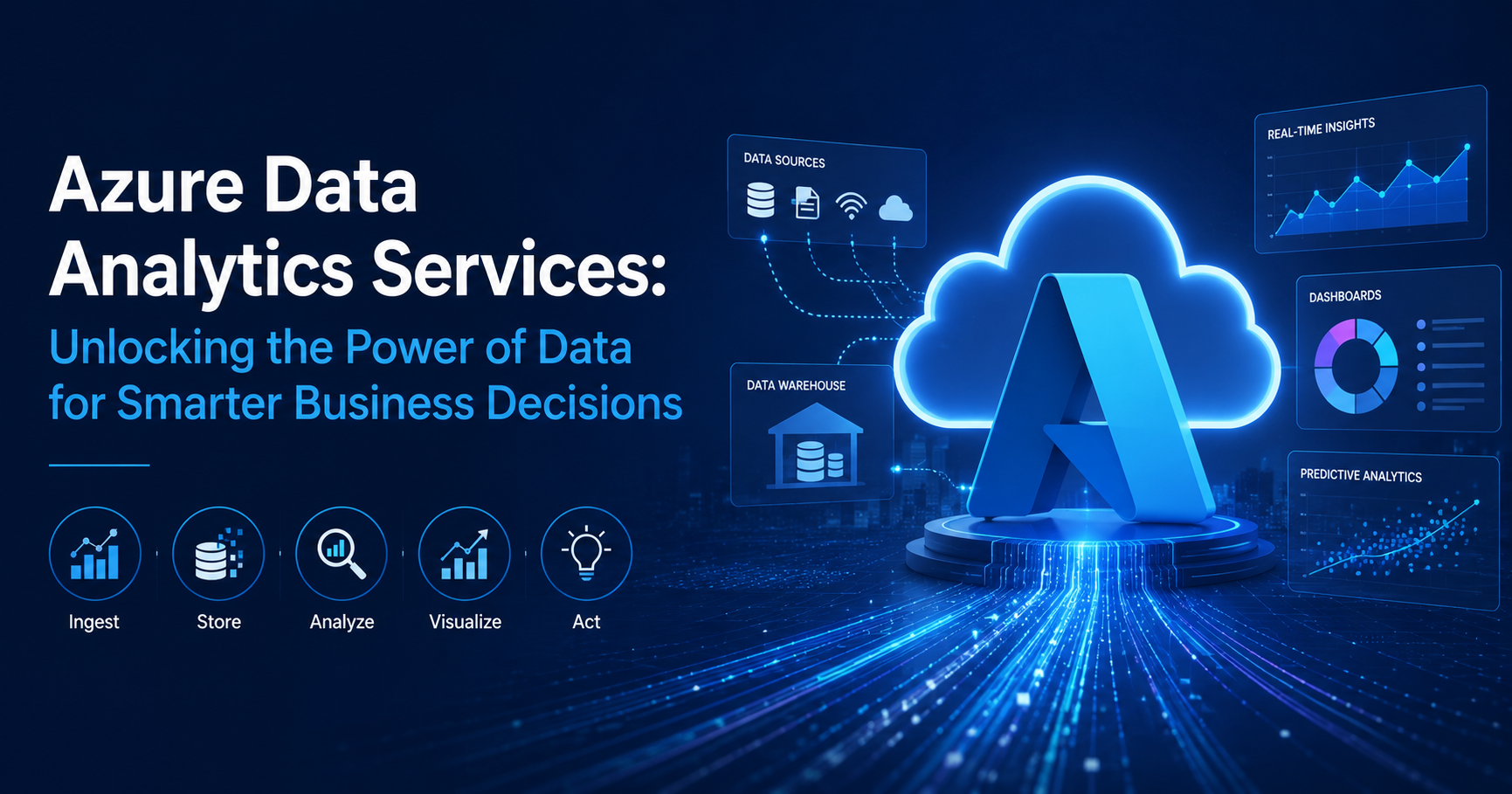
In today’s data-driven business environment, organizations generate enormous volumes of information from multiple sources, including websites, mobile applications, customer interactions, enterprise systems, IoT devices, and social media platforms. While collecting data is relatively easy, extracting meaningful insights from it remains a challenge for many businesses.
Organizations need advanced analytics solutions that can transform raw data into actionable intelligence. This is where Azure Data Analytics Services come into play. Microsoft Azure offers a comprehensive suite of cloud-based analytics tools that help businesses collect, process, analyze, visualize, and leverage data to make informed decisions.
Whether an organization wants to improve operational efficiency, enhance customer experiences, predict future trends, or gain a competitive advantage, Azure provides the technologies needed to build a modern data analytics ecosystem.
What Are Azure Data Analytics Services?
Azure Data Analytics Services refer to a collection of cloud-based solutions and tools offered by Microsoft Azure that enable businesses to manage and analyze large volumes of data efficiently.
These services support the entire data lifecycle, including:
- Data collection
- Data integration
- Data storage
- Data processing
- Data transformation
- Data analysis
- Business intelligence
- Machine learning
- Reporting and visualization
Azure’s analytics ecosystem allows organizations to handle structured, semi-structured, and unstructured data while maintaining security, scalability, and performance.
Why Businesses Need Azure Data Analytics Services
Modern organizations face several data-related challenges, including:
- Rapidly increasing data volumes
- Data stored across multiple systems
- Complex reporting requirements
- Real-time analytics needs
- Regulatory compliance requirements
- Difficulty converting data into actionable insights
Azure Data Analytics Services help businesses address these challenges by providing a centralized, scalable, and intelligent analytics platform.
Organizations can use Azure to:
- Improve decision-making
- Optimize business operations
- Reduce costs
- Enhance customer experiences
- Increase productivity
- Support innovation initiatives
Core Components of Azure Data Analytics Services
Microsoft Azure offers several powerful services that work together to create a complete analytics ecosystem.
Azure Data Factory
Azure Data Factory is a cloud-based data integration service that enables businesses to create, schedule, and automate data pipelines.
Key Features
- Data movement across systems
- ETL and ELT processes
- Workflow orchestration
- Data transformation
- Automated scheduling
- Real-time monitoring
Benefits
- Simplified data integration
- Faster analytics workflows
- Reduced manual effort
- Improved data consistency
Organizations often use Azure Data Factory as the foundation of their analytics architecture.
Azure Synapse Analytics
Azure Synapse Analytics is Microsoft’s unified analytics platform that combines data warehousing, big data analytics, and business intelligence capabilities.
Key Features
- Enterprise data warehousing
- SQL analytics
- Apache Spark integration
- Data exploration
- Real-time analytics
- AI integration
Benefits
- Unified analytics environment
- High-performance querying
- Faster data processing
- Enhanced scalability
Azure Synapse helps organizations analyze massive datasets quickly and efficiently.
Azure Data Lake Storage
Azure Data Lake Storage provides secure and scalable storage for large amounts of structured and unstructured data.
Key Features
- Petabyte-scale storage
- Hierarchical file system
- Enterprise security
- High-performance access
- Cost-effective storage
Benefits
- Centralized data repository
- Flexible storage architecture
- Support for analytics workloads
- Reduced storage costs
Many organizations use Data Lake Storage as the central repository for enterprise data.
Azure Databricks
Azure Databricks is a cloud-based analytics platform built on Apache Spark.
Key Features
- Big data processing
- Machine learning
- Collaborative analytics
- Streaming analytics
- Data engineering capabilities
Benefits
- Faster analytics processing
- Improved collaboration
- Advanced AI capabilities
- Real-time insights
Databricks is particularly useful for organizations working with advanced analytics and artificial intelligence.
Azure Stream Analytics
Azure Stream Analytics processes and analyzes real-time data streams from multiple sources.
Common Data Sources
- IoT devices
- Sensors
- Applications
- Websites
- Industrial equipment
Benefits
- Instant analytics
- Real-time alerts
- Faster decision-making
- Operational visibility
This service is ideal for businesses that require immediate responses to incoming data.
Power BI
Power BI is Microsoft’s business intelligence and data visualization platform.
Key Features
- Interactive dashboards
- Visual reports
- Self-service analytics
- Mobile accessibility
- Data sharing
Benefits
- Better data understanding
- Enhanced reporting
- Improved collaboration
- Executive visibility
Power BI enables organizations to transform complex data into meaningful visual insights.
Key Benefits of Azure Data Analytics Services
Scalability
Azure provides virtually unlimited scalability to support growing business needs.
Organizations can:
- Store petabytes of data
- Process large workloads
- Scale resources on demand
- Support global operations
This flexibility ensures businesses only pay for the resources they use.
Cost Efficiency
Azure’s pay-as-you-go pricing model helps organizations optimize costs.
Benefits include:
- No upfront infrastructure investment
- Reduced maintenance costs
- Lower operational expenses
- Efficient resource utilization
Businesses can achieve significant savings compared to traditional on-premises analytics environments.
Enhanced Security
Data security remains a top priority for modern enterprises.
Azure offers:
- Data encryption
- Identity management
- Role-based access control
- Multi-factor authentication
- Threat detection
- Compliance certifications
These features help organizations protect sensitive business data.
Real-Time Analytics
Organizations increasingly require immediate access to business insights.
Azure enables:
- Live dashboards
- Streaming analytics
- Real-time monitoring
- Instant notifications
Real-time analytics supports faster and more informed decision-making.
Artificial Intelligence Integration
Azure integrates analytics with artificial intelligence and machine learning capabilities.
Businesses can leverage AI for:
- Predictive analytics
- Customer behavior analysis
- Demand forecasting
- Risk assessment
- Fraud detection
This combination of analytics and AI creates powerful business intelligence solutions.
Industry Applications of Azure Data Analytics Services
Healthcare
Healthcare organizations use Azure analytics to:
- Analyze patient records
- Improve treatment outcomes
- Monitor healthcare operations
- Predict disease patterns
- Support medical research
Benefits include enhanced patient care and operational efficiency.
Banking and Financial Services
Financial institutions leverage Azure analytics for:
- Fraud detection
- Risk management
- Customer segmentation
- Regulatory compliance
- Financial forecasting
Real-time analytics helps financial organizations improve security and profitability.
Retail and E-Commerce
Retail businesses use Azure to:
- Understand customer behavior
- Optimize inventory
- Forecast demand
- Personalize marketing campaigns
- Improve customer experiences
Analytics-driven strategies help retailers increase sales and customer loyalty.
Manufacturing
Manufacturers use Azure analytics for:
- Predictive maintenance
- Production monitoring
- Supply chain optimization
- Quality assurance
- Equipment performance analysis
These capabilities reduce downtime and improve productivity.
Telecommunications
Telecom providers utilize Azure analytics to:
- Monitor network performance
- Analyze customer usage
- Reduce customer churn
- Improve service quality
- Optimize network operations
Data-driven insights help telecom companies remain competitive in a rapidly evolving market.
Azure Data Analytics and Artificial Intelligence
The combination of analytics and artificial intelligence is transforming how organizations use data.
Azure enables businesses to:
- Build machine learning models
- Automate decision-making
- Generate predictive insights
- Improve forecasting accuracy
- Personalize customer experiences
AI-powered analytics helps organizations move beyond historical reporting and toward predictive and prescriptive decision-making.
Azure Data Analytics Implementation Process
A successful Azure analytics project typically follows a structured approach.
Step 1: Business Assessment
Organizations begin by identifying:
- Business objectives
- Key performance indicators
- Data requirements
- Analytics goals
Step 2: Data Strategy Development
This phase includes:
- Data architecture design
- Governance planning
- Security framework development
- Technology selection
Step 3: Data Integration
Businesses connect various data sources using Azure Data Factory and related services.
Step 4: Data Storage Setup
Azure Data Lake Storage and Azure Synapse Analytics are configured to store and manage data effectively.
Step 5: Analytics Development
Organizations develop:
- Dashboards
- Reports
- Data models
- Machine learning solutions
Step 6: Testing and Optimization
Analytics environments are tested for:
- Performance
- Security
- Scalability
- Accuracy
Step 7: Deployment and Support
The solution is deployed, monitored, and continuously optimized.
Challenges in Azure Data Analytics Projects
While Azure provides powerful analytics capabilities, organizations may encounter challenges such as:
Data Quality Issues
Poor-quality data can lead to inaccurate insights.
Solutions
- Data cleansing
- Validation processes
- Governance policies
Integration Complexity
Many businesses operate multiple systems and applications.
Solutions
- Standardized integration frameworks
- API-based connectivity
- Expert implementation support
Skills Gap
Advanced analytics platforms require specialized expertise.
Solutions
- Employee training
- Managed analytics services
- Consulting partnerships
Cost Management
Without proper planning, cloud analytics costs can increase rapidly.
Solutions
- Resource monitoring
- Cost optimization strategies
- Automated scaling policies
Best Practices for Azure Data Analytics Success
Organizations can maximize their analytics investments by following these best practices:
Define Clear Business Goals
Align analytics initiatives with strategic business objectives.
Build a Strong Data Governance Framework
Ensure data quality, security, and compliance.
Start with High-Value Use Cases
Focus on projects that deliver measurable business outcomes.
Invest in User Training
Equip employees with the skills needed to use analytics tools effectively.
Prioritize Security
Implement security controls from the beginning of the project.
Continuously Optimize
Monitor performance and refine analytics processes regularly.
Future Trends in Azure Data Analytics Services
The analytics landscape continues to evolve rapidly.
Key trends shaping the future include:
AI-Driven Analytics
Artificial intelligence will automate insight generation and predictive analysis.
Real-Time Data Processing
Organizations will increasingly rely on instant analytics for operational decision-making.
Data Fabric Architectures
Unified data management platforms will simplify analytics environments.
Generative AI Integration
Businesses will use natural language interfaces to interact with data.
Edge Analytics
Processing data closer to its source will improve speed and efficiency.
Advanced Data Governance
Organizations will strengthen governance practices to meet growing regulatory requirements.
Why Choose Azure Data Analytics Services?
Azure stands out as one of the most comprehensive analytics platforms available today.
Key advantages include:
- End-to-end analytics ecosystem
- Seamless Microsoft integration
- Enterprise-grade security
- Global cloud infrastructure
- Advanced AI capabilities
- Flexible pricing models
- Continuous innovation
Organizations of all sizes can leverage Azure to transform data into strategic business value.
Conclusion
Data has become a critical driver of business success, and organizations need advanced analytics solutions to remain competitive. Azure Data Analytics Services provide a powerful cloud-based platform that enables businesses to collect, process, analyze, and visualize data efficiently.
From Azure Data Factory and Azure Synapse Analytics to Power BI and Azure Databricks, Microsoft offers a comprehensive suite of tools that support modern analytics requirements. These solutions help organizations improve decision-making, enhance operational efficiency, drive innovation, and create exceptional customer experiences.
As artificial intelligence, machine learning, and real-time analytics continue to evolve, Azure Data Analytics Services will play an increasingly important role in helping businesses unlock the full value of their data and achieve sustainable growth in the digital age.