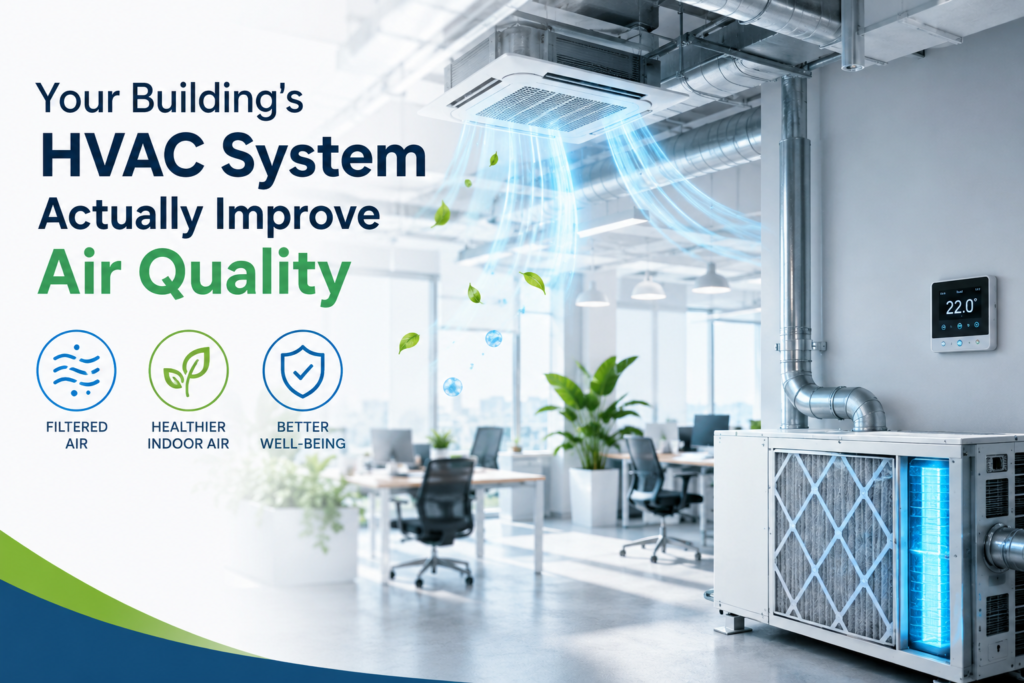
Commercial buildings rely on well-designed heating and cooling systems to maintain a stable indoor environment while also supporting HVAC indoor air quality for people living there. Being comfortable and having clean air are not the same thing. A lot of people who own buildings think that if the heating and cooling systems are working well, then the air inside must be healthy.
The air quality inside a building is about more than just how hot or cold it is. It is also about how the air is moving around, how well the filters are working, how well the system is maintained, and how well the system was designed. If you understand how your heating and cooling system affects the air inside your building, you can make a place for people to be.
In this blog, we will discuss how commercial HVAC systems influence indoor air quality, building performance, and overall occupant comfort.
The Role of HVAC Systems In Indoor Air Quality
Instead of just warming and cooling an indoor space, a quality HVAC system will actively impact indoor air quality in HVAC systems by addressing airborne contaminants, controlling humidity levels, and ensuring fresh air exchange.
Many commercial buildings often run in “recirculation mode”, which constantly pushes indoor air around and through the system with less and less fresh air introduced, causing CO₂ levels, dust, and other organic and inorganic compounds to rise.
Conversely, a ventilated system introduces just the right amount of outside air and also filters the introduced air.
Why Indoor Air Quality Matters For Buildings
Indoor air quality directly impacts your health, comfort, and the performance of everyone living in the building.
Common indoor pollutants include:
- Dust and pollen
- Bad chemicals that are in the air
- Mould spores
- Bacteria
- Much moisture
- Carbon dioxide build-up
These issues can cause headaches, fatigue, allergies, and breathing problems. Read our guide on how poor ventilation affects your health. Bad air affects more than just comfort.
The Essential Factors That Influence HVAC Indoor Air Quality
Here are some important factors that influence HVAC indoor air quality:
- Remove stale or poor indoor air and bring fresh air from outdoors.
- Collect dust, pollen, smoke, and other particles before they spread through the buildings.
- Clean filters mean cleaner air and better system performance.
- It helps maintain moisture levels by preventing mould and also improves comfort.
- Using HVAC servicing regularly keeps the system working properly and supports cleaner air.
- Clean air vents help to stop dust and pollutants from building up and spreading.
- Balanced airflow keeps every part of the building properly ventilated.
- Fresh air helps keep indoor spaces cleaner and free from bad smells.
- Decentralised heat recovery ventilation improves air quality and saves energy.
- A good HVAC system is designed to suit the building’s size and needs.
Signs Your HVAC System May Not Be Improving Air Quality
Your HVAC system may require attention if you notice:
- Persistent stale odours
- Uneven airflow
- Excessive dust accumulation
- Increased allergy complaints
- Condensation on windows
- Mould growth
- Rooms don’t feel fresh, even when heating or cooling is working.
Addressing these problems early improves comfort and helps your HVAC system last longer.
How Heat Recovery Ventilation Supports Cleaner Indoor Air
Here’s how heat recovery ventilation helps improve indoor air quality:
- These days, commercial buildings are made to be more efficient, which helps to stop energy from being wasted.
- If you do not bring air into a building that is airtight, it will collect old air, dust, and other bad things that are inside.
- Heat recovery ventilation helps to replace poor indoor air with filtered outdoor air.
- Products like Fantini Cosmi Ecocomfort help companies keep their air clean without increasing heating costs.
- When you use heat recovery ventilation with a well-functioning heating and cooling system, it makes the inside of the building a healthier and more comfortable place to be. It also helps to save energy and make the building work better in the long run.
- Heat recovery ventilation and systems like Fantini Cosmi Ecocomfort are important for indoor air quality and really support it.
FAQs
1. Can an HVAC system improve indoor air quality?
Yes, HVAC systems improve indoor air quality and provide good ventilation and filtration.
2. How often should HVAC filters be replaced?
Filters should be replaced regularly by following the manufacturer’s instructions.
3. Why is ventilation important?
Ventilation is very important for improving indoor air quality and creating a healthier indoor environment.
4. What are the signs of poor indoor air quality?
The signs of poor indoor air quality include stale odours, dust, poor airflow, and persistent allergy symptoms.
5. Can heat recovery ventilation reduce energy costs?
Yes, it helps improve ventilation while recovering heat, making buildings more energy efficient.
Final Thoughts
Indoor Air Quality Is More Than Your HVAC. If you can improve the air quality in your building and reduce your overall HVAC expenses at the same time. Luckily for you, there are more ways to improve air quality beyond simply upgrading your system.
If your building has the necessary amount of ventilation and maintenance, you’ll end up enjoying healthier and more pleasant spaces with increased system efficiency, and you’ll save money in the long run, too.
So start with a few changes today to ensure you’ll continue to benefit from them far into the future.
Improve Your Building’s Air Quality with Ermen Systems
Looking to create a healthier and more comfortable commercial space? Ermen Systems provides a reliable HVAC and ventilation solution that customises to your building’s needs. Our teams help businesses across Ireland improve indoor air quality with energy-efficient systems.