
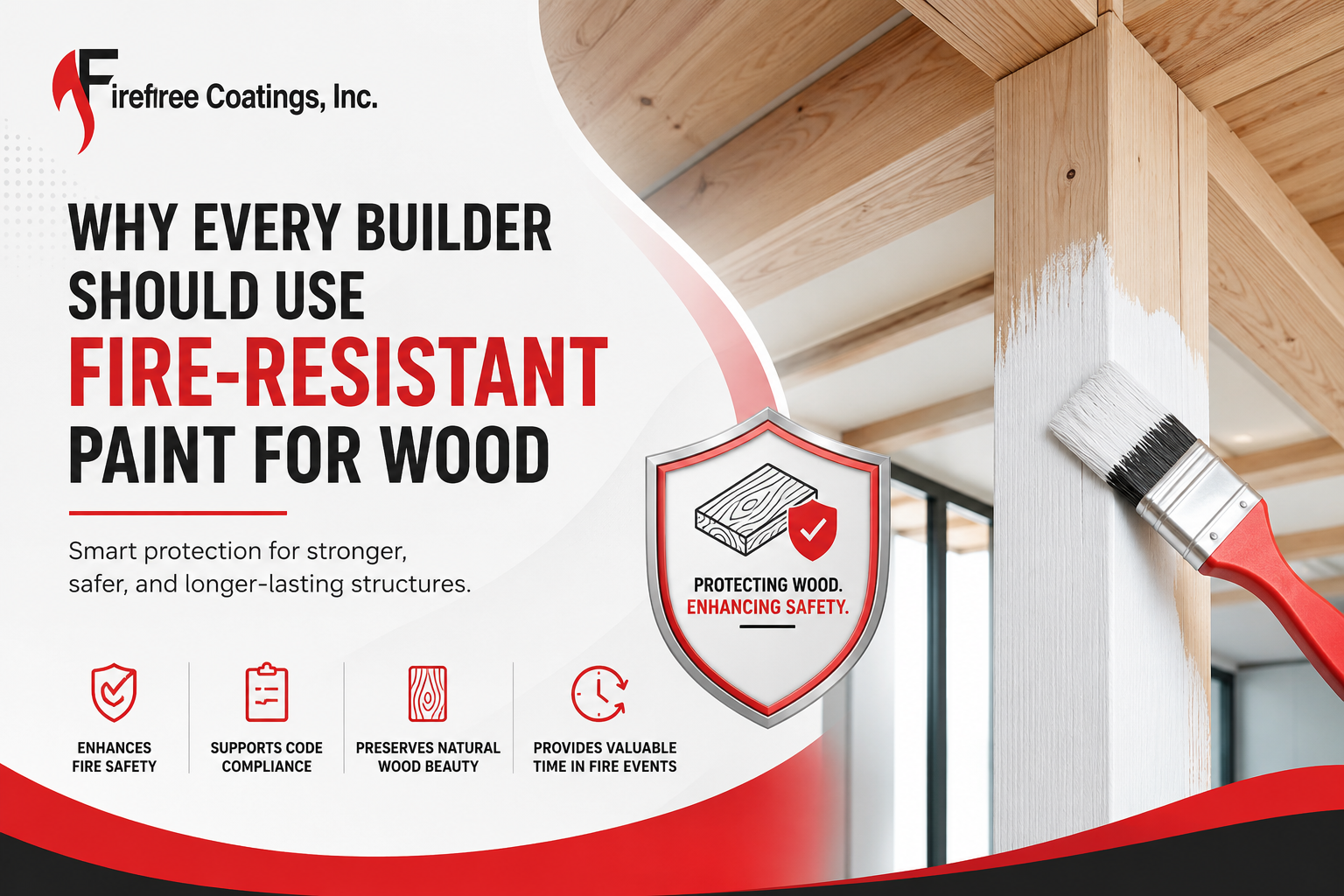
Wood remains one of the most widely used construction materials because of its strength, versatility, and natural appearance. However, as a combustible material, wood requires additional protection to help improve fire safety and meet applicable building codes. This is why many builders and architects specify Fire-Resistant Paint for Wood as part of their passive fire protection strategy. By helping reduce flame spread and smoke development, Fire-Resistant Paint for Wood can enhance the fire performance of wood surfaces while preserving their aesthetic appeal in residential, commercial, and institutional projects.
Whether used in residential, commercial, or institutional construction, understanding how these coatings work can help builders make informed decisions when selecting fire protection solutions.
How Does Fire-Resistant Paint Work on Wood?
Fire-Resistant Paint for Wood is designed to enhance the fire performance of wood by slowing the spread of flames and reducing heat transfer during fire exposure. Many advanced systems utilize intumescent technology, which reacts to high temperatures by expanding into a thick insulating layer.
This protective char layer helps shield the wood substrate from direct heat, delaying combustion and providing additional time for occupants to evacuate and emergency responders to act.
For builders and specifiers, it is important to select products that have been independently tested and comply with recognized fire safety standards. Test reports and certifications can help verify performance and support compliance with project requirements.
Advantages of Fire-Resistant Paint for Wood
Using Fire-Resistant Paint for Wood offers several benefits in construction projects:
Improved Fire Performance
Fire-retardant coatings can help slow flame spread across wood surfaces, reducing the speed at which a fire may develop.
Support for Building Code Compliance
Many projects require materials and coatings to meet specific fire performance standards. Properly tested products can help support compliance with local and national building codes.
Preservation of Wood Structures
Protective coatings allow builders to maintain the aesthetic appeal of exposed wood while enhancing fire safety performance.
Versatile Applications
Fire-resistant coatings can be used on a variety of wood components, including walls, ceilings, beams, columns, and decorative architectural features.
Firefree Class A: Fire Retardant Paint for Wood
Among the available solutions, Firefree Class A: Fire Retardant Paint for Wood is designed to provide advanced fire protection for wood substrates. Introducing Firefree Class A, the ultimate wood fire retardant coating that meets all ASTM E84 standard requirements, including the demanding 30-Minute Extended Test.
Tested to ASTM E-84 standards, the coating helps reduce flame spread and smoke development, making it a valuable option for builders seeking enhanced fire performance. When selecting fire protection products, reviewing independent testing documentation is essential to ensure suitability for the intended application.
How Do You Apply Fire-Retardant Paint to Wood Surfaces?
Proper installation plays a significant role in coating performance. Before application, wood surfaces should be clean, dry, and free of contaminants that may interfere with adhesion.
Typical application steps include:
- Inspect and prepare the wood surface.
- Follow manufacturer recommendations for primer requirements.
- Apply the coating at the specified coverage rate.
- Allow appropriate drying and curing times.
- Verify film thickness requirements where applicable.
Builders should always follow manufacturer installation guidelines and project specifications to achieve the intended level of fire protection.
What Are the Common Uses of Fire-Resistant Paint on Wood?
Fire-resistant coatings are commonly used in a variety of building applications, including:
- Residential homes
- Multi-family housing
- Educational facilities
- Healthcare buildings
- Hotels and hospitality projects
- Commercial office spaces
- Public assembly buildings
- Decorative exposed timber construction
As wood continues to be incorporated into modern architectural designs, protective coatings provide an additional layer of passive fire protection that can help improve overall building safety.
Firefree Class A: Fire Retardant Paint for Wood for Modern Construction
Builders today face increasing demands for safety, sustainability, and regulatory compliance. Products such as Firefree Class A: Fire Retardant Paint for Wood offer a practical solution for enhancing the fire performance of wood while maintaining its natural appearance.
Firefree Coatings Inc develops passive fire protection technologies designed to help improve building safety across a wide range of applications. By focusing on tested fire protection systems, builders can better address project requirements and support long-term safety objectives.
Firefree Coatings Inc continues to provide innovative fire protection solutions that help architects, contractors, and building owners make informed decisions when selecting fire-retardant coatings for wood construction.
Conclusion
As wood remains a preferred construction material, fire protection becomes an important consideration during the design and specification process. Choosing tested and code-compliant coatings can help improve safety, support building code requirements, and enhance the fire performance of wood structures. By understanding how fire-resistant coatings work and where they are commonly used, builders can make more informed decisions that contribute to safer and more resilient buildings.