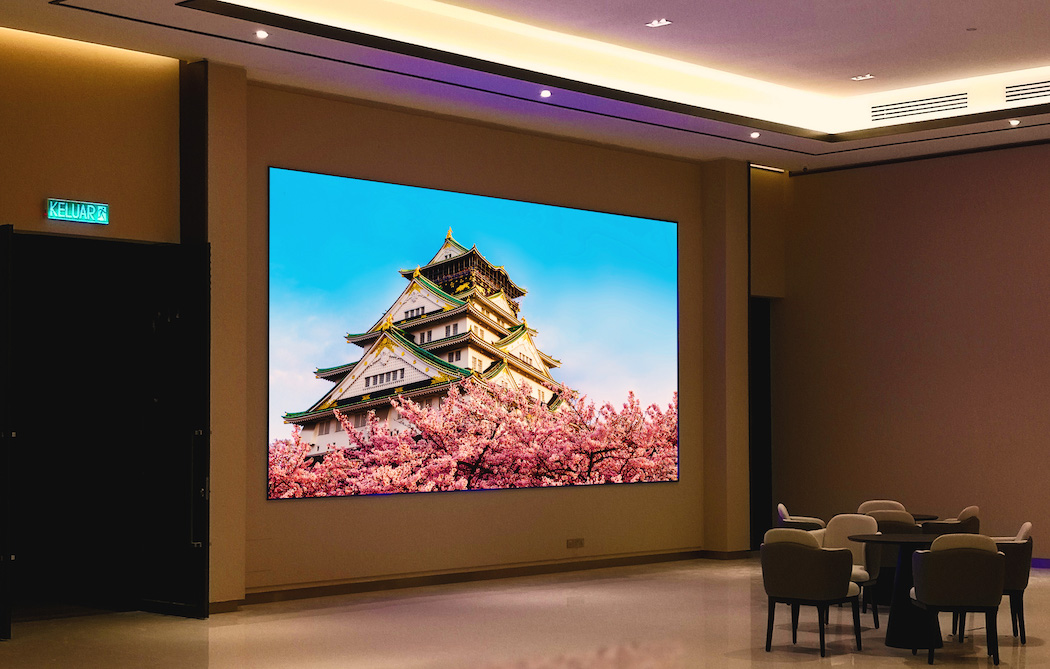
LED display advertising has transformed how businesses connect with customers. Whether you’re running campaigns on a large outdoor billboard or a strategically placed indoor LED screen, the real challenge isn’t just getting noticed—it’s proving that your investment is actually working.
The good news? Tracking the success of LED display advertisements is far more achievable than most marketers realise. With the right metrics, tools, and optimisation strategies, you can trace the customer journey from that first fleeting glance all the way through to purchase. This post breaks down exactly how to do that.
Understanding the Customer Journey: From Impression to Purchase
Before diving into metrics, it helps to understand the path your customer takes. The journey typically moves through several stages: awareness, consideration, intent, and finally, purchase.
LED display advertisements are powerful at the awareness stage—they create high-visibility touchpoints that plant your brand in the minds of potential buyers. But a viewer seeing your ad doesn’t automatically become a customer. The gap between impression and purchase is where your tracking strategy matters most. Bridging that gap requires connecting your display advertising activity to downstream behaviour, such as website visits, enquiries, and sales.
Key Metrics for Tracking Success
Reach and Impressions
Reach refers to the total number of unique individuals who see your advertisement, while impressions count every instance your ad is displayed—including repeat views from the same person. For LED display campaigns, these figures are often estimated using footfall data, traffic counts, and screen location analytics.
These metrics set your baseline. High reach with low downstream engagement may suggest your creative or message needs work. High impressions with strong conversion data, on the other hand, confirms your campaign is doing its job.
Engagement Rates
Engagement is harder to measure for physical displays than for digital ads, but not impossible. Dwell time—how long a viewer spends looking at your screen—is one useful proxy. Some modern LED display systems incorporate audience measurement technology that estimates dwell time and even demographic breakdowns based on anonymised camera data.
Social media can also serve as an indirect engagement indicator. Are people photographing and sharing your display? Are branded hashtags or location tags increasing around your screen’s location?
Website Traffic and Conversions
One of the most reliable ways to connect LED display advertising to business outcomes is through web traffic analysis. By monitoring spikes in direct traffic, branded search queries, or traffic from specific geographic areas during and after campaign periods, you can draw meaningful correlations between display activity and online behaviour.
Set up goal tracking in your analytics platform to measure what happens after visitors arrive—sign-ups, enquiries, purchases, and other conversion events all tell a richer story than traffic volume alone.
Sales and ROI
Ultimately, the metric that matters most to stakeholders is return on investment. Calculate this by comparing campaign costs against the revenue attributable to the campaign period. While LED display advertising rarely operates as a last-click channel, its contribution to brand awareness can meaningfully lift overall sales—particularly when combined with other marketing activity.
Tools and Techniques for Tracking
Analytics Platforms
Google Analytics 4 (GA4) remains the go-to platform for tracking website behaviour. Create campaign-specific date ranges and segment your data by location to isolate the impact of your LED display activity. Pair this with Google Search Console to monitor changes in branded search volume, which often rises in response to strong above-the-line advertising.
For more sophisticated attribution, platforms like Nielsen or Kantar offer out-of-home (OOH) measurement tools designed specifically for physical advertising environments.
QR Codes and Unique URLs
QR codes on LED displays offer a direct, measurable link between physical exposure and digital action. A viewer scans the code, lands on a dedicated page, and that interaction is logged—giving you clean, attributable data.
Similarly, unique URLs (such as yourbrand.com/summer-offer) allow you to track traffic that originated specifically from your display campaign, separate from your broader website traffic. Both approaches are simple to implement and highly effective.
A/B Testing
Running two versions of your creative—different headlines, imagery, offers, or calls to action—and rotating them across your LED display allows you to identify which performs better. Track the downstream metrics (web visits, QR scans, conversions) for each variant over equal time periods, then double down on whatever drives better results.
Optimising Your LED Display Campaigns
Content Strategy
LED displays reward simplicity. A clear message, bold visuals, and minimal text perform consistently better than cluttered creative. Tailor your content to the context: a fast-moving commuter environment demands instant comprehension, while a dwell-heavy shopping centre display can afford slightly more detail.
Refresh your creative regularly to avoid ad fatigue. Rotating content also gives you natural A/B testing opportunities.
Placement and Timing
The best LED display campaign in the world delivers poor results if the screen is in the wrong location or running at the wrong time. Analyse your target audience’s movement patterns and ensure your screens are placed where they’re most likely to see them—and in a mindset receptive to your message.
Dayparting—scheduling your ads to run at specific times—can dramatically improve performance. A coffee brand running ads during the morning commute, or a restaurant promoting dinner specials between 4pm and 6pm, is a far smarter use of budget than running the same ad around the clock.
Call to Action
Every LED display ad needs a clear, specific call to action. “Visit our website”, “Scan to claim your discount”, or “Book online today” give viewers a defined next step. Vague messaging that simply raises awareness without directing behaviour makes it far harder to track—and harder to convert.
Real-World Examples of Campaigns That Nailed It
Retail brand drives footfall with geo-targeted QR campaign: A fashion retailer placed indoor LED screens across three major shopping centres, each displaying a QR code linking to an exclusive in-store discount. By tracking QR scans and matching them against in-store transaction data during the campaign period, the brand attributed a 22% uplift in footfall directly to the display activity.
Restaurant chain tests creative with A/B display rotation: A quick-service restaurant ran two versions of a promotional campaign across its outdoor LED network—one featuring a product image, the other a limited-time price offer. The price-led creative generated 34% more web visits via the unique URL shown on screen, informing the brand’s creative strategy for future campaigns.
These examples illustrate a simple truth: the brands that treat LED display advertising as a trackable, data-driven channel consistently outperform those that treat it as pure brand activity.
Maximising Your Advertising Impact
LED display advertising is one of the most visually compelling formats available to marketers. But visual impact alone doesn’t justify the spend—accountability does.
By combining clear metrics, practical tracking tools like QR codes and analytics platforms, and a commitment to continuous optimisation, you can turn your LED display campaigns into a measurable, high-performing part of your marketing mix. Start with the metrics that matter most to your business, build your tracking infrastructure before the campaign launches, and treat every campaign as an opportunity to learn something new.
The gap between impression and purchase is closable. With the right approach, you’ll not only close it—you’ll prove it.