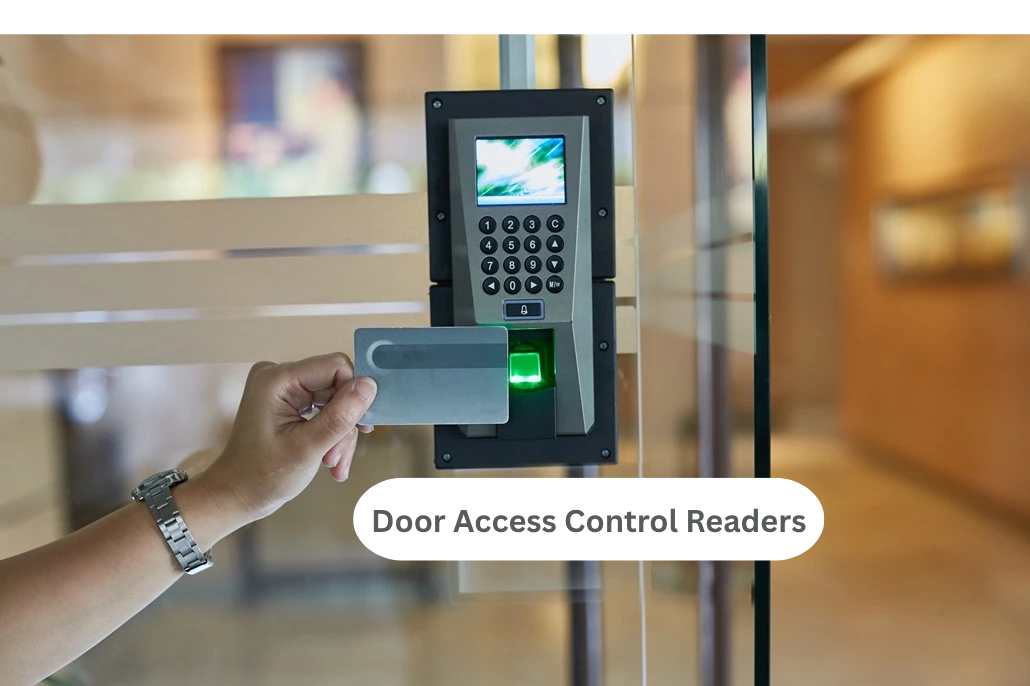
The Global Door Access Control Readers Market plays a crucial role in modern security infrastructure by enabling secure, efficient, and automated access management across commercial buildings, industrial facilities, government institutions, healthcare centers, educational campuses, and residential complexes. Door access control readers are electronic devices that authenticate and authorize individuals through technologies such as RFID cards, smart cards, mobile credentials, PIN codes, biometrics, and facial recognition systems. Growing concerns regarding security, increasing adoption of smart building technologies, rising investments in physical access management systems, and expanding demand for contactless authentication solutions are driving market growth globally. The global Door Access Control Readers market is projected to reach USD 11.70 billion by 2036, registering a CAGR of 7.70% between 2026 and 2036.
Overview of the Market
Door access control readers have become essential components of modern security systems, enabling organizations to manage entry permissions, monitor access activities, and strengthen facility protection. The market is being driven by increasing security threats, growing adoption of smart infrastructure, rising implementation of workplace safety regulations, and expanding deployment of integrated security management solutions.
Access the Full Report PDF Here:
Key Market Trends
Several significant trends are shaping the Door Access Control Readers market. The growing adoption of contactless authentication technologies, including mobile credentials and facial recognition systems, is transforming access management practices. Organizations are increasingly implementing cloud-based access control platforms to enhance operational flexibility and centralized monitoring capabilities. Biometric access control solutions are witnessing strong demand due to their superior security and authentication accuracy. Additionally, integration of artificial intelligence, IoT connectivity, and real-time analytics is enabling smarter and more responsive security infrastructure across various industries.
Analytical Tool
Industry stakeholders utilize analytical frameworks such as Porter’s Five Forces Analysis, Value Chain Analysis, Competitive Benchmarking, SWOT Analysis, and Market Attractiveness Assessment to evaluate market dynamics. These tools help businesses understand competitive pressures, optimize supply chains, identify growth opportunities, and formulate strategic investment plans within the access control ecosystem.
Regional Analysis
North America dominates the Door Access Control Readers market due to strong adoption of advanced security technologies, significant investments in smart buildings, and stringent security regulations across commercial and government sectors. Europe remains a major market driven by increasing demand for integrated building management systems, growing smart city initiatives, and enhanced security compliance requirements.
SWOT Analysis
Strengths
• Enhanced security and access management capabilities
• Growing adoption across commercial, industrial, and residential sectors
• Integration with advanced technologies such as biometrics and AI
• Improved operational efficiency through automated access control
Weaknesses
• High installation and maintenance costs for advanced systems
• Complexity associated with integrating legacy security infrastructure
Opportunities
• Expansion of smart buildings and smart city projects
• Rising demand for cloud-based access control solutions
• Growing adoption of biometric and mobile credential technologies
• Increasing investments in workplace safety and security systems
Threats
• Cybersecurity risks associated with connected access control systems
• Rapid technological changes requiring continuous upgrades
• Regulatory and privacy concerns related to biometric authentication
• Competition from alternative security management solutions
PESTEL Analysis
Political:
Government regulations concerning public safety, critical infrastructure protection, and building security significantly influence market growth.
Economic:
Increasing investments in commercial infrastructure, smart buildings, and security modernization projects support demand for access control readers.
Social:
Growing awareness regarding workplace safety, personal security, and secure access management drives adoption across various sectors.
Technological:
Advancements in biometric authentication, artificial intelligence, cloud computing, mobile credentials, and IoT-enabled security systems enhance product capabilities.
Environmental:
Energy-efficient security devices and sustainable smart building initiatives are encouraging the development of environmentally responsible access control solutions.
Legal:
Compliance with data privacy regulations, biometric data protection laws, cybersecurity standards, and building security requirements remains essential for manufacturers and service providers.
Market Share and Key Players
The Door Access Control Readers market is highly competitive and characterized by the presence of leading security technology providers, building automation companies, and access management solution developers focused on innovation and product enhancement. Key players include HID Global Corporation, ASSA ABLOY AB, Honeywell International Inc., Johnson Controls International plc, Allegion plc, dormakaba Holding AG, Bosch Security Systems, Suprema Inc., Identiv, Inc., and Axis Communications AB.
Challenges and Future Opportunities
The industry faces challenges including cybersecurity vulnerabilities, high implementation costs, data privacy concerns, and integration complexities with legacy infrastructure. However, future opportunities remain substantial due to the growing adoption of smart buildings, increasing deployment of contactless access solutions, rising demand for biometric authentication systems, and expanding investments in digital security infrastructure.
Browse Trending Report:
Passive Optical Network (PON) Equipment Industry