
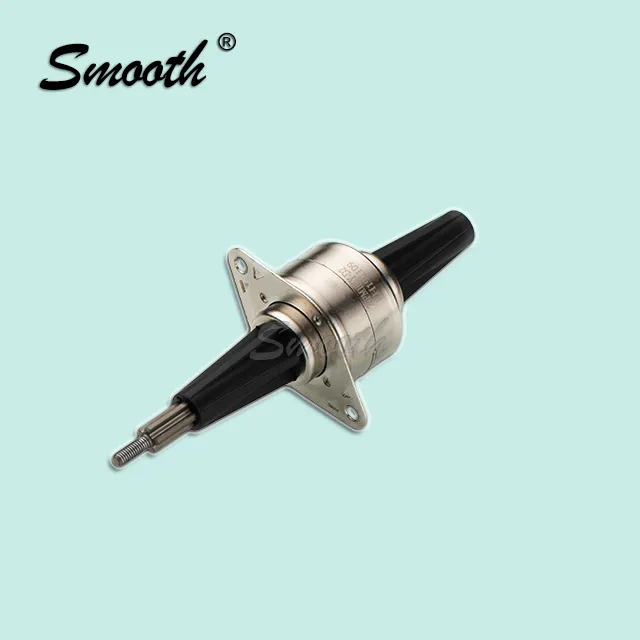
Maintenance budgets in automated facilities are often larger than expected, and much of that cost traces back to components that wear unpredictably or fail without warning. A well-chosen stepper linear actuator system can meaningfully shrink that budget line by offering mechanical simplicity and predictable wear patterns that are far easier to plan around than many alternative drive technologies. Facilities that take a hard look at where their maintenance dollars actually go often discover that a disproportionate share is spent chasing unpredictable failures in complex subsystems, making component simplicity a genuine financial advantage rather than just an engineering preference. Facilities that track this data closely often find the savings extend well beyond what a simple parts-cost comparison would initially suggest.
Fewer Moving Parts Means Fewer Failure Points
Compared to more complex servo assemblies or pneumatic systems with valves, hoses, and compressors, a stepper-driven linear actuator has relatively few components that can fail. Fewer parts translate directly into fewer things that need inspection, lubrication, or eventual replacement across the life of the machine. This simplicity also reduces the training burden on maintenance staff, since technicians need to become familiar with fewer distinct failure modes and troubleshooting procedures compared to more elaborate motion systems. This simplicity also shortens the learning curve for new hires, allowing maintenance departments to onboard staff more quickly and maintain consistent service quality even during periods of turnover.
Predictable Wear Enables Proactive Scheduling
Because these actuators move in consistent, repeatable patterns, wear on the lead screw and bearings tends to follow a fairly predictable curve. Maintenance teams can use this predictability to schedule preventive service during planned downtime, rather than reacting to sudden, unexpected failures that halt an entire production line. This shift from reactive to proactive maintenance is often one of the more underappreciated financial benefits of standardizing on reliable, well-understood motion components across a facility. Facilities that track this wear data over multiple years often use it to negotiate more accurate service contracts, since predictable failure timelines make it easier to plan parts inventory well in advance.
Lower Energy Consumption Over Time
Stepper actuators often draw current efficiently, particularly in applications with intermittent duty cycles where the motor is not required to run continuously. Lower energy draw not only reduces utility costs but also generates less heat, which in turn reduces stress on surrounding components and extends their service life as well. Over the course of a year, these seemingly small efficiency gains can add up to a meaningful reduction in a facility’s overall electricity bill, particularly when multiplied across dozens or hundreds of actuators. These savings become particularly noticeable in facilities that run equipment continuously across multiple shifts, where even a modest per-unit efficiency gain compounds significantly across a full year of electricity bills.
Simplified Troubleshooting for Maintenance Staff
When something does go wrong, diagnosing a stepper-based system is often more straightforward than tracing an issue through a closed-loop servo network. Technicians can check step counts, driver signals, and mechanical binding without needing specialized tuning software, which shortens repair time and gets equipment back online faster. This faster diagnostic process directly reduces the total downtime cost associated with any given failure, since less time is spent identifying the problem and more time is available for the actual repair. Because the diagnostic process relies on straightforward tools rather than proprietary tuning software, technicians across different shifts and even different facilities can follow a consistent, well-documented troubleshooting procedure.
Long-Term Value Beyond the Purchase Price
Facilities evaluating a stepper linear actuator upgrade should weigh the total cost of ownership rather than just the sticker price, since reduced downtime and simpler servicing often outweigh a slightly higher upfront cost within the first year of operation. Calculating this total cost accurately requires factoring in historical downtime data, technician labor rates, and the cost of replacement parts over the expected service life of the equipment being considered. Facilities that build this kind of lifecycle cost model into their purchasing decisions often find that the true winner in a component comparison looks quite different from whichever option simply had the lowest sticker price.
Building Maintenance Strategy Around Reliable Components
Choosing dependable actuators from the start is one of the most effective ways to control long-term maintenance spending. When a facility standardizes on components known for consistent, predictable behavior, it becomes far easier to build accurate maintenance budgets and avoid the costly surprises that come with less reliable motion hardware. This standardization also simplifies spare parts inventory management, since fewer distinct component types need to be stocked and tracked across the facility. This standardization pays additional dividends when a facility expands, since new lines can be designed around already-proven components rather than requiring a fresh evaluation process for every new project.