
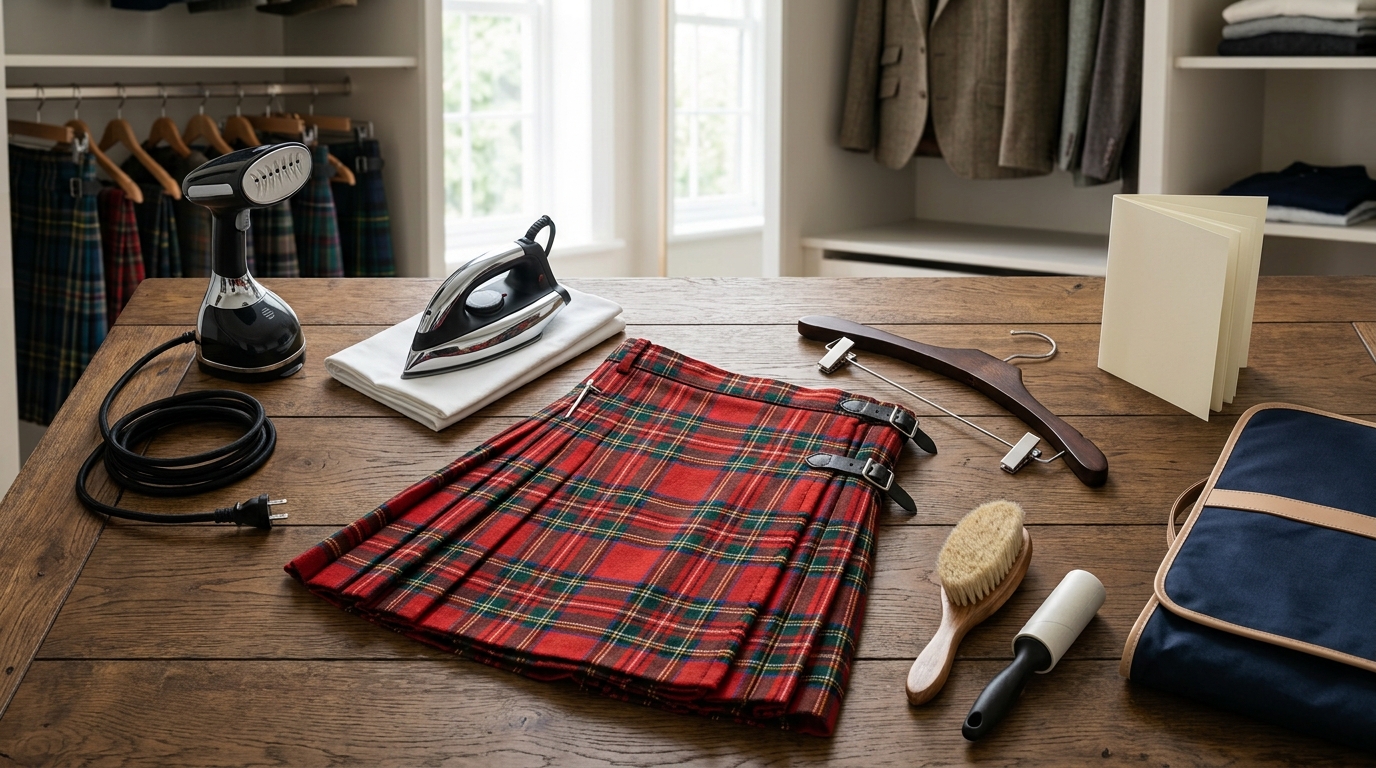
You spend good money on a kilt, then a hot wash fades the color and flattens the pleats in one cycle. Poor care shortens the life of a garment built to last years. That waste stings after the cost of a quality piece. A simple routine prevents it. This guide walks you through washing, drying, pressing, and storing a kilt the right way.
Why Proper Care Pays Off
A well-made kilt lasts for years with the right care. Neglect cuts that lifespan short.
Color, pleats, and fabric strength all depend on how you treat the garment. A few good habits protect your investment. The routine takes minutes and saves replacement costs.
Care also protects resale and reuse value. A well-kept kilt can pass to another wearer in good shape. Neglect ends that possibility early.
A clean routine also saves money. Fewer replacements mean lower long-term costs. Care turns one purchase into years of wear.
Washing Without Damaging the Fabric
Use cold water for nearly every kilt. Hot water fades dye and weakens fibers over time.
Choose a gentle cycle or hand wash for delicate fabrics. Empty all pockets first, since loose items damage both the kilt and the machine. Turn the garment inside out to protect the outer surface.
Wash similar colors together to avoid transfer. A dark kilt can bleed onto lighter items in warm water. Cold water and sorted loads prevent that problem.
Close any snaps or buckles before washing. Open hardware snags fabric in the machine. A quick check prevents avoidable damage.
Choosing the Right Detergent
Pick a mild detergent without harsh bleach or brighteners. Strong formulas strip color from the fabric.
Use a small amount, since excess detergent leaves residue in the pleats. A gentle wash preserves both color and texture. The range of modern kilts handles regular washing well when you follow these basics.
Skip fabric softener on pleated kilts. It can coat the fibers and soften the crisp folds. A clean rinse keeps the pleats sharp.
Drying to Protect the Shape
Skip the dryer for most kilts. High heat shrinks fabric and sets wrinkles into the pleats.
Hang the kilt to air dry instead. Smooth the pleats by hand while it is damp so they dry in line. Air drying keeps the shape crisp and the fabric strong.
Avoid direct sun for long stretches. Strong sunlight fades color over time. A shaded, airy spot dries the kilt without bleaching it.
Use a sturdy hanger that holds the weight. A flimsy hanger lets the kilt sag and distort. Good support keeps the lines clean.
Pressing Pleats the Right Way
Press along the pleat lines, not across them. Working with the folds keeps each pleat sharp.
Use a medium heat setting and a pressing cloth for delicate fabrics. Move slowly and follow each fold from waist to hem. Crisp pleats make the difference between a sharp kilt and a tired one.
Let the kilt cool before moving it. Pressing sets the pleats while warm, and handling them too soon loosens the lines. A short rest locks the shape in.
Storing Your Kilt Between Wears
Hang the kilt or fold it carefully along the pleats. Crushing it in a drawer ruins the lines.
Use a breathable garment bag for long storage. Avoid plastic, which traps moisture and encourages mildew. A cool, dry spot keeps the fabric in good condition between uses.
Keep it away from damp basements and hot attics. Temperature swings and moisture damage fabric over time. A stable, dry closet works best.
Caring for Formal and Wool Kilts
Formal kilts need extra care. Spot clean small marks and reserve full cleaning for a specialist who knows the fabric.
Air the garment after an event before storing it, since trapped moisture sets into wool. These steps keep a formal piece ready for the next occasion. The range of wedding kilts benefits from this gentle, specialist-led approach.
Brush wool gently between cleanings. A soft brush lifts surface dust without harming fibers. Light upkeep extends the time between full cleanings.
Store wool with cedar or a moth deterrent. Natural fibers attract pests in storage. A simple guard protects the garment between events.
Handling Stains and Snags
Treat stains quickly before they set. Blot rather than rub, which pushes the mark deeper.
Fix small snags with a quick stitch before they grow. A pulled thread left alone becomes a tear after the next wash. Prompt attention keeps the fabric sound for years.
Keep a small repair kit on hand. A needle, matching thread, and a stain pen handle most issues. Quick fixes prevent small problems from growing.
Building a Simple Routine
Wash in cold, air dry, press the pleats, and store with care. Those four steps cover most kilts.
Rotate two kilts if you wear them often, so each one recovers its shape. A consistent routine keeps every kilt in your closet looking new. Good care turns a single purchase into years of wear.
Set a reminder for seasonal checks. A quick review catches loose threads and storage issues early. Small habits protect the garment long term.
Treat the routine as habit, not a chore. A few minutes after each wear keeps the kilt sharp. Consistency does the heavy lifting over time.
To Read More Article, Please Visit: Blogging Webs