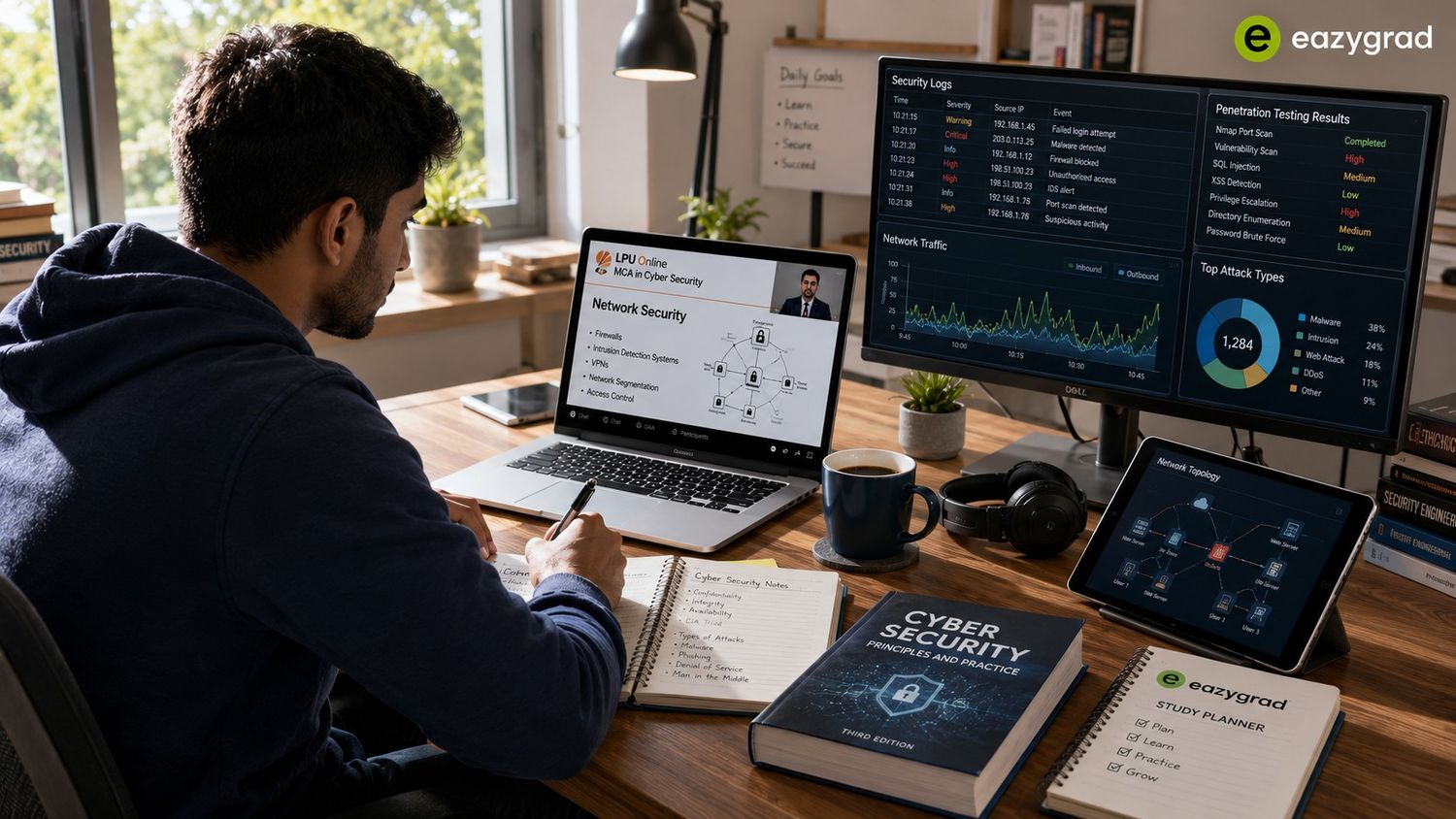
The digital world has transformed the way businesses, governments, and individuals store and manage information. As organizations increasingly rely on cloud platforms, digital transactions, and remote work environments, protecting sensitive data has become a top priority. This growing need has significantly increased the demand for skilled cybersecurity professionals who can identify vulnerabilities, prevent cyberattacks, and safeguard critical digital assets.
At the same time, online postgraduate education has become a practical option for students and working professionals looking to enhance their technical expertise without interrupting their careers. Programs that combine flexibility with industry-relevant learning are becoming increasingly popular among aspiring IT professionals. One such option is the LPU Online MCA in Cyber Security, designed to help learners develop advanced computing knowledge while focusing on modern cybersecurity concepts. Before choosing any online program, it is important to understand its curriculum, eligibility requirements, career opportunities, and long-term value to determine whether it aligns with your professional goals.
What is LPU Online MCA in Cyber Security?
The LPU Online MCA in Cyber Security is a postgraduate program that combines core computer application subjects with specialized cybersecurity concepts. It is designed for learners who want to strengthen their understanding of software technologies while developing practical knowledge of protecting digital systems and information.
The program is generally structured over two years and is delivered through an online learning platform that allows students to attend lectures, access study materials, submit assignments, and participate in assessments remotely. This flexible format makes it suitable for recent graduates as well as working professionals who need to balance education with other responsibilities.
Rather than focusing only on theoretical concepts, the curriculum usually introduces learners to real-world cybersecurity challenges, secure computing practices, and modern technologies used to defend digital infrastructure. Students also gain exposure to project-based learning that helps them understand practical applications of cybersecurity principles.
This program is particularly suitable for:
- Graduates interested in building a career in Information Security
- Working IT professionals seeking specialization
- Software developers interested in secure application development
- Network administrators looking to upgrade their cybersecurity knowledge
- Students planning long-term careers in digital security and IT management
Why Choose a Specialization in Cyber Security?
Cybersecurity has become one of the most rapidly evolving fields within the technology sector. Organizations of every size now depend on secure digital systems to protect customer information, financial records, intellectual property, and business operations.
As cyber threats continue to evolve, businesses require professionals who can proactively identify risks and respond to security incidents. This growing demand has created numerous opportunities for individuals with specialized cybersecurity knowledge.
Some reasons why many learners consider a Cyber Security Course specialization include:
- Growing reliance on digital technologies across industries
- Increasing frequency of cyberattacks and data breaches
- Rising importance of Data Protection and privacy regulations
- Greater adoption of cloud-based infrastructure
- Expanding need for Cyber Risk Management professionals
- Continuous technological innovation requiring ongoing skill development
Unlike many technology domains that focus solely on software development, cybersecurity combines analytical thinking, technical expertise, risk assessment, and strategic decision-making. Professionals often work across multiple areas such as Network Security, Cloud Security, Ethical Hacking, Digital Forensics, and Cyber Threat Analysis, making the field both dynamic and intellectually rewarding.
Eligibility Criteria
Students considering an LPU Online MCA in Cyber Security should carefully review the eligibility requirements before applying. While admission criteria may vary depending on university policies and regulatory updates, most online MCA programs follow similar academic standards.
Typical eligibility requirements include:
| Criteria | Details |
| Educational Qualification | Bachelor’s degree from a recognized university |
| Academic Background | Computer Applications, Computer Science, IT, or equivalent (requirements may vary) |
| Mode of Learning | Fully Online |
| Duration | Typically 2 Years |
| Suitable For | Fresh graduates and working professionals |
The admission process generally involves:
- Online application submission
- Academic document verification
- Identity proof submission
- Passport-size photograph
- Fee payment after confirmation
Working professionals often appreciate the flexibility offered by online learning because it enables them to continue gaining industry experience while pursuing higher education.
Subjects Covered in LPU Online MCA in Cyber Security
The curriculum of an LPU Online MCA in Cyber Security is designed to build both strong technical foundations and specialized security knowledge. Students typically study core computer science concepts before progressing to advanced cybersecurity topics.
Some commonly covered subjects include:
- Information Security Fundamentals
- Network Security
- Ethical Hacking
- Cryptography
- Cloud Security
- Cyber Laws and Compliance
- Secure Software Development
- Database Security
- Digital Forensics
- Incident Response
- Cyber Threat Intelligence
- Risk Assessment and Management
Alongside theoretical learning, many Online MCA Program curricula encourage students to work on practical assignments, case studies, and projects that simulate real cybersecurity challenges. This helps learners understand how security concepts apply in real business environments.
The combination of programming, networking, security frameworks, and analytical problem-solving prepares students for diverse Cyber Security Careers while strengthening their overall IT Career prospects.
Career Opportunities After an Online MCA in Cyber Security
Completing an LPU Online MCA in Cyber Security can prepare learners for a wide range of technology and security-focused roles. As organizations continue to strengthen their digital infrastructure, professionals with expertise in cybersecurity are needed across various business functions. While specific responsibilities may differ between industries, the following roles are commonly associated with this specialization.
| Job Role | Key Responsibilities | Essential Skills |
| Cyber Security Analyst | Monitor systems, identify vulnerabilities, and respond to security incidents | Threat analysis, Network Security, risk assessment |
| Information Security Analyst | Develop security policies and protect organizational data | Information Security, compliance, security auditing |
| Security Consultant | Advise organizations on improving their cybersecurity posture | Cyber Risk Management, communication, security planning |
| Ethical Hacker | Conduct authorized security testing to identify weaknesses | Ethical Hacking, penetration testing, scripting |
| Penetration Tester | Simulate cyberattacks to evaluate system security | Vulnerability assessment, Linux, networking |
| SOC Analyst | Monitor security events and investigate suspicious activities | Incident response, SIEM tools, analytical thinking |
| Digital Forensics Analyst | Examine digital evidence after cyber incidents | Digital Forensics, data recovery, investigation |
| Network Security Engineer | Design and secure enterprise network infrastructure | Firewalls, routers, Network Security |
| Cloud Security Specialist | Protect cloud environments and cloud-based applications | Cloud Security, cloud platforms, identity management |
| Cyber Risk Consultant | Evaluate organizational risks and recommend mitigation strategies | Risk analysis, governance, compliance |
Many professionals gradually move into leadership positions such as Security Architect, Cyber Security Manager, Information Security Consultant, or Governance, Risk, and Compliance (GRC) Specialist after gaining industry experience and relevant certifications.
Industries Hiring Cyber Security Professionals
Cybersecurity is no longer limited to technology companies. Almost every industry depends on secure digital systems, making cybersecurity expertise valuable across multiple sectors.
Some of the major industries hiring cybersecurity professionals include:
- IT Services and Software Development
- Banking and Financial Services
- Healthcare and Hospitals
- Government Organizations
- E-commerce Platforms
- Telecommunications
- Cloud Computing Companies
- Consulting Firms
- Manufacturing Industries
- EdTech Organizations
Each of these sectors manages sensitive customer information, financial records, intellectual property, or operational systems that require strong security measures. As digital transformation continues, organizations increasingly seek professionals who can reduce security risks, strengthen Data Protection practices, and support regulatory compliance.
Skills Required for Success in Cyber Security
Building a successful career in cybersecurity requires a balance of technical knowledge and professional skills. While an academic program provides a solid foundation, continuous learning remains essential because cyber threats evolve rapidly.
Some of the most valuable Cyber Security Skills include:
- Strong problem-solving abilities
- Networking fundamentals
- Basic Linux administration
- Programming knowledge using languages such as Python, Java, or C++
- Risk analysis and security assessment
- Incident management and response
- Communication and teamwork
- Analytical thinking
- Cloud security awareness
- Curiosity and continuous learning
Professionals who regularly update their knowledge through practical projects, certifications, and industry resources are often better prepared to adapt to changing security challenges.
Future Scope of Cyber Security
Cybersecurity is expected to remain one of the most significant technology domains as organizations continue expanding their digital operations. Businesses increasingly rely on cloud computing, artificial intelligence, connected devices, and remote collaboration, all of which require stronger security frameworks.
Several emerging trends are shaping the future of cybersecurity:
- AI-powered threat detection and automated security monitoring
- Increased adoption of Cloud Security solutions
- Growing importance of IoT security for connected devices
- Wider implementation of Zero Trust security architecture
- Stronger global focus on privacy regulations and compliance
- Expansion of Cyber Threat Analysis capabilities
- Greater demand for professionals specializing in digital investigations and incident response
Although technologies continue to evolve, the need for qualified cybersecurity professionals is expected to remain strong because organizations must constantly protect their digital assets against emerging threats.
Related Programs and Learning Paths
Choosing the right postgraduate program often involves exploring multiple educational pathways before making a final decision.
Students researching an online mca degree in india can compare different universities, learning formats, and specialization options to understand which program best aligns with their long-term career objectives.
Learners interested in understanding the digital learning ecosystem may also explore lovely professional university online to learn more about how online postgraduate education is delivered through virtual platforms and learning management systems.
Some students may wish to compare technology specializations before making a decision. Exploring the best colleges for mca and artificial intelligence in india can help them evaluate how Artificial Intelligence and Cyber Security differ in terms of curriculum, career paths, and industry applications.
Another useful topic to explore is how is an online mca degree important for IT students, especially for those planning to strengthen their technical foundation while balancing work, personal commitments, or professional upskilling.
Factors to Consider Before Choosing an Online MCA Program
Selecting an online postgraduate program requires more than simply comparing course names. Students should evaluate several important factors before making an informed decision.
Consider the following aspects:
- UGC recognition and academic credibility
- Updated and industry-relevant curriculum
- Faculty expertise and academic support
- Learning Management System (LMS) quality
- Practical projects and case studies
- Student support services
- Transparent fee structure
- Flexible learning schedule
- Career guidance and placement support
- Availability of recorded lectures and learning resources
Taking time to compare these factors can help learners choose a program that supports both their current learning needs and long-term career aspirations.
Conclusion
Cybersecurity continues to play a vital role in protecting organizations from increasingly sophisticated digital threats. As businesses expand their online presence and adopt advanced technologies, professionals with expertise in Information Security, Cloud Security, Network Security, and Cyber Risk Management are becoming increasingly valuable across industries.
The LPU Online MCA in Cyber Security offers learners an opportunity to build advanced technical knowledge while developing practical problem-solving and security skills relevant to today’s technology landscape. Before selecting any online postgraduate program, students should carefully evaluate the curriculum, university recognition, learning flexibility, faculty support, and alignment with their long-term career goals. Making an informed decision today can contribute to a stronger and more sustainable IT career in the future.
If you’re comparing Online MCA programs and aren’t sure which specialization best matches your career goals, EazyGrad offers free expert counselling to help you understand eligibility, curriculum, university options, and career opportunities. Speaking with experienced counsellors can make it easier to choose an Online MCA program that aligns with your academic background and future aspirations.
Frequently Asked Questions
1. What is the LPU Online MCA in Cyber Security?
It is an online postgraduate computer applications program that combines core MCA subjects with specialized cybersecurity topics such as Information Security, Ethical Hacking, Cloud Security, and Digital Forensics.
2. Who can apply for this program?
Graduates from a recognized university who meet the university’s eligibility requirements can apply. The program is suitable for both fresh graduates and working professionals.
3. Is an Online MCA in Cyber Security worth it?
It can be a valuable option for individuals interested in developing advanced technical skills and pursuing careers in cybersecurity, information security, and related IT domains.
4. What subjects are included in the curriculum?
Typical subjects include Network Security, Ethical Hacking, Cryptography, Information Security, Cloud Security, Cyber Laws, Database Security, Incident Response, Risk Assessment, and Digital Forensics.
5. What jobs can I get after completing this program?
Graduates may pursue roles such as Cyber Security Analyst, Ethical Hacker, Security Consultant, SOC Analyst, Digital Forensics Analyst, Network Security Engineer, Information Security Analyst, or Cloud Security Specialist.
6. What skills are required for a career in Cyber Security?
Important skills include networking fundamentals, programming knowledge, analytical thinking, Linux basics, communication, risk assessment, cloud security awareness, and continuous learning.
7. What is the future scope of Cyber Security?
The field continues to grow with increasing demand in AI-powered security, cloud computing, IoT security, data privacy, Zero Trust architecture, and cyber risk management across multiple industries.
8. Can working professionals pursue this program?
Yes. Since the program follows an online learning format, many working professionals choose it because it offers flexibility to continue their education while managing their jobs.