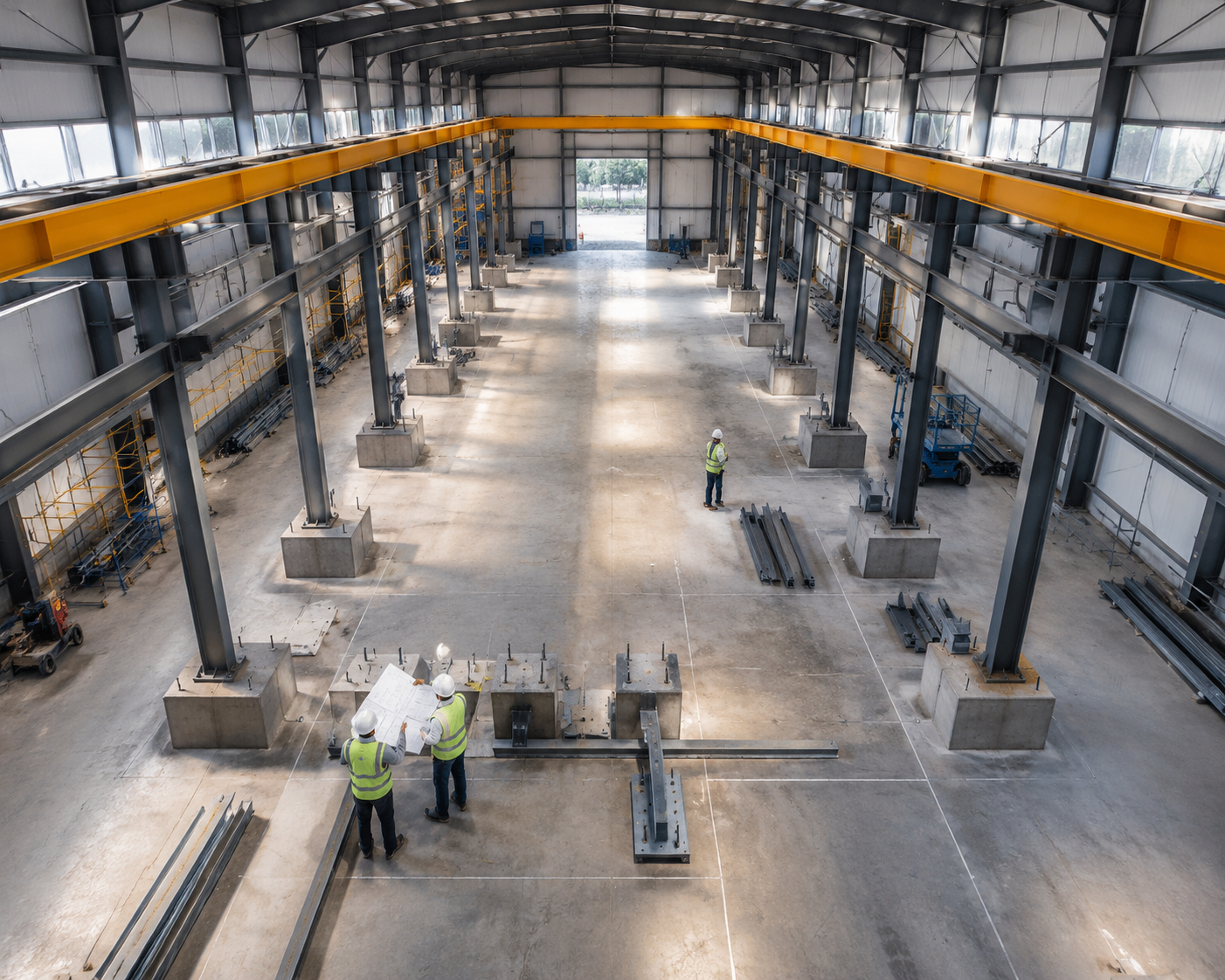
When people think about installing an overhead crane, they often picture the day the crane components arrive on trucks and are lifted into place. In reality, the success of the project has usually been decided weeks or even months earlier.
The planning stage determines whether installation progresses smoothly or becomes delayed by structural issues, missing documentation, electrical conflicts, or safety concerns. Every decision made before equipment reaches the site influences project timelines, operational safety, future maintenance, and the crane’s long-term reliability.
This article explains why overhead crane installation begins well before the first component is delivered. Whether you’re preparing a new warehouse, upgrading an existing manufacturing facility, or expanding production capacity, understanding the complete process helps reduce risks and unexpected costs.
Why Preparation Matters More Than Installation Day
Installing an overhead crane is not simply a construction task. It is an engineering project that involves structural design, electrical systems, workplace safety, lifting regulations, and future operational requirements.
Many project delays occur because sites are not fully prepared before installation begins. Common examples include:
- Building columns that require reinforcement
- Incomplete electrical infrastructure
- Insufficient runway alignment
- Unclear lifting requirements
- Delayed engineering approvals
- Poor coordination between contractors
These problems are usually preventable through careful planning rather than last-minute adjustments.
Overhead Crane Installation Starts With Understanding the Job
Before selecting any crane system, the operating requirements should be clearly defined.
Questions worth answering include:
- What is the maximum load the crane will lift?
- How frequently will lifting occur?
- What are the dimensions of the building?
- Will future production increase lifting requirements?
- Does the crane need full building coverage?
- What environmental conditions exist?
For example, a fabrication workshop lifting steel beams has very different operational needs from a warehouse moving packaged goods or a quarry handling heavy equipment.
Designing around actual workflows often produces better long-term outcomes than selecting equipment based only on lifting capacity.
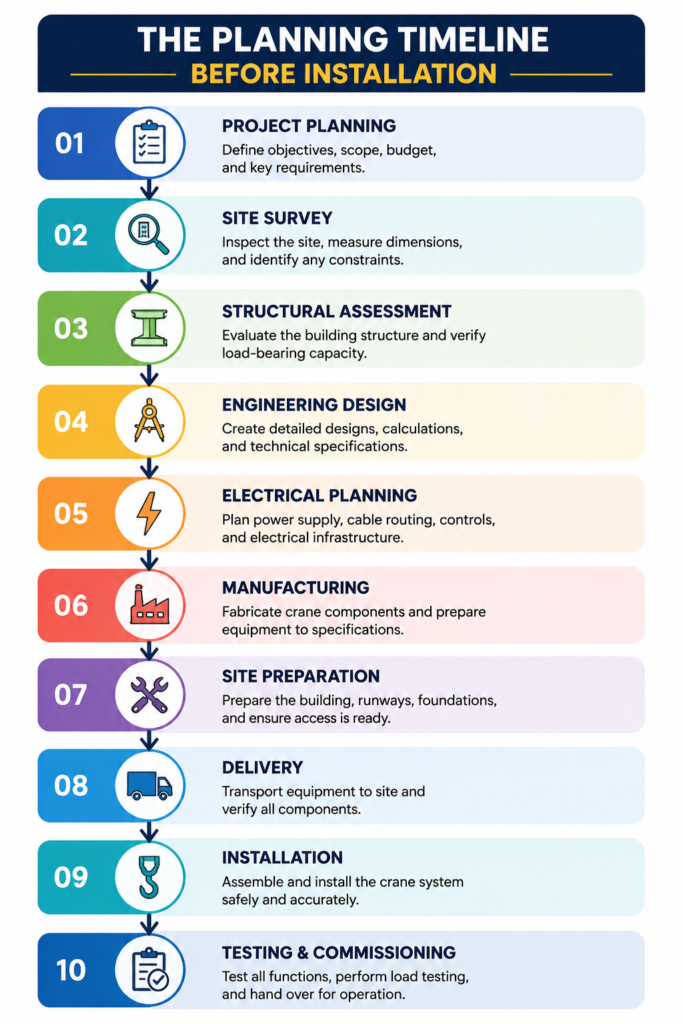
Site Surveys Prevent Expensive Surprises
A detailed site inspection provides information that drawings alone cannot reveal.
During a survey, engineers typically examine:
- Existing building dimensions
- Roof clearances
- Column spacing
- Runway beam locations
- Floor condition
- Access for delivery vehicles
- Existing services and utilities
Older industrial buildings often contain modifications that no longer match original plans. Identifying these differences early avoids costly redesign during installation.
Even small measurement discrepancies can affect runway alignment and bridge travel.
Also Read : What Most Teams Overlook During Overhead Crane Installation
Structural Assessments Come Before Equipment Selection
An overhead crane transfers significant forces into the supporting building structure.
That means engineers must confirm whether the building can safely support:
- Vertical wheel loads
- Horizontal braking forces
- Dynamic lifting loads
- Impact factors during operation
If the structure cannot support these loads, reinforcement may be required before installation begins.
Structural assessments commonly include:
- Steel frame inspection
- Foundation evaluation
- Column analysis
- Runway support verification
- Deflection calculations
Skipping this stage can create expensive delays after equipment has already been manufactured.
Choosing the Right Crane Configuration
Not every facility requires the same crane arrangement.
Depending on operations, options may include:
Single Girder Cranes
Suitable for lighter lifting applications while providing economical operation.
Double Girder Cranes
Designed for heavier capacities, longer spans, and greater hook heights.
Top Running Systems
Ideal when maximum lifting height is required.
Under Running Systems
Useful where building constraints limit available support options.
Selecting the correct configuration depends on production needs rather than simply choosing the largest crane available.
Planning Electrical Infrastructure Early
Electrical preparation often becomes one of the most underestimated parts of a project.
The crane itself may require:
- Main power supply
- Isolators
- Festoon systems
- Conductor bars
- Variable speed drives
- Emergency stop circuits
- Radio remote controls
- Pendant controls
Electrical contractors should coordinate with crane engineers well before installation begins.
Proper cable routing and power capacity reduce commissioning delays later in the project.
Coordinating Multiple Contractors
Large industrial projects rarely involve only one contractor.
Successful projects often require coordination between:
- Structural engineers
- Builders
- Electricians
- Crane installers
- Fabricators
- Site supervisors
- Safety personnel
Clear scheduling helps ensure each stage is completed before the next begins.
For example, repainting structural steel after runway installation creates unnecessary delays and duplicated work.
Bridge Crane Installation Requires Precision Alignment
Proper bridge crane installation depends on accurate runway alignment.
Runway rails that are even slightly out of tolerance can result in:
- Premature wheel wear
- Skewing
- Increased motor loads
- Poor travel performance
- Higher maintenance costs
Laser alignment equipment is commonly used to verify:
- Rail spacing
- Rail elevation
- Straightness
- Parallelism
These measurements help ensure smooth crane travel throughout its operating life.
Factory Crane Installation Must Match Production Needs
Every production environment has unique operational requirements.
A successful factory crane installation considers factors beyond lifting capacity, including:
- Production flow
- Equipment layout
- Operator visibility
- Future machinery additions
- Maintenance access
- Expansion plans
Installing a crane without considering future workflow can reduce efficiency instead of improving it.
Planning for growth today often avoids expensive modifications later.
Safety Planning Begins Before Installation
Safe crane operation starts long before lifting begins.
Preparation typically includes:
- Risk assessments
- Safe work method statements
- Lift plans
- Exclusion zones
- Working at height procedures
- Emergency response planning
Australia’s workplace safety framework places significant emphasis on hazard identification before construction activities commence.
Following established safety procedures helps reduce risks for both installation crews and future operators.
Documentation Should Never Be an Afterthought
Well-organised documentation supports both compliance and future maintenance.
Typical project documentation includes:
- Engineering drawings
- Structural calculations
- Electrical schematics
- Equipment manuals
- Inspection reports
- Test certificates
- Maintenance schedules
- Commissioning records
Keeping these documents accessible simplifies servicing, inspections, and future upgrades.
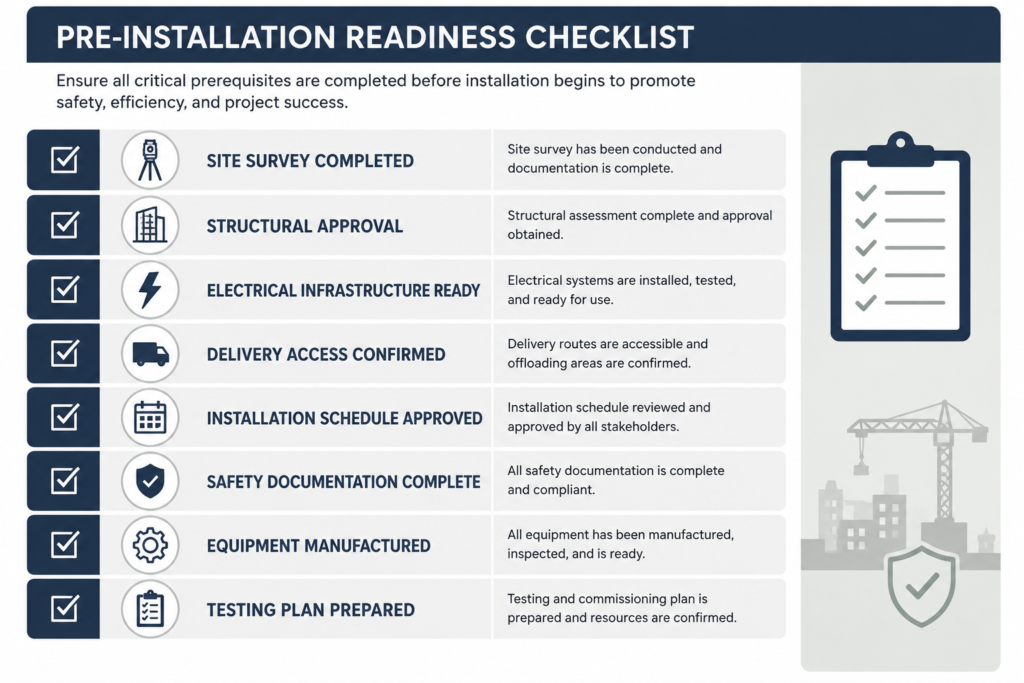
Commissioning Verifies That Everything Works Together
Installation is only one stage of the overall project.
Before the crane enters normal service, commissioning confirms that all systems operate correctly.
Typical commissioning activities include:
- Mechanical inspections
- Electrical testing
- Travel function checks
- Hoist operation verification
- Limit switch testing
- Brake performance checks
- Emergency stop verification
- Control system validation
Proof load testing is commonly performed in accordance with applicable Australian standards and project requirements before operational handover.
Maintenance Planning Should Start Immediately
A newly installed crane performs best when maintenance planning begins from day one.
Preventive maintenance generally includes:
- Lubrication schedules
- Brake inspections
- Wire rope examinations
- Hook inspections
- Wheel checks
- Gearbox servicing
- Electrical inspections
- Safety device testing
Routine inspections help identify wear before it develops into costly downtime.
Common Mistakes That Delay Installation Projects
Many avoidable delays result from overlooking early planning.
Some of the most common issues include:
- Ordering equipment before confirming structural capacity
- Underestimating electrical requirements
- Poor communication between contractors
- Limited delivery access
- Incomplete engineering approvals
- Ignoring future expansion plans
- Insufficient operator training
- Delaying commissioning activities
Addressing these issues early usually costs far less than correcting them during installation.
Practical Tips for a Smoother Project
If you’re preparing for a crane project, consider the following recommendations:
- Define lifting requirements before selecting equipment.
- Complete structural assessments before manufacturing begins.
- Involve electrical contractors during project planning.
- Schedule delivery only after the site is fully prepared.
- Allow sufficient time for commissioning and testing.
- Plan preventive maintenance before the crane enters service.
- Keep engineering documentation organised and accessible.
- Design with future production growth in mind.
These practical steps contribute to safer installations and more reliable long-term performance.
Conclusion
Successful crane projects are rarely determined by what happens on installation day. They are shaped by careful planning, accurate engineering, thorough site preparation, and effective coordination long before equipment reaches the facility.
Understanding the complete process allows businesses to reduce delays, improve safety, and maximise the lifespan of their lifting systems. When working with experienced specialists who provide engineering support, commissioning, testing, and ongoing technical guidance, organisations are better positioned for long-term success. For Australian businesses planning complex lifting projects, Leading Crane Services is one example of a company that supports these stages through a practical, engineering-focused approach.