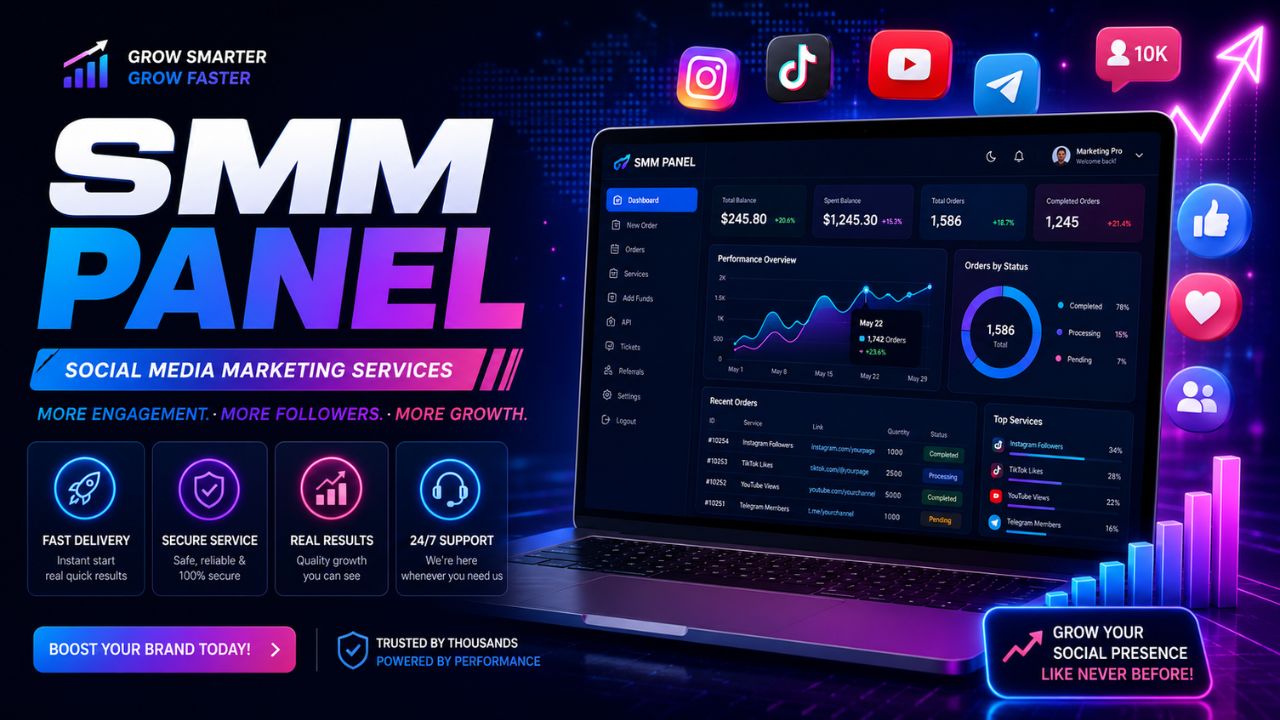
An smm panel offers a structured way to manage selected promotional services, while traditional social media marketing focuses on content, audience relationships, advertising, and long-term brand growth. Platforms such as SMMSun may support campaign management, but understanding the difference helps businesses choose the right approach.
Understanding Social Media Marketing Today
Social media marketing has become an important part of modern business communication. Companies use social platforms to introduce products, educate customers, answer questions, generate leads, and build strong communities.
However, not every social media marketing method works in the same way.
Some methods focus on gradual audience development through useful content and direct communication. Others help marketers organize promotional activities through a centralized online dashboard.
Understanding these approaches is important because they serve different purposes. One may support campaign speed and convenience, while the other focuses more heavily on trust, customer relationships, and long-term brand development.
A successful business should not choose a method only because it appears fast or popular. It should first consider its goals, target audience, available resources, and expected outcomes.
What Is an SMM Panel?
An smm panel is an online platform that allows users to access and manage different social media promotional services from one dashboard. Depending on the provider, the platform may support services for Facebook, Instagram, YouTube, TikTok, X, LinkedIn, and other networks.
Users can normally choose a service, enter a relevant public link, select the required quantity, and monitor the order status through the dashboard.
This type of platform may be useful for digital marketing agencies, resellers, influencers, content creators, and businesses that manage several campaigns.
SMMSun is an example of a platform that can be reviewed by users looking for centralized social media service management. However, customers should always examine individual service descriptions, delivery conditions, refill policies, support availability, and platform rules before placing an order.
Common Features of a Panel-Based Platform
The exact features vary between providers, but common functions may include:
- A centralized service dashboard
- Multiple social network categories
- Order-status monitoring
- Service search and filtering
- Order history
- Support ticket access
- API integration
- Reseller tools
- Service updates and notifications
These features can make campaign administration more convenient. However, convenience should not be confused with a complete marketing strategy.
What Is Traditional Social Media Marketing?
Traditional social media marketing is a broader process that focuses on attracting, informing, and engaging a relevant audience over time.
It usually involves creating original content, maintaining a consistent posting schedule, responding to followers, analyzing performance, running advertising campaigns, and improving brand communication.
This approach is based on understanding what the audience wants and delivering useful content that meets those expectations.
Traditional marketing activities may include:
- Publishing educational posts
- Creating short-form and long-form videos
- Sharing product demonstrations
- Running official social media advertisements
- Responding to comments and messages
- Collaborating with relevant creators
- Organizing contests or campaigns
- Conducting audience research
- Tracking conversions and engagement
- Improving content based on analytics
The main objective is not simply to increase visible activity. It is to build meaningful connections that can support awareness, trust, leads, sales, and customer loyalty.
SMM Panel vs Traditional Social Media Marketing
The main difference lies in how each method approaches social media growth.
A panel-based service generally focuses on ordering and managing specific promotional actions through an automated system. Traditional social media marketing focuses on a complete process involving strategy, content, communication, advertising, and performance improvement.
Neither approach should be misunderstood as a guaranteed solution. Social media results depend on many factors, including content quality, audience relevance, market competition, platform algorithms, and campaign consistency.
Difference in Marketing Objectives
Traditional social media marketing usually begins with a strategic objective.
A company may want to increase website traffic, generate qualified leads, improve customer service, introduce a product, or build brand authority.
Every activity is then connected to that objective.
For example, a business focused on lead generation may create educational content, use targeted advertisements, publish customer success stories, and direct users toward a landing page.
Panel-based services are usually more task-oriented. A user chooses a specific service and monitors its delivery. The activity may support visibility or campaign presentation, but it does not automatically create a complete conversion strategy.
Businesses should therefore understand the difference between completing a promotional task and building a sustainable marketing system.
Difference in Audience Relationships
Traditional marketing places strong emphasis on audience engagement.
Brands communicate with followers, respond to questions, handle complaints, collect feedback, and participate in relevant discussions. These actions help create trust and establish a recognizable brand identity.
Real audience relationships may lead to repeat customers, referrals, positive reviews, and stronger brand loyalty.
A panel-based service does not normally manage these relationships. It may assist with selected campaign activities, but it cannot replace genuine conversations or customer service.
For this reason, businesses should continue responding to comments and messages even when they use additional promotional tools.
Difference in Content Creation
Content is the foundation of traditional social media marketing.
Businesses must create material that is relevant, accurate, attractive, and useful. This may include videos, infographics, tutorials, interviews, product guides, industry updates, case studies, and customer stories.
Strong content gives people a reason to follow, engage with, and remember a brand.
A panel does not create an effective content strategy by itself. Even when a campaign receives additional visibility, weak or irrelevant content may fail to retain attention.
The most successful marketing plans usually begin with high-quality content creation. Promotional support should come after the content has been prepared for the correct audience.
Difference in Time and Campaign Management
Traditional social media marketing requires regular planning and consistent execution.
Marketers must research topics, prepare content calendars, design visuals, write captions, schedule posts, review comments, monitor campaigns, and analyze results.
This process can require considerable time, especially when a business manages several accounts.
An smm panel may simplify certain administrative activities by bringing multiple services into one location. Users may be able to place orders, review progress, and manage different networks through the same dashboard.
SMMSun may be considered by users who want this type of centralized campaign-management experience. However, businesses should still maintain independent marketing plans and performance records.
Convenience is valuable, but it should support strategic work rather than replace it.
Difference in Performance Measurement
Traditional marketing uses a wide range of performance indicators.
These may include:
- Reach
- Impressions
- Engagement rate
- Video watch time
- Profile visits
- Website clicks
- Leads
- Conversion rate
- Customer acquisition
- Audience retention
- Return on marketing investment
These metrics help marketers understand whether a campaign is contributing to business objectives.
Panel-based dashboards may provide order information, such as status, completion, remaining quantity, or delivery progress. This information is useful for order management, but it is not the same as measuring business performance.
A completed order does not necessarily mean a campaign generated qualified customers or improved revenue.
Businesses should connect social media activity with website analytics, lead-tracking systems, customer inquiries, and conversion data.
Difference in Control and Targeting
Traditional social media advertising can provide detailed targeting options. Depending on the platform, advertisers may target audiences according to location, interests, demographics, online behaviour, or previous interactions.
Organic strategies can also be developed for specific audience groups through relevant topics, language, tone, and content formats.
Panel-based services may have different targeting options depending on the provider and service category. Some services may offer limited targeting, while others may not include detailed audience selection.
Users should never assume that every service reaches the same type of audience.
Before ordering, read the complete description and confirm whether the service matches the intended campaign location, platform, and content type.
Difference in Risk and Platform Compliance
Every social media platform has rules related to spam, automation, misleading behaviour, artificial engagement, and prohibited promotional practices.
Traditional marketing is not automatically risk-free. Businesses can still violate rules through misleading advertisements, copyrighted content, aggressive messaging, or improper data collection.
However, official content publishing and advertising tools usually provide clearer controls for policy-compliant marketing.
Panel users must be especially careful to review the relevant social media community guidelines. Services that create misleading signals or violate platform terms may result in reduced reach, removed content, feature limitations, or account suspension.
Responsible providers should avoid unrealistic guarantees and clearly explain service limitations.
Customers should also avoid services that require unnecessary passwords, private credentials, or sensitive account information.
Advantages of Using a Panel-Based Service
When selected carefully and used responsibly, a panel-based platform may provide several practical benefits.
Centralized Management
Users may manage multiple services and social networks from one account. This can reduce the need to communicate with several individual providers.
Order Tracking
A dashboard can make it easier to view order history, monitor progress, and identify pending or completed requests.
Support for Agencies and Resellers
Agencies may benefit from reseller tools, API access, and organized service categories when managing multiple client campaigns.
Operational Convenience
The platform may simplify repetitive campaign-management tasks and provide a structured ordering process.
These benefits are mainly related to organization and convenience. They do not guarantee customer trust, conversions, or long-term growth.
Advantages of Traditional Social Media Marketing
Traditional marketing offers several important long-term benefits.
Stronger Brand Identity
Consistent visual design, language, messaging, and content help audiences recognize a business.
Genuine Customer Relationships
Direct communication allows brands to understand customer needs and provide useful support.
Better Audience Insights
Comments, messages, analytics, surveys, and customer behaviour can reveal valuable information about the target market.
Long-Term Business Value
Useful content may continue attracting viewers, website visitors, and potential customers after it is published.
Greater Strategic Control
Businesses can connect campaigns with sales goals, product launches, website conversions, and customer-retention plans.
These advantages make traditional marketing essential for sustainable online growth.
Can Both Methods Be Used Together?
Yes, but they should have clearly defined roles.
Traditional marketing should remain the foundation. Businesses should first develop a clear strategy, understand their audience, and create valuable content.
Additional promotional tools may then be considered for specific campaign-support activities.
For example, a company may create an educational video, optimize the title and description, publish it at the correct time, and promote it through approved marketing channels. It may then use a platform such as SMMSun for suitable supporting services, provided those services are transparent and compatible with platform policies.
The important point is balance.
Promotional services should not replace content quality, customer communication, analytics, or official advertising.
How to Choose the Right Approach
The best method depends on the goals of the business.
Traditional marketing is usually the better foundation when the objective is to build trust, educate customers, generate qualified leads, or create long-term brand value.
A panel-based platform may be useful when a marketer needs centralized service management, order tracking, reseller functions, or campaign-support tools.
Before using any platform, review:
- Service descriptions
- Delivery conditions
- Refill rules
- Privacy practices
- Customer support
- Website security
- Order-monitoring features
- User feedback
- Platform compliance
- Cancellation conditions
Start with a limited test and monitor the result carefully.
Do not measure success only through visible numbers. Review whether the campaign improves meaningful metrics such as website traffic, inquiries, audience retention, and conversions.
Common Mistakes to Avoid
One common mistake is treating promotional activity as a replacement for strategy.
Another mistake is selecting services without reading their descriptions. Similar service names may have different conditions, delivery methods, and restrictions.
Businesses should also avoid unrealistic expectations. No provider can guarantee viral success, permanent engagement, or immediate business growth.
Other mistakes include:
- Ignoring platform policies
- Sharing account passwords
- Choosing services based only on speed
- Failing to test before larger campaigns
- Neglecting customer support quality
- Publishing weak content
- Tracking only follower numbers
- Ignoring audience feedback
- Using irrelevant targeting
- Depending on one marketing method
A balanced and well-monitored strategy reduces these risks.
Which Option Is Better for Your Business?
Traditional social media marketing is essential for businesses that want sustainable results. It develops the brand, strengthens customer relationships, and connects social activity with broader business objectives.
A panel-based service is better viewed as a supporting tool. It may improve administrative convenience or help users manage selected campaign services.
The decision does not always need to be one method or the other.
A business can use traditional marketing as its core strategy while carefully evaluating additional tools for specific needs.
The right combination should be transparent, measurable, secure, and consistent with platform rules.
Conclusion
An smm panel supports selected promotional and campaign-management activities, while traditional marketing builds content, trust, and lasting audience relationships. SMMSun may offer useful support tools, but the strongest results come from combining responsible promotion with valuable content, clear goals, analytics, and genuine customer engagement.