The Second World War demanded radical shifts in military strategy, technology, and—perhaps most visibly—soldier equipment. As the British Army faced down threats across Europe, North Africa, and Asia, the rigid, traditional military attire of the past gave way to unparalleled functionality. For modern historians, collectors, and living history reenactors, the ww2 british soldier uniform stands as a legendary symbol of resilience, innovation, and practical design.
Understanding the components of this iconic gear is essential for anyone looking to build an accurate historical display or step onto a reenactment field.
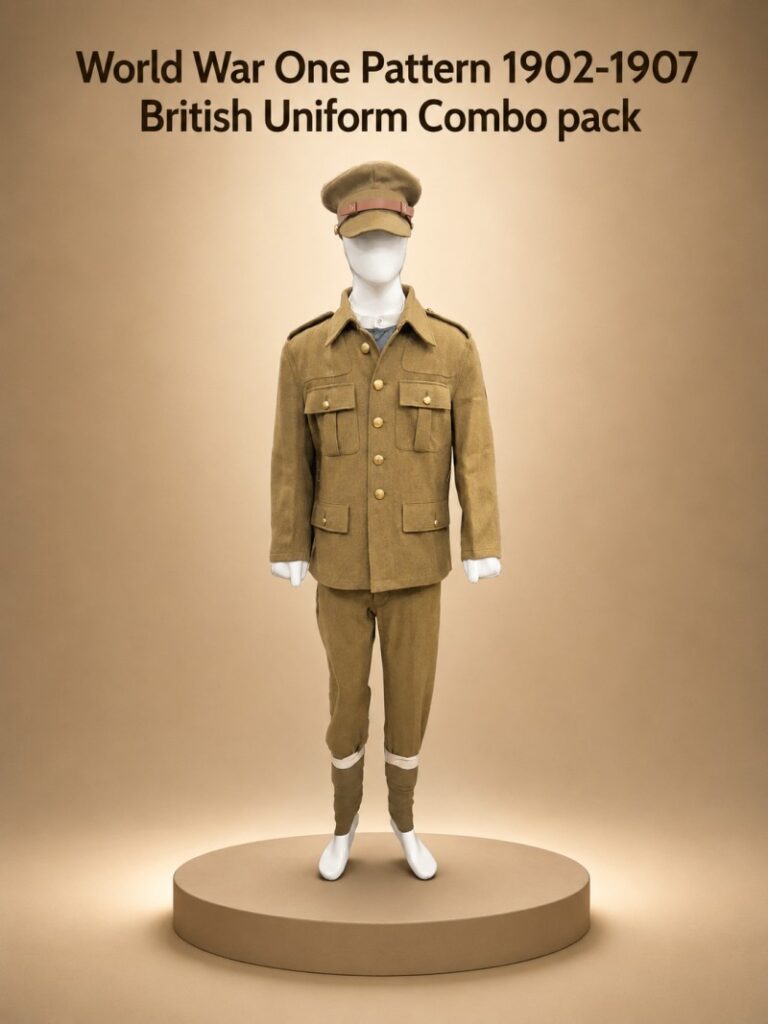
The Core of the Uniform: 1938 Pattern Battledress
Introduced just before the outbreak of the war, the ww2 british soldier uniform broke away from the long, sweeping tunics of previous generations. In their place came the 1938 Pattern Battledress—a revolutionary, streamlined two-piece garment made from heavy, serge wool.
- The Blouse (Jacket): Short and cropped at the waist, the blouse featured a built-in fabric belt that buckled tightly to keep out cold winds. It was designed with deep pleated breast pockets and an adaptable collar that could be worn open with a collared shirt or buttoned securely to the throat.
- The Trousers: Engineered with high-waisted comfort in mind, these trousers featured a massive map pocket on the left thigh and a specialized dressing pocket near the right hip.
This short, utilitarian cut gave the British “Tommy” unprecedented mobility in the field, whether crawling through the mud of Normandy or navigating urban ruins.
Essential Webbing and Headgear
A soldier’s uniform is only as good as the gear that supports it. To complete the authentic silhouette, the wool battledress was paired with the highly versatile 1937 Pattern Web Equipment. Made from tightly woven, khaki-green cotton canvas, this webbing system included:
- Dual ammunition pouches designed to hold Bren gun magazines or Lee-Enfield clips.
- A sturdy waist belt, cross-straps, and an integrated haversack for rations and personal kit.
Protecting the soldier was the iconic Brodie Helmet (Mk II), famously recognizable by its wide, shallow brim designed to shield men from falling shrapnel. As the war progressed, airborne troops and specialized commandos adopted unique variations, such as the netted Mk III “Turtle” helmet or specialized berets, adding distinct layers to the Commonwealth military identity.
Preserving History with ReplicaMilitary
Because original, mid-century serge wool garments have grown fragile, faded, and rare over the decades, finding wearable originals is nearly impossible. At ReplicaMilitary, we bridge the gap between history and the modern collector.
We take pride in meticulously analyzing original wartime tailoring to recreate the exact weight, weave, and distinctive khaki-drab hue of the authentic British service dress. From the unique brass dish buttons to the correct canvas weave of the 1937 webbing, ReplicaMilitary ensures your impression stands up to the closest inspection by discerning historians.
Whether you are commemorating the triumphs of D-Day, honoring ancestral legacies, or building a definitive museum-grade display, investing in high-quality accuracy is paramount. Explore our expertly tailored collections at ReplicaMilitary today to gear up with total confidence.